
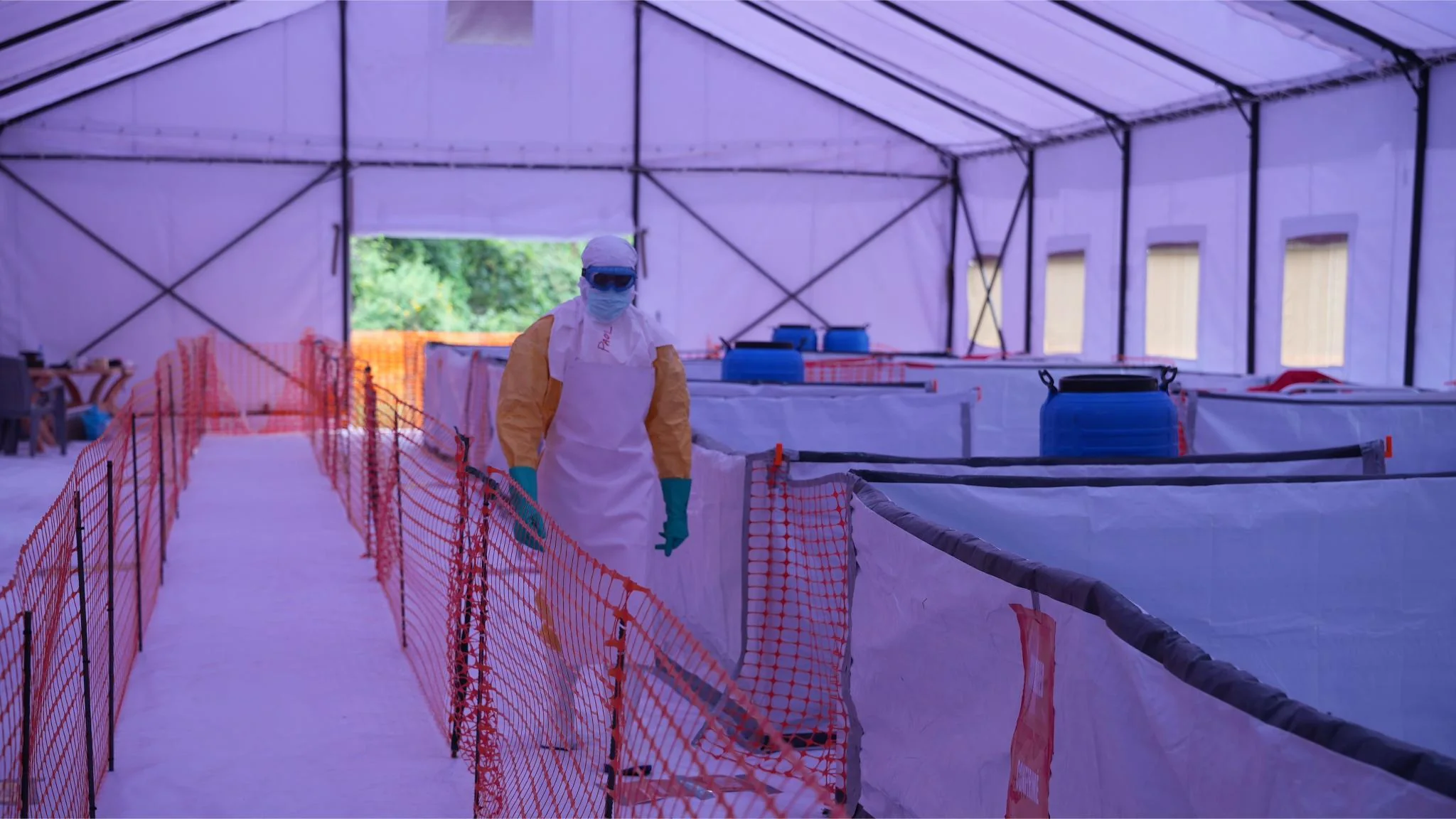
Kenya has tightened its Ebola response by outlawing the washing and embalming of people who die from the disease, while prohibiting families from bringing home the bodies of relatives who succumb to the infection outside the country.
The new regulations also prescribe strict procedures for burial and body transportation, require exposed individuals to undergo up to 21 days of quarantine and introduce penalties for failing to report suspected infections as the government seeks to contain the risk of further transmission.
The measures are contained in the Public Health (Ebola Disease) Rules, 2026, published on Monday evening. They set out how authorities should handle Ebola-related deaths, monitor people who may have been exposed to the virus and manage suspected cases.
Under the new requirements, the bodies of people who die from Ebola in Kenya must be buried under strict infection prevention and control measures. Washing and embalming are prohibited, and bodies cannot be undressed or redressed for funeral ceremonies.
Authorities are also prohibited from opening sealed body bags unless an examination or specimen collection is legally authorised and carried out under the required infection prevention measures.
The regulations further restrict the movement of Ebola victims’ bodies across international borders, particularly where a person dies from the disease outside Kenya.
“A person shall not transfer or repatriate the body of a person who has died of Ebola disease outside Kenya,” Rule 21, which deals with the transportation and repatriation of bodies, states.
However, the rules allow the bodies of people who die from Ebola within Kenya to be moved to another part of the country for burial, provided the transportation meets approved health requirements.
“The body shall be transported in a suitable conveyance under arrangements approved by the medical officer of health and in accordance with infection prevention and control measures,” the rules state.
A medical officer of health must make arrangements for the burial without undue delay and ensure the selected site is suitable. The process must also comply with existing laws on the registration of deaths, the issuance of burial permits and investigations into the cause of death.
The regulations are set to remain in effect for 12 months unless Health Cabinet Secretary Aden Duale revokes them earlier.
Quarantine and penalties for violations
Beyond the handling of bodies, the regulations introduce strict monitoring requirements for people who have been in contact with Ebola patients.
Such contacts must remain in quarantine for 21 days from their last relevant exposure and undergo daily checks for symptoms. The period follows World Health Organisation guidance that Ebola symptoms can appear between two and 21 days after infection.
The rules, however, provide for the early release of contacts who meet specified testing requirements.
“A contact whose test results indicate negative after two diagnostic tests, undertaken in accordance with the relevant protocols, may be released from quarantine before the lapse of the 21 days,” the regulations state.
The government has also made it an offence to conceal or fail to report a suspected Ebola infection or a death linked to the disease.
Anyone who suspects a case or becomes aware of an Ebola-related death must report it confidentially to the nearest medical officer of health, health facility or national administrative officer, including a chief.
Failure to report a case, giving false information or escaping quarantine can attract a fine of up to Sh50,000, a prison term of up to six months, or both, under Section 164 of the Public Health Act.
The provisions place an obligation on members of the public to report suspected infections while giving health authorities a legal basis to act against those who breach the rules.
Testing limited to designated facilities
Duale has restricted Ebola testing to the national reference laboratory and other facilities he may designate.
Laboratories without authorisation to test suspected Ebola cases are required to forward samples they receive to an approved testing facility.
The restrictions come as the government continues to strengthen its disease surveillance systems following the confirmation of an imported case in Kenya.
The World Health Organisation has urged countries affected by Ebola outbreaks to tackle fear and stigma and encourage people to report symptoms and seek medical care as early as possible.
The new rules follow the confirmation of Kenya’s first imported case of Bundibugyo Ebola virus disease, involving a Kenyan citizen who travelled from the Democratic Republic of Congo through Uganda before arriving in Nairobi.
The patient arrived in the capital on October 3 and was assessed and isolated at Nairobi Hospital before testing positive for the disease. He died on October 5 and was buried the next day in accordance with public health protocols.
On October 11, Duale announced that no further cases had been recorded.
He said authorities had identified and verified 122 contacts linked to the patient, of whom 108 were in quarantine.
According to the Cabinet Secretary, 293 samples had been tested from 289 alerts, with only the index patient returning a positive result.
The government had also screened 667,675 travellers at 26 points of entry as part of efforts to detect possible infections and prevent the virus from spreading further.
Duale said five designated laboratories were testing samples, with results being released within six to 12 hours.
He further reported that 241 isolation beds were available in five hospitals across Nairobi, Eldoret and Mombasa to support the response.
No lockdown or travel restrictions
Despite the confirmed infection, Duale said the government had not introduced restrictions on travel, trade or public gatherings and had not imposed a lockdown.
He urged Kenyans to remain vigilant and seek medical attention promptly if they developed symptoms or had concerns about possible exposure to the virus.
The Cabinet Secretary also sought to clarify how Ebola is transmitted, noting that the disease does not spread through the air but through direct contact with infected bodily fluids.
“Ebola is not spread through the air, it spreads through direct contact with the blood or body fluids of a person who is sick or has died from the disease,” he said.
The government’s response includes screening travellers at entry points, testing suspected cases at designated laboratories, monitoring contacts and enforcing quarantine where necessary.
The new rules also establish clear requirements for the transportation and burial of victims, with authorities expected to ensure that all procedures follow approved infection prevention measures.