
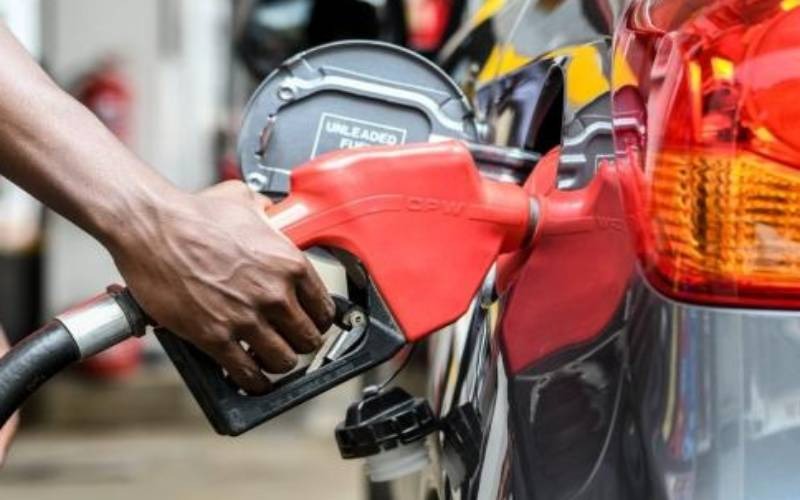
Motorists and households across Kenya will pay more for fuel from October 15 following a sharp increase in pump prices announced by the Energy and Petroleum Regulatory Authority (EPRA).
The new maximum retail prices, which will remain in force until November 14, 2026, reflect rising international petroleum prices and higher landed costs of imported refined petroleum products.
In Nairobi, Super Petrol will retail at a maximum of Sh226.96 per litre, while Automotive Diesel will cost Sh227.76 and Kerosene Sh219.87 per litre.
In Mombasa, motorists will pay Sh223.81 for a litre of Super Petrol, Sh224.61 for Diesel and Sh216.71 for Kerosene.
Nakuru residents will pay Sh225.73 per litre for Super Petrol, Sh226.93 for Diesel and Sh219.06 for Kerosene.
In Eldoret and Kisumu, Super Petrol will retail at Sh226.51 per litre, Diesel at Sh227.71 and Kerosene at Sh219.83.
The adjustments are expected to increase transport and household energy expenses, adding pressure on consumers already facing the cost of living.
According to EPRA, the latest review was driven by increases in the average landed costs of imported petroleum products between August and September 2026.
The average landed cost of Super Petrol rose by 11.81 per cent, while Diesel increased by 11.32 per cent. Kerosene recorded a 9.41 per cent rise over the same period.
Consequently, the maximum retail prices of Super Petrol, Diesel and Kerosene increased nationally by Sh12.93, Sh9.90 and Sh28.49 per litre, respectively.
The increase in Kerosene prices is particularly significant for households that rely on the fuel for cooking and lighting, while higher petrol and diesel costs could raise transport and distribution expenses.
Diesel is widely used by public service vehicles, commercial transporters and businesses, meaning the higher pump prices could put additional pressure on the cost of moving people and goods.
Any resulting increases in transport fares and commodity prices will depend on how operators and businesses respond to the higher fuel costs.
EPRA Director General Eng. Edward Kinyua said the pricing calculations incorporated the applicable eight per cent Value Added Tax (VAT), in line with government policy.
“EPRA wishes to assure the public of its continued commitment to the observance of fair competition and protection of the interests of both consumers and investors in the energy and petroleum sectors,” Kinyua said.
The authority regulates maximum retail prices for petroleum products in the country, with rates varying across towns to account for differences in distribution and transportation costs.
Mombasa, which hosts Kenya’s main seaport for petroleum imports, has lower maximum prices than the inland towns listed in the latest review.
Nairobi has the highest listed price for Super Petrol and Diesel among the five cities, while Eldoret and Kisumu have identical rates for all three products.
The latest increases come amid continued exposure of domestic fuel prices to movements in international petroleum markets and the cost of importing refined products.
Fuel prices remain a key economic indicator because changes at the pump can affect transport, manufacturing, agriculture and the distribution of essential goods.
The new schedule will apply for one month, after which EPRA is expected to issue another review based on the relevant pricing factors.
The authority said its pricing framework seeks to balance consumer protection with the interests of investors operating in the petroleum sector.