
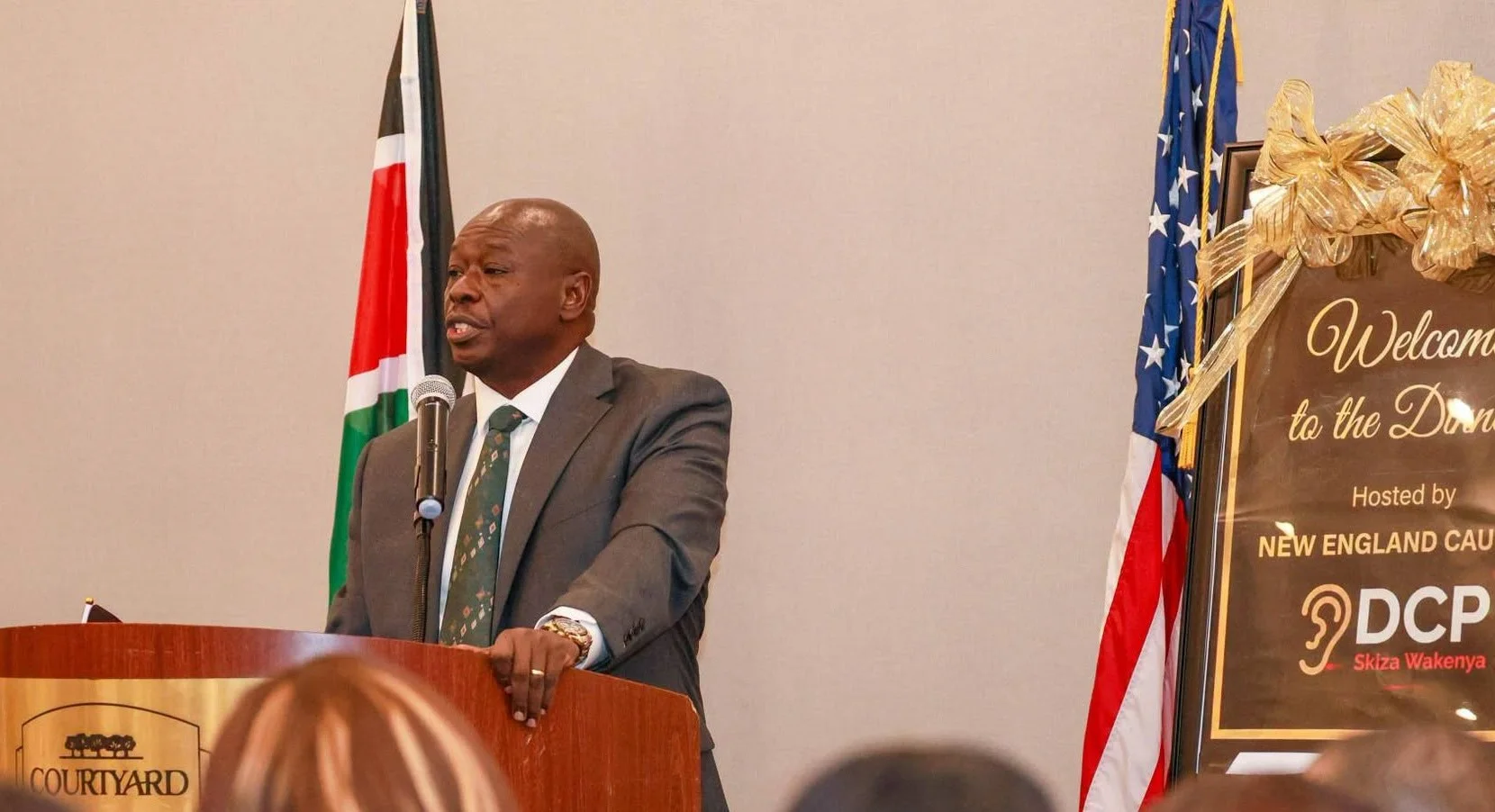
Rigathi Gachagua has pushed back against pressure for opposition leaders to declare their presidential candidate early, insisting that the race to find a common challenger to President William Ruto should not be mistaken for a struggle that could tear the opposition apart.
The former Deputy President says he is prepared to make personal sacrifices and use his political influence to bring rival camps together, arguing that securing one candidate for the 2027 General Election should take priority over individual ambitions and demands for an immediate decision.
Speaking to Kenyans in Massachusetts, United States, the Democracy for the Citizens Party (DCP) leader dismissed reports that opposition figures were struggling to agree on who should lead their campaign against Ruto.
He maintained that discussions aimed at building a united political front were ongoing and that the absence of an announced flag bearer did not mean the leaders had failed to reach a common understanding on the need for political change.
“I’ll do whatever is within my power and ability; I’ll make whatever sacrifices necessary to make sure that we have one single presidential candidate, so that the liberation of our country can begin in earnest,” he said.
Gachagua was responding to reports suggesting that disagreements over the presidential ticket could deepen divisions among opposition leaders as the 2027 elections draw closer.
He rejected the suggestion that the opposition's unity should be measured by how quickly it names its candidate, maintaining that the process of bringing leaders together should be allowed to proceed without unnecessary pressure.
Among those involved in discussions over the opposition's political direction are former Interior Cabinet Secretary Fred Matiang’i, Nairobi Senator Edwin Sifuna, Wiper Party leader Kalonzo Musyoka and Gachagua.
Their challenge is to manage their different political interests and support bases while working towards a common candidate capable of mounting a serious challenge to Ruto in the next election.
The former Deputy President also turned his attention to what he described as attempts by government-aligned politicians to exploit differences among opposition leaders and prevent them from working together.
Gachagua singled out remarks he attributed to a Member of Parliament whom he accused of suggesting that the opposition could be weakened by encouraging different regions to demand presidential candidacies for their preferred leaders.
“I saw some young fellow, an MP, he was talking, saying we are going to divide this opposition,” Gachagua said.
He claimed the alleged strategy involved telling residents of Kisii that Matiang’i must appear on the ballot, encouraging people from the Kamba region to insist that Kalonzo should run for president, and urging the Mount Kenya region to demand his own candidacy.
According to Gachagua, such demands would encourage separate presidential campaigns based on regional loyalties, making it harder for opposition leaders to settle on a single candidate.
He warned that those pursuing such an approach risked misreading the mood of the electorate, drawing comparisons with political tactics associated with the administration of former President Daniel arap Moi.
“I want to tell that young man, the way he is talking is the way Moi and his people were talking. They don't know the people of Kenya; they don't know what decisions have been made by the people of Kenya,” he said.
His remarks were intended to counter concerns that competing presidential ambitions and regional interests could derail efforts to establish a united opposition ahead of the 2027 polls.
By offering to make sacrifices to secure a common candidate, Gachagua signalled his willingness to work with other opposition figures rather than allow the selection process to become a contest between individual leaders.
However, he did not give a date for the announcement of the opposition's presidential candidate or explain how the competing ambitions would be resolved.
The absence of a clear timetable leaves the opposition with the task of finding a formula that can accommodate its leading figures while maintaining unity and avoiding disagreements that could weaken its electoral prospects.
As preparations for the 2027 General Election continue, opposition leaders must balance their personal ambitions, regional support and the need to present voters with a common political alternative to Ruto.
Gachagua insisted that the process of choosing a flag bearer should not be hurried, maintaining that the opposition's immediate priority should be building unity rather than responding to pressure to announce a candidate before an agreement has been reached.