
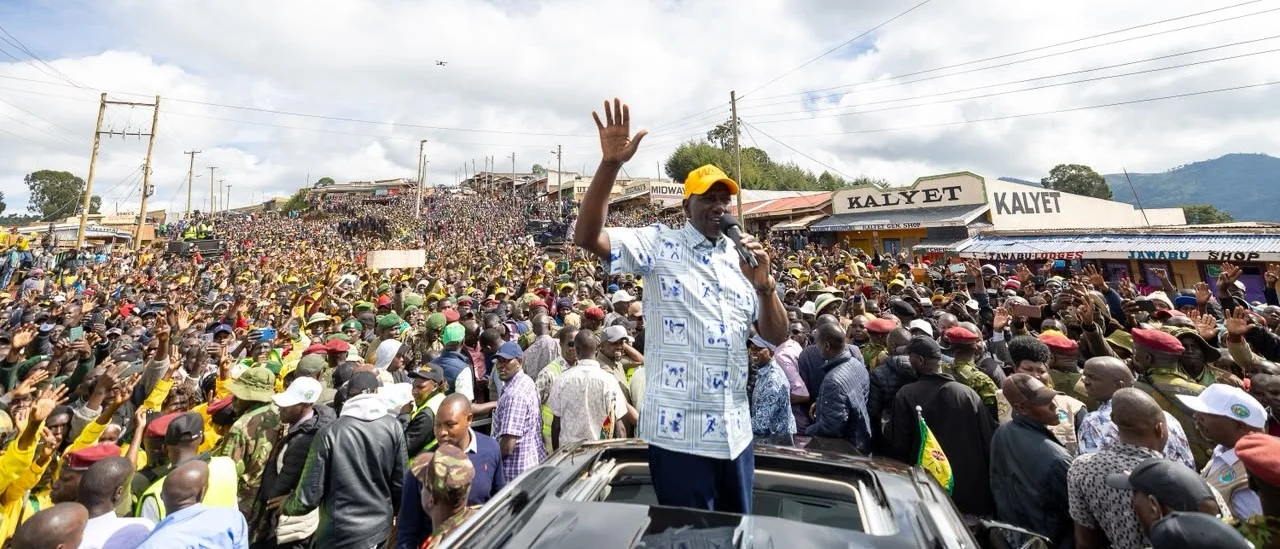
President William Ruto has accused his political opponents of exploiting ethnic divisions to gain power, challenging opposition leaders to compete with his administration on development policies rather than tribal alliances ahead of the 2027 General Election.
Speaking during a development tour in Kapyego, Elgeyo Marakwet County, on Tuesday, Ruto questioned the opposition’s calls for national unity, alleging that some leaders were using coalition-building to calculate ethnic voting blocs rather than develop policies to transform the country.
“2027 is the climax, the culmination of us as a nation confirming that the politics of our nation, that Kenya is no longer going to be driven by hate, or ethnicity, or exclusion, or marginalisation. 2027, we are going to confirm finally that leadership will be measured by the plan you have for our nation, by the agenda you have for Kenya, by the agenda and the programme and the policy and the manifesto you have for the transformation of Kenya,” Ruto said.
The President’s remarks come as opposition leaders, including former Deputy President Rigathi Gachagua, Wiper leader Kalonzo Musyoka, Jubilee presidential hopeful Fred Matiang’i and Nairobi Senator Edwin Sifuna, manoeuvre to establish a united front to challenge him in the August 10 elections.
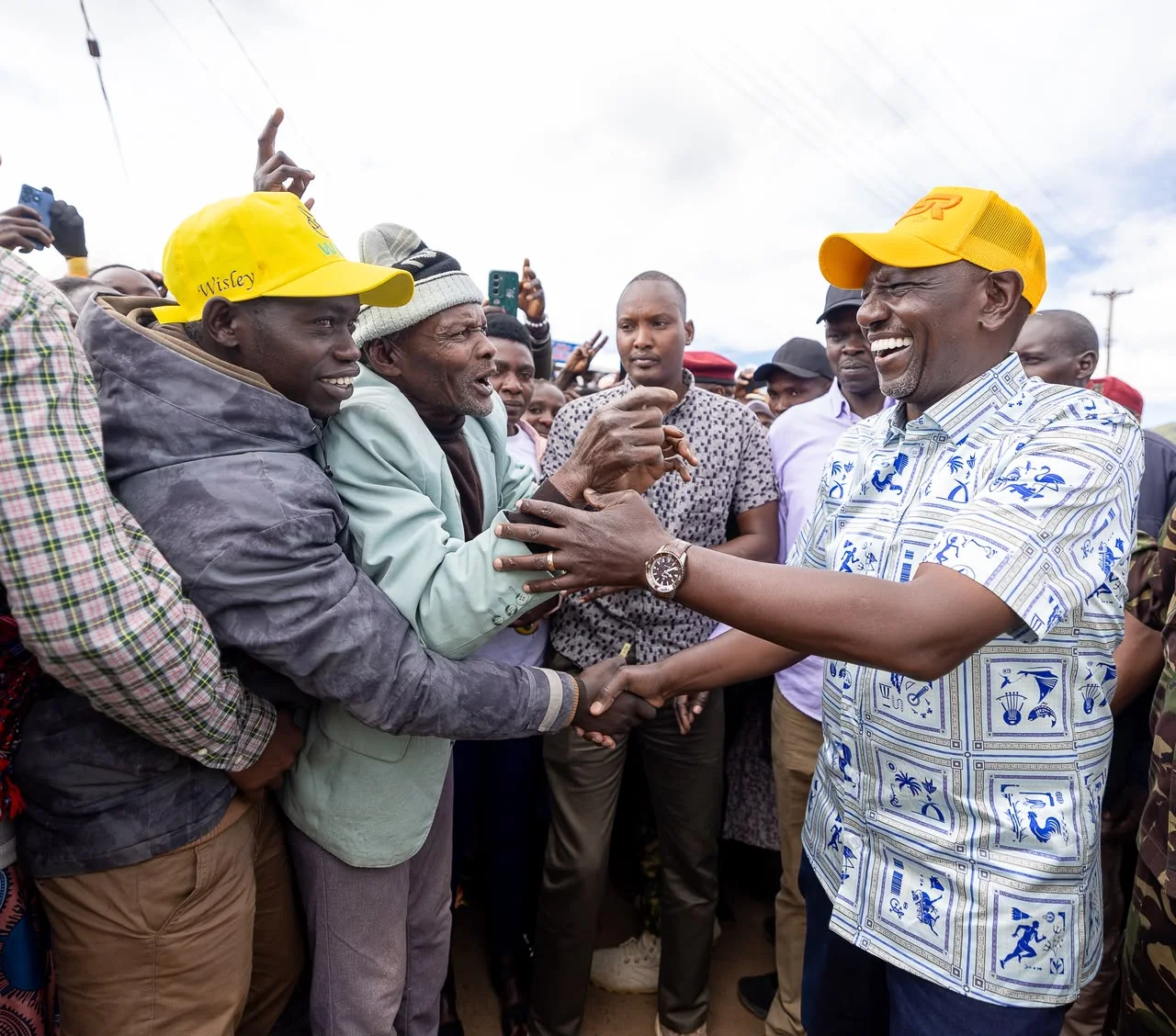
The opposition leaders face mounting challenges in agreeing on a presidential candidate for the 2027 General Election, with competing ambitions, party interests, and regional support bases complicating efforts to form a united front against President William Ruto.
Ruto seized on these divisions to accuse his rivals of disguising ethnic calculations as national unity, insisting that his administration would not engage in political contests organised around community identities.
“I want to tell those who want to compete with us, we are not available for ethnic competition. We hear you saying you want to unite because you are working on tribal arithmetic. We want to tell you we are not available for that contest. We are going to compete with you on the basis of the plan of the transformation of Kenya,” Ruto maintained.
Kenyan elections have historically been influenced by regional alliances and ethnic voting patterns, making coalition negotiations a significant part of presidential campaigns.
In the 2022 election, Ruto secured 7,176,141 votes, representing 50.49%, underscoring the importance of building support across multiple regions.
The opposition’s challenge is therefore twofold: agree on a candidate capable of attracting national support and reconcile competing interests without undermining the unity they seek to project.
Ruto, meanwhile, is positioning his development record as the alternative to identity-based politics. During his Elgeyo Marakwet tour, he cited investments in roads, electricity, water, affordable housing, markets and education as evidence of his administration’s commitment to extending public services across the country.
He said the government had allocated Sh18 billion to build 270 kilometres of roads in Elgeyo Marakwet, Sh1.6 billion for electricity connections, and Sh350 million for water projects.
The President argued that such investments demonstrated the value of electing leaders on the basis of their development programmes rather than their ethnic backgrounds.
The Head of State also maintained that he won in 2022 on a development agenda, urging voters to assess presidential candidates by their plans for the country.
His opponents, however, have framed their coalition-building efforts as necessary to consolidate support against the incumbent, not as an admission that ethnic identity should determine leadership.