
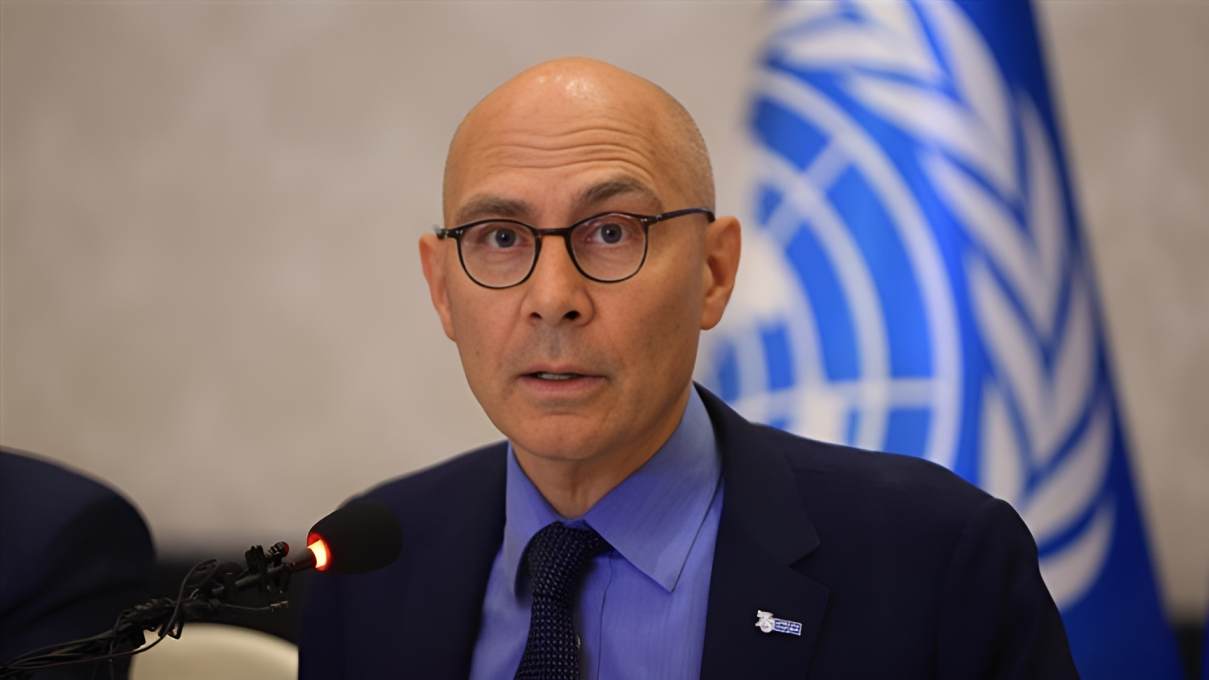
The United Nations has accused the Ugandan government of tightening its grip on opposition leaders, civil society and the media, warning that the country's shrinking civic space is creating fear and weakening basic freedoms ahead of a tense political period.
UN High Commissioner for Human Rights Volker Türk on Thursday, July 30, said Uganda was witnessing a worrying rise in actions targeting critics of the government, saying the continued crackdown was weakening the rule of law while increasing the role of the military in civilian institutions.
According to Türk, the developments under President Yoweri Museveni's administration have left many Ugandans living in fear as restrictions on fundamental freedoms continue to grow.
"I am appalled that the authorities are increasingly targeting any form of dissent and deepening restrictions on the fundamental freedoms of all those living in Uganda," Türk said.
His statement came hours after opposition leader Kizza Besigye was admitted to the Intensive Care Unit after collapsing during a court appearance in Kampala.
The 70-year-old, who is facing treason charges, reportedly lost consciousness while appearing before the court before he was rushed to hospital by ambulance.
His wife, Winnie Byanyima, who heads the United Nations AIDS programme (UNAIDS), announced his condition in a post on X.
"He is unconscious, unable to speak, and unresponsive even to a pain stimulus," Byanyima wrote.
Türk said the pressure on opposition figures has intensified since Uganda's January 15, 2026, general election, revealing that at least 50 opposition leaders and supporters have been arrested during that period.
He also raised concern over the treatment of journalists, saying five media workers have been subjected to enforced disappearances, torture, ill-treatment and arbitrary arrests since the beginning of the year, in cases that fall short of international human rights standards.
"The actions of the authorities are creating a climate of fear that is increasing self-censorship, further stifling public debate and deepening polarisation," Türk said.
The UN rights chief called on the Ugandan government to meet its obligations under international human rights law, the African Charter and the Ugandan Constitution by protecting freedom of expression and other fundamental rights.
Türk also urged the Museveni administration to use renewed international financial support and available economic opportunities to tackle long-standing structural challenges while building an economy that places human rights at its centre.