
From reducing the number of people held in prisons to making it easier for farmers to obtain loans without rushing to sell their harvests, President William Ruto’s Cabinet has approved a series of proposed changes targeting some of the challenges facing Kenyans and businesses.
The package also seeks to strengthen safety standards in the construction industry, widen access to insurance, simplify business licensing and attract more investment through improved regulation and international partnerships.
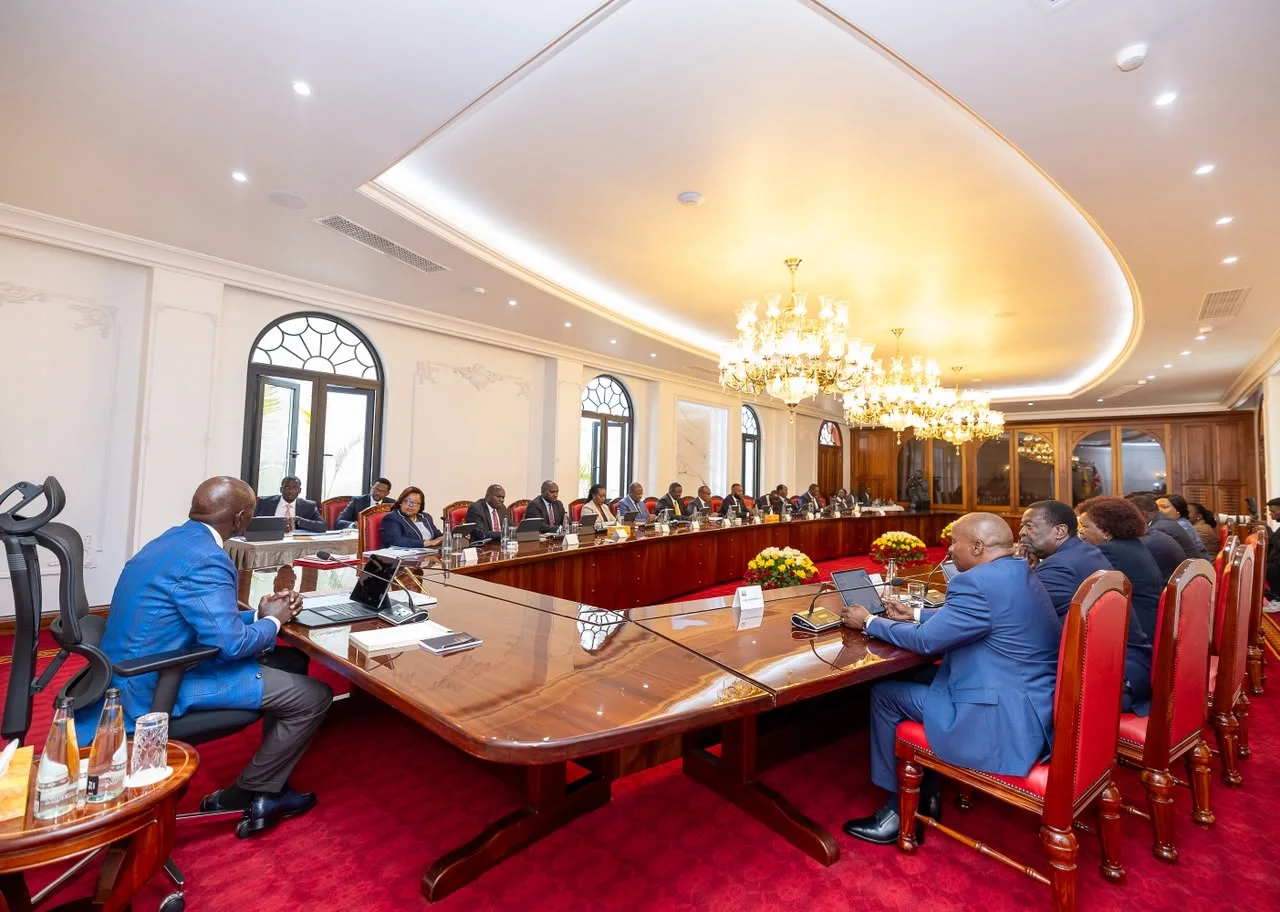
The proposals were approved during a Cabinet meeting chaired by President Ruto at State House, Nairobi, on October 9, 2026.
They cover several sectors, including justice, construction, agriculture, insurance and investment, with the government seeking to improve public services and strengthen the rules governing professional and commercial activities.
The measures include the Prisons Bill, 2026, the Probation of Offenders Bill, 2026, and the Architectural and Quantity Surveying Practitioners Bill, 2026.
The proposed laws are expected to change how correctional services are managed, expand the use of alternatives to imprisonment and introduce stricter requirements for professionals working in the construction sector.
Cabinet seeks new ways to address prison overcrowding
The government is proposing changes to the correctional system that would give greater attention to prisoners’ rights, rehabilitation and the challenges caused by overcrowded facilities.
The Prisons Bill, 2026, and the Probation of Offenders Bill, 2026, seek to align the management of offenders with the Constitution while improving conditions in prisons and supporting efforts to prepare inmates for life after release.
"It sets the stage for an overhaul of Kenya’s correctional system to align it with the Constitution, safeguard prisoners’ rights and tackle overcrowding," the Cabinet dispatch reads in part.
One of the main proposals is to promote alternatives to imprisonment for offenders who meet the required conditions. This would allow eligible offenders to be handled through other measures rather than being sent to prison in every case.
The proposed approach places greater emphasis on rehabilitation and helping offenders return to their communities while maintaining public safety. It is also intended to ease pressure on correctional facilities and improve the conditions in which prisoners are held.
Through the planned changes, the government hopes to strengthen rehabilitation programmes and support the reintegration of offenders into society. The proposals form part of broader efforts to improve the justice system and ensure that the treatment of offenders takes account of their rights and the need to protect the public.
Construction industry faces stricter oversight
The Cabinet has also approved a proposed law that would overhaul the rules governing architects, quantity surveyors and other professionals involved in construction projects.
The Architectural and Quantity Surveying Practitioners Bill, 2026, seeks to replace the existing legislation, which dates back to 1934, with a framework that introduces tighter controls over professional practice.
Under the proposed law, practitioners would be required to renew their practising licences every year. A new regulatory board would also be empowered to inspect construction sites and strengthen supervision of professionals working in the industry.
The scope of regulation would be expanded to cover landscape architects, interior designers and construction project managers, bringing more professions involved in construction and project planning under the proposed framework.
The Bill also proposes penalties for people who work without the required qualifications and those who falsely claim to be registered or licensed. Offenders could face fines of up to Sh2 million or a prison term of up to two years.
The proposed penalties are intended to discourage unqualified practice and strengthen accountability across the industry. The government seeks to protect the public from risks linked to professionals who lack the required qualifications or operate without proper approval.
The planned changes would also give regulators greater powers to monitor professional conduct and check compliance with licensing requirements.
New agricultural laws target better prices and easier loans
Farmers are also expected to be affected by the Cabinet decisions, which include approval of the Geographical Indications Bill, 2026, and the Warehouse Receipt System (Amendment) Bill, 2025.
The two proposals seek to improve the value farmers receive from their produce, protect Kenyan products from imitation and create more opportunities for producers to access markets and financing.
The Geographical Indications Bill is designed to protect products with distinctive qualities or identities linked to their origin. By protecting these products against imitation, the proposed law could help producers build stronger market recognition and seek better prices both in Kenya and abroad.
The measure is also intended to give buyers a clearer way to identify products with recognised characteristics, helping producers establish their place in competitive markets.
The proposed changes to the Warehouse Receipt System focus on storage, reducing post-harvest losses and improving access to credit.
Under the planned arrangement, farmers would be able to deposit their produce in certified warehouses and receive receipts that could be presented as security when applying for loans.
This would offer farmers an alternative to selling their harvest immediately after picking or collecting it, especially when market prices are low. Instead, they could store their produce safely and use the receipts to seek financing while waiting for more favourable prices.
The changes are expected to reduce pressure on farmers to sell quickly, strengthen agricultural value chains and improve access to formal loans.
By making stored produce useful as security for financing, the proposed system seeks to give farmers more options when deciding when to sell their crops and how to meet their financial needs.

Insurance policy seeks to reach more Kenyans
The Cabinet has adopted the National Insurance Policy, 2026, in a move aimed at widening access to insurance and making cover more affordable for households and businesses.
Farmers, informal sector workers and small businesses are among the groups the policy seeks to reach, as the government looks to address the limited uptake of insurance services in the country.
Insurance penetration is estimated at 2.45 per cent, a figure that points to the limited reach of insurance across the population.
The policy proposes stronger protection for consumers, closer supervision of insurance companies and fairer business practices. It also includes measures to tackle insurance fraud.
Another part of the plan involves expanding digital insurance services and improving the industry's ability to cover climate-related disasters and other emerging risks.
The proposed changes seek to help households and businesses cope with unexpected losses that could threaten their income, livelihoods or daily operations.
Wider access to insurance is also expected to increase the number of people and enterprises protected against financial shocks while improving public confidence in insurance providers.
The government intends to make insurance more accessible to groups that may have difficulty obtaining suitable cover, while strengthening oversight of the industry.
Business licensing and investment plans receive Cabinet backing
The Cabinet has also endorsed measures to simplify business licensing and remove unnecessary regulatory barriers that may make it harder for enterprises to operate.
The proposals are intended to improve the business environment by making licensing requirements easier to navigate and reducing obstacles facing investors.
In another decision, the Cabinet supported the establishment of a European Bank for Reconstruction and Development office in Nairobi. The move is expected to improve access to investment financing and deepen economic cooperation.
The Cabinet also backed double taxation agreements with Belgium and the Czech Republic. These arrangements are intended to strengthen economic relations with the two countries and provide a framework for dealing with tax matters affecting cross-border business and investment.
The proposed agreements are part of efforts to support economic ties and address tax issues that may arise when businesses and investors operate in more than one country.
The Cabinet further supported proposed space cooperation arrangements with South Africa and Kazakhstan. The plans are expected to create opportunities for joint work in the growing space sector.
Together, the business and international cooperation measures are intended to improve the conditions for investment, strengthen relations with foreign partners and create opportunities for economic collaboration.
Proposed changes await legislative processes
The Cabinet's decisions cover a wide range of areas, from the treatment and rehabilitation of offenders to construction standards, agricultural financing, insurance access and investment.
The proposals seek to improve oversight, widen access to services and address challenges affecting individuals, farmers, professionals and businesses.
However, Cabinet approval does not mean the proposed Bills have already become law. They will have to go through the relevant legislative processes before taking effect.