
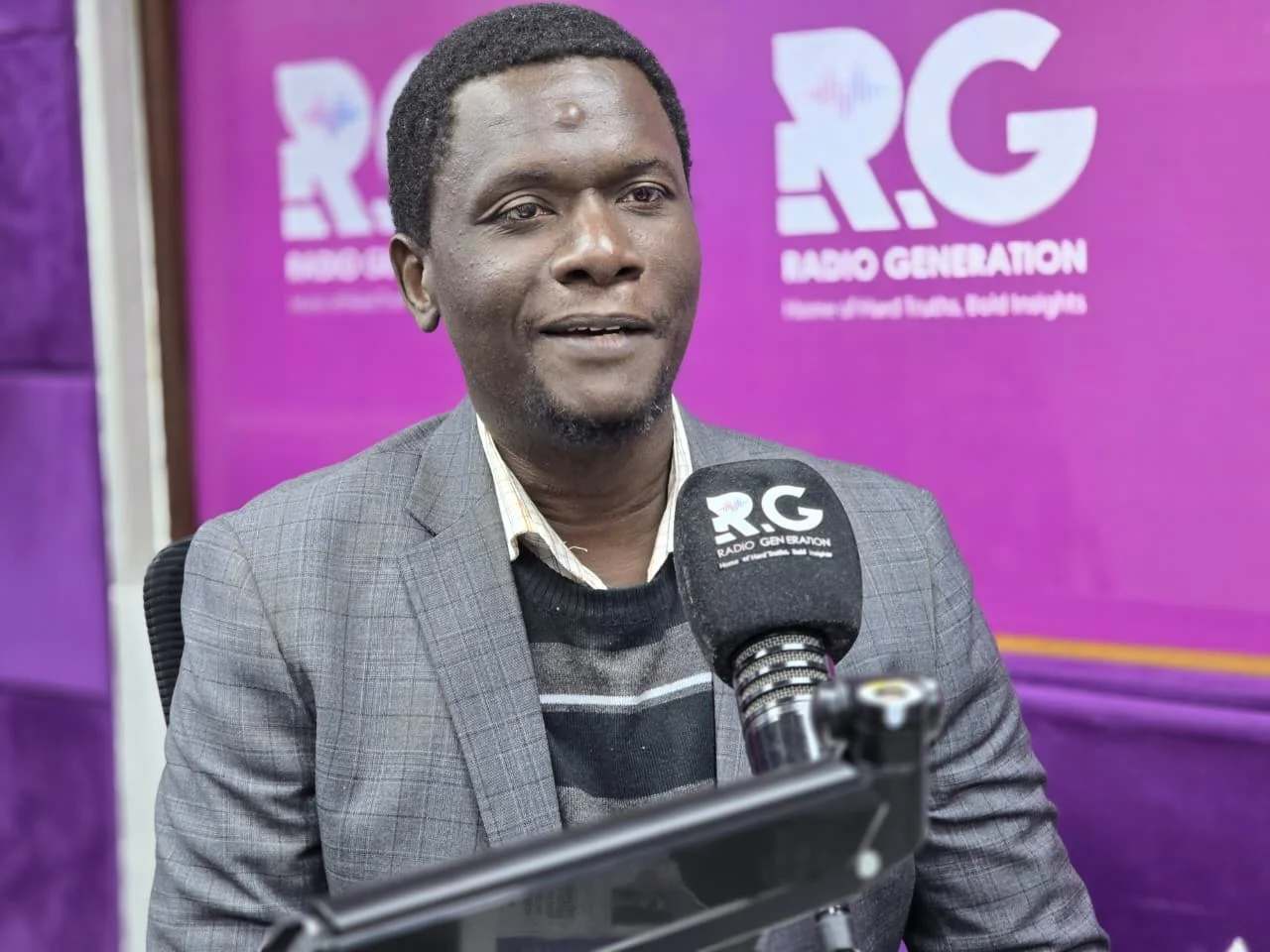
The Orange Democratic Movement (ODM) faces an uncertain political future following the death of its longtime leader Raila Odinga, with economist Odhiambo Ramogi warning that the party could lose its national appeal as rival leaders seek to win over his supporters.
Ramogi said Raila had played a central role in bringing together communities that felt excluded from political leadership, building a political movement that extended beyond his Luo community. He warned that the absence of the former Prime Minister had exposed divisions within the party and raised questions about who could command the loyalty of his broad support base.
Speaking on Radio Generation on Friday, Ramogi described Raila as a unifying figure whose influence helped ODM maintain its position as a national political force.
“Baba was the glue that held together the other side of the country,” Ramogi said, explaining how Raila brought together communities that felt marginalised and gave them a common political platform.
He said Raila’s death had triggered a contest for his political influence, with several leaders seeking to position themselves as his possible successors both nationally and within the Luo community.
The economist questioned whether ODM could preserve the broad support it enjoyed under Raila or gradually turn into a party largely identified with one community. He said the emergence of competing political groups and demands for space from younger leaders could further weaken the party.
Oburu struggles to fill Raila’s political shoes
Ramogi also expressed doubts about whether Oburu Oginga, who was appointed to lead ODM following Raila’s death, had managed to establish himself as the party’s new political kingpin.
“From where I sit, it feels like Oburu has not gotten to wear the shoes of kingpin successfully,” he said.
His remarks point to the challenge facing ODM as it seeks to maintain unity and direction without the leader whose political influence had shaped the party for decades.
Raila’s ability to bring together different communities and political interests had helped ODM build a wider national following. Ramogi suggested that maintaining that support would require the party to contend with leaders outside the Odinga family who could offer alternative political directions.
Ruto and Sifuna emerge as possible beneficiaries
Ramogi identified President William Ruto and Nairobi Senator Edwin Sifuna as among the politicians who could attract sections of Raila’s support base, despite not belonging to the Odinga family.
He said Raila’s supporters were increasingly divided, with some remaining loyal to the established political leadership while others appeared willing to consider alternative political options.
The economist singled out Sifuna as a figure gaining ground among younger supporters who may be looking for a different political direction.
“It looks like Edwin Sifuna is winning them over,” Ramogi said.
The senator’s appeal among some of these supporters could add to the pressure on ODM as it tries to retain its influence and prevent further divisions within its ranks.
Ramogi also pointed to the growing number of political parties and formations in regions where ODM has traditionally enjoyed strong backing, warning that the trend could erode the party’s electoral strength.
“If you go to Coast where ODM means nowadays, there are now two or three parties. Go to Nyanza, we have two or three parties,” he said.
He argued that the rise of competing political groups in both the Coast and Nyanza regions could make it harder for ODM to maintain its hold on elective positions.
According to Ramogi, the fragmentation could reduce the number of leaders elected on the party’s ticket by September 2027, as voters and politicians explore other political options.
Odinga family faces succession challenge
Ramogi acknowledged that members of Raila’s family could continue to play an important role in Kenyan politics but cautioned that several relatives seeking elective or senior political positions could face challenges.
He said having multiple members of the same family pursuing prominent political offices could create the impression that power was being retained through family succession rather than a wider political process.
Such perceptions, he suggested, could complicate efforts by the Odinga family to maintain its influence, particularly at a time when other leaders are seeking to attract supporters who previously looked to Raila for political direction.
The succession debate comes as ODM confronts questions about its leadership, its relationship with the government and its ability to remain a strong political force in the absence of its longtime leader.
Raila, who died in October 2025, was a central figure in Kenya’s opposition politics for decades. His political career was marked by his ability to build alliances across different communities and maintain a large following beyond his traditional support base.
His death has since intensified debate over who will shape ODM’s future, whether the party can preserve the coalition he helped build and how it will compete for support as the country moves towards the 2027 General Election.