
Panama is facing the aftermath of a powerful earthquake that damaged homes, brought down parts of buildings and forced people to flee hospitals and other structures as violent shaking spread across the country.
The magnitude 7.7 tremor struck south-central Panama on Friday, leaving residents worried about the safety of their homes, while emergency officials began assessing the destruction and monitoring further aftershocks.
The United States Geological Survey (USGS) estimated that about 4.6 million people experienced moderate to severe shaking, warning that the impact of the earthquake was likely to extend across a wide area.
The earthquake struck shortly before 3pm local time, or 18:00 GMT, with its epicentre about 10 kilometres (6.2 miles) from Pitaloza Arriba in south-central Panama.
Several towns reported damage, with videos circulating online showing buildings that had collapsed during the tremors. In one recording, a man could be heard shouting towards the remains of a collapsed building, apparently trying to establish whether anyone was trapped underneath.
Footage verified from the affected areas showed part of a cathedral in Penonomé collapsing, including one of its sides and a spire. Another video showed a hotel that appeared to have suffered extensive structural damage, with much of the building reduced to rubble.
The destruction left residents in several communities concerned about returning to their homes, particularly where walls had developed cracks or buildings appeared unstable.
Ricardo Brown, a 74-year-old resident of Las Minas in Herrera province, told Reuters that several houses in his neighbourhood had been damaged by the earthquake.
He described the fear he and other residents were experiencing as they tried to determine whether their homes remained safe.
"We're scared. It's just the two of us old folks here. The house has cracked and we're afraid it could fall on us," the 74-year-old said.
The full extent of the destruction was not immediately known, as officials continued working to establish the impact of the earthquake. Several strong aftershocks were also reported close to the original epicentre, adding to concerns among residents and emergency responders.
The earthquake was recorded at a depth of about 12 kilometres below the ground. Shallow earthquakes can cause severe damage because the energy released during the event has a shorter distance to travel before reaching the surface.
In Panama City, about 200 kilometres from the epicentre, the tremors prompted people to leave buildings and gather in open spaces. Some waited along roads and in nearby parks until the shaking stopped.
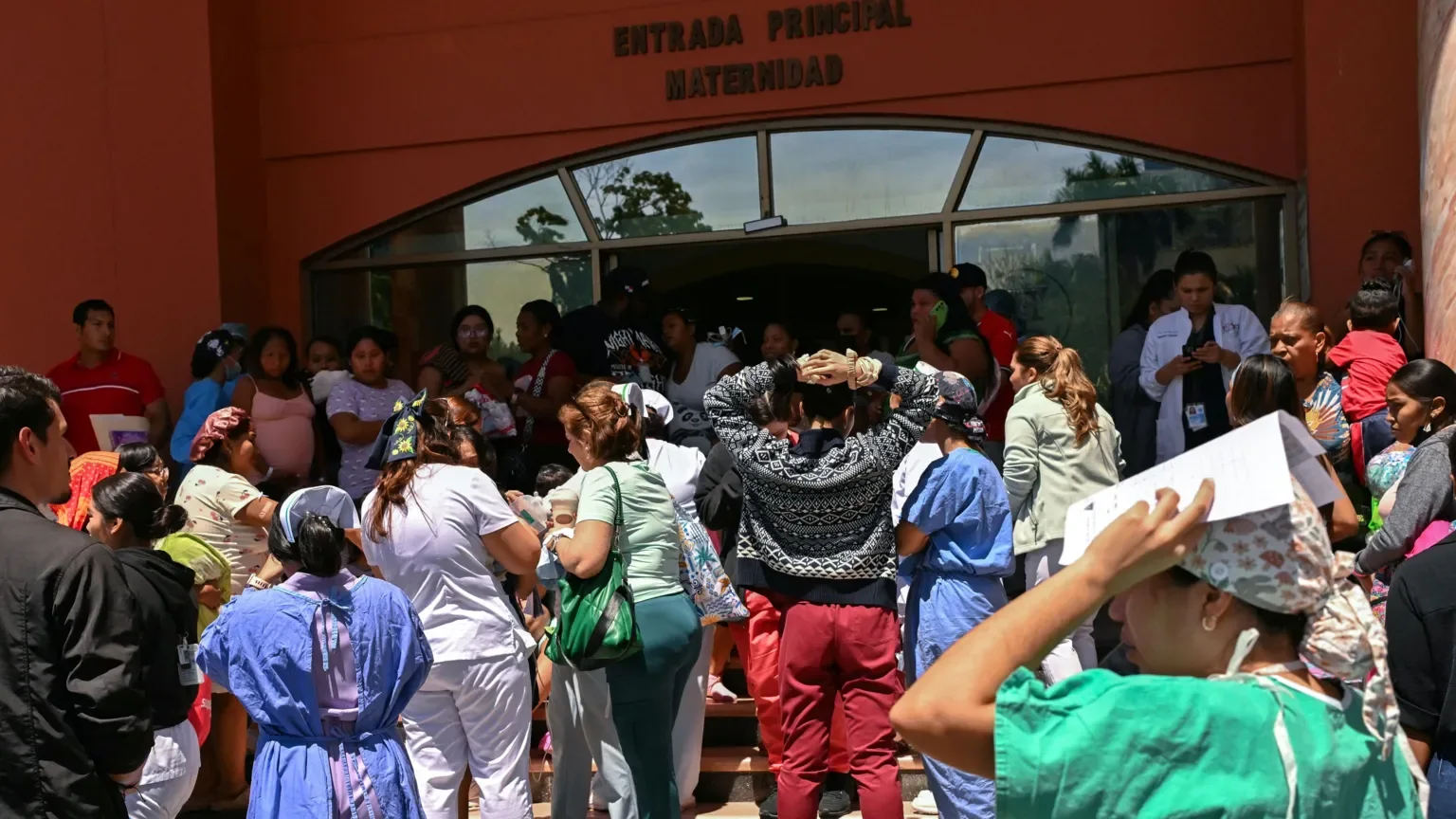
Damage in the capital appeared to have been limited mainly to debris falling from rooftops. However, buildings were evacuated as a precaution, including the maternity ward at Santo Tomas Hospital, where people were seen standing outside following the tremors.
President José Raúl Mulino said his government was mobilising to respond to the disaster and manage the unfolding situation.
The president also urged the public to remain calm, cautioning against actions that could trigger unnecessary panic or disorder.
"What happened should not be used to cause alarm or disorder."
The earthquake initially prompted tsunami warnings for 11 countries in the region, raising concerns about possible waves along nearby coastlines. The US Tsunami Warning System later confirmed that there was no tsunami threat.
Despite the damage reported in several communities, the Panama Canal continued operating normally, according to the authority responsible for managing the waterway.
The canal connects the Atlantic and Pacific oceans and serves as a major route for international shipping. Its continued operation was an important development as authorities worked to assess the effects of the earthquake on buildings and other infrastructure.
The disaster struck just three days before Panama was scheduled to conduct a nationwide evacuation drill aimed at preparing residents and emergency teams for a major earthquake.
The planned exercise was intended to test the country's readiness to respond to a large-scale emergency, but the powerful tremor brought those concerns into immediate focus.
The earthquake also followed devastating seismic events in Colombia and Venezuela earlier in the year, adding to concerns about the impact of major earthquakes in the region.
As the assessment continued, authorities faced the task of determining which buildings had suffered serious damage and whether residents could safely return to their homes. The reported collapses in several towns, the damage to residential properties and the evacuations in Panama City highlighted the risks posed by the powerful tremor.
Although no casualties had been reported in the account at the time, the possibility of further aftershocks remained a concern for people living in affected areas.
Officials continued to assess the damage while residents waited for clearer information about the condition of their homes and the safety of buildings weakened by the earthquake.