
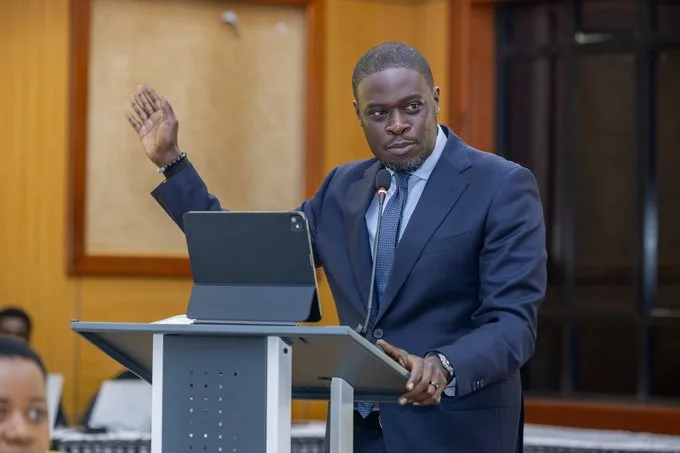
Nairobi Governor Johnson Sakaja has called for urgent government action to rescue the Sh80 billion development agreement between City Hall and the national government, revealing that the rollout of 40,000 planned streetlights has barely begun, with only three installed so far.
He warned that the slow progress reflects wider challenges affecting water infrastructure, garbage management and the city's school feeding programme, as funding disputes and disagreements with contractors continue to hold back key projects.
Speaking during the Second National Development Implementation Committee meeting in Nairobi on Monday, October 12, Sakaja urged government ministries and agencies to address the outstanding issues and ensure the agreement delivers the improvements promised to city residents.
The cooperation framework was signed on February 17, 2026, by the administration of President William Ruto and the Nairobi City County Government. It was intended to support infrastructure development, improve living conditions and address longstanding weaknesses in public service delivery.
However, Sakaja said implementation had been slower than expected, pointing to the streetlighting programme as one of the clearest examples of the challenges facing the agreement.
“Only three lights out of 40,000 have been installed. We have a challenge with the contractor. Please help us. Remember, the public has really been waiting for this,” he said.
The governor asked the national government to intervene in the dispute with the contractor, warning that residents had been waiting for the promised lighting improvements.
He also announced a new arrangement with the Kenya National Highways Authority (KeNHA) and the Kenya Urban Roads Authority (KURA) to clarify responsibility for electricity bills on roads managed by the two agencies.
Under the agreement, each agency will be expected to pay electricity costs for roads under its control. Sakaja explained that Nairobi County had previously been settling bills for roads managed by KURA, with unpaid charges sometimes resulting in streetlights being switched off.
He called for the arrangement to take effect in the current financial year while the county and the road agencies work towards resolving outstanding bills.
Nairobi's water shortage remains a major concern
Sakaja also highlighted delays affecting water projects, warning that the amount supplied to Nairobi remains well below the city's daily demand.
The governor said the city produces 525.6 million litres of water each day, against an estimated requirement of 900 million litres, leaving a considerable gap that continues to affect supply.
He noted that the Northern Collector Tunnel project had increased Nairobi's daily water supply by 140 million litres, helping improve access in areas that had previously struggled with unreliable service.
Among the areas benefiting from the additional supply are parts of Karen, Utawala, Ruai and Mihango.
Despite the improvement, Sakaja said more investment was needed to close the gap between supply and demand, identifying the Ngethu treatment plant and the Maragua Four project as important parts of the city's plans to secure additional water.
He explained that the Ngethu plant loses 30 million litres daily through backwash filtration. A proposed Sh5 billion project could address the losses and increase the amount of water available to Nairobi by 70 million litres each day.
The governor also pointed to the Maragua Four project, which is expected to deliver 180 million litres daily at a projected cost of Sh60 billion.
However, he said attempts to secure financing for the project through an infrastructure fund had failed to make progress. This has left external financing or direct government support as the remaining options for taking the project forward.
Another project facing difficulties is the expansion of the Kariobangi water treatment plant, where disagreements between the county and the contractor have stalled progress.
The planned works are expected to increase the facility's capacity from 30 million litres to 90 million litres daily. Sakaja said the proposed design, however, did not include power generation, which the county wants incorporated to reduce future electricity expenses.
He said the dispute had been referred to the relevant government offices for an executive decision.
Unreleased funds hold back waste management work
The governor said waste management projects were also struggling to advance because the national government had yet to release funds required under the agreed financing arrangement.
Under the plan, Nairobi County is responsible for 60 per cent of the costs, while the national government is expected to cover the remaining 40 per cent.
Sakaja maintained that the county was meeting its obligations but said the national government's contribution, allocated through the Ministry of Environment, had not been transferred to Green Nairobi.
“That has not moved, and we have engaged the contractor. We are doing our part as a city, but the money appropriated to the Ministry of Environment by the national government has not been released to Green Nairobi to address the issue,” he said.
Construction of a waste recovery facility intended to support recycling is continuing, but the governor said the contractor's operations had been affected by delayed payments.
He appealed to the National Treasury to intervene and help address the financing difficulties, revealing that projects worth Sh42 billion remained unfunded and required government backing.
Sakaja also raised concerns about a court order affecting water and housing projects, asking the Attorney General to provide guidance on how it should be interpreted.
According to the governor, the ruling was unclear and had prevented the steering committee from meeting, creating another obstacle to the implementation of the planned developments.
Sakaja wants city court reinstated to tackle vandalism
Beyond the stalled projects, Sakaja called for stronger measures against offences that damage public infrastructure and undermine service delivery.
He urged the Judiciary and the Office of the Director of Public Prosecutions to reinstate the city court and ensure prosecutors are available to handle cases involving illegal dumping, streetlight vandalism and destruction of energy infrastructure.
The governor cited a case in which 487 public streetlights were allegedly found at a suspect's yard, saying the county had encountered difficulties pursuing such cases under the existing prosecution requirements.
He argued that restoring the court and providing prosecutors to handle the offences would help the county take action against people accused of damaging public assets.
School meals programme awaits national government contributions
Sakaja further expressed concern over the national government's failure to meet its financial commitments to Nairobi's school feeding programme, which he said serves more than 300,000 children every day.
He reported that school enrolment had risen by more than 40 per cent, while attendance had reached 100 per cent, pointing to the programme's role in supporting learners.
The governor said the initiative was expected to reach 100 million meals served in November, but the national government had not made its agreed contributions since 2023.
Under the Shilling-for-shilling arrangement, the county and the national government are expected to share the cost of providing meals to learners. Sakaja said Nairobi had been left to carry the financial burden despite submitting invoices to the Ministry of Education.
He cited an initial claim of Sh1.4 billion and a subsequent invoice of Sh2.3 billion, urging the national government to release the money it had committed to the programme.
Sakaja added that the initiative had already been included in the ministry's budget, making it necessary for the responsible offices to ensure the funds are provided.
He called on ministries, government agencies and other relevant institutions to work together to settle the outstanding issues, resolve contractual disputes and secure financing for the projects.
The governor said coordinated action was necessary to move the delayed developments forward and ensure Nairobi residents benefit from the commitments made under the Sh80 billion agreement.