
The Orange Democratic Movement (ODM) has defended its broad-based political arrangement with President William Ruto’s administration, saying the strategy is aimed at positioning the party to form Kenya’s next government and implement the late Raila Odinga’s vision.
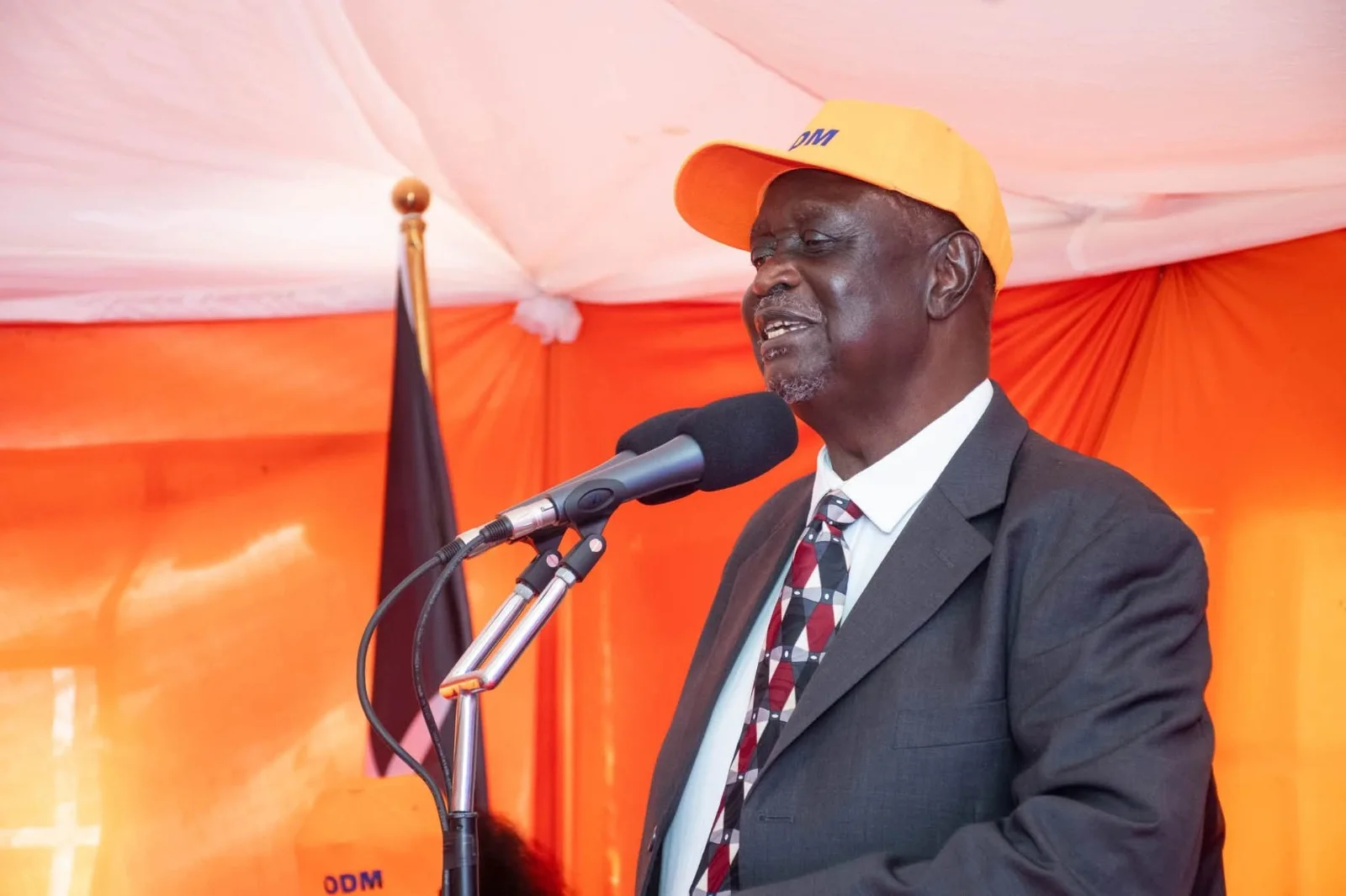
Speaking through Kisii Governor and ODM Deputy Party Leader Simba Arati, who delivered his remarks on his behalf at Migwena Grounds in Bondo, Siaya County, on Thursday, party leader Oburu Oginga said the arrangement was a deliberate political choice rather than a betrayal of the party’s principles.
Oburu argued that ODM’s participation in broad-based governance was consistent with its history of pragmatic engagement and efforts to promote national stability while pursuing its political objectives.
“I want to confirm to you today that Orange Democratic Movement’s current broad-based approach is neither a fallacy nor a betrayal of our long-standing struggle. Rather, it is a sophisticated, deliberate continuation of it. We have always been a party of pragmatic engagement, ready to make conscious patriotic choices to stabilise the republic when it matters most,” he said.
The remarks came as ODM marked the first anniversary of Raila’s death, with the party outlining its political direction ahead of the next General Election scheduled for August 10, 2027.
Oburu maintained that the party needed to move beyond defending constitutional reforms and focus on securing the political power necessary to implement its economic and governance agenda.
“Baba gave this nation its greatest shield, the Constitution of Kenya, 2010, which comprehensively enshrines our fundamental rights and democratic freedom. However, we must now boldly move past the phase of merely defending the text and enter the critical phase of realisation through practical implementation,” he stated.
He added that ODM could not fully implement its proposals on economic equity, devolution and institutional integrity while operating from the political periphery.
“The blueprint of economic equity, genuine devolution, and institutionalised integrity requires real power. The best, most effective way for us as a political party to fully realise Baba’s vision for Kenya is to strategically position ourselves to form the next government,” Oburu maintained.
The broad-based arrangement emerged from efforts to ease political tensions following the anti-government protests that swept across Kenya in 2024, driven largely by opposition to proposed tax increases and broader grievances over governance and the cost of living.
On March 7, 2025, President Ruto and Raila signed a cooperation agreement between the ruling Kenya Kwanza alliance and ODM at the Kenyatta International Convention Centre in Nairobi. The framework was publicly outlined on March 8, 2025, committing the two sides to cooperation on national unity, youth unemployment, inclusive governance, integrity in public service, and economic transformation.
Ruto maintained at the time that the agreement was not about power-sharing or the 2027 election. However, the partnership became a significant development in Kenya’s political landscape, bringing together leaders who had contested against each other in the 2022 presidential election.
Oburu’s latest remarks suggest ODM is seeking to use the arrangement as a platform for strengthening its political influence and advancing its longer-term ambition of leading the government.
He said the party was already laying the groundwork by consolidating its numbers and strengthening its structures, insisting that its political direction remained unchanged despite Raila’s death.
“Raila left us a robust institutionalised political movement. His temporary physical absence changes nothing about our trajectory. Our leadership is structurally fully acting and fully empowered to execute our progressive agenda,” he maintained.
With the 2027 election approaching, Oburu urged ODM members to maintain unity and discipline as the party navigates its relationship with the government and prepares for the next electoral contest.
“Let us honour Baba’s memory today by maintaining the discipline, the focus, and unwavering faith that he modelled for decades. Do not be distracted by outside noise or unfounded rumours. The party machinery is operating at peak efficiency.”
He maintained that ODM would continue defending democratic gains and pursuing economic liberation, arguing that securing national leadership offered the most effective route to translating Raila’s political ideals into government policy.
The remarks place the pursuit of state power at the centre of ODM’s post-Raila strategy, while seeking to reassure supporters that the broad-based arrangement remains consistent with the party’s long-term political ambitions.