
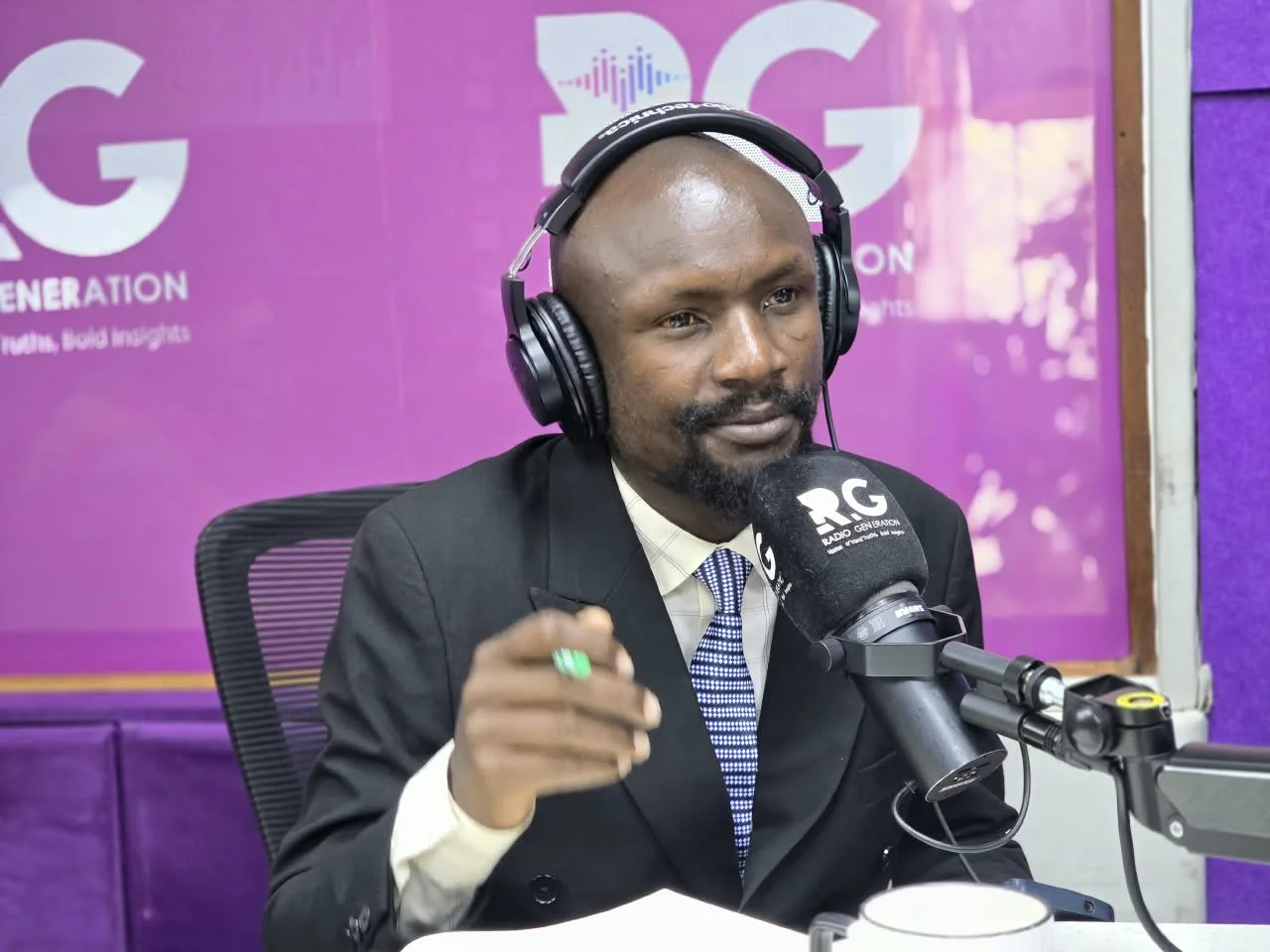
Narok governor aspirant Elphas Kimutai Murbii has put youth leadership at the centre of his campaign, saying young people should stop waiting for change and take up positions where they can turn their ideas into action.
Speaking on Radio Generation on Friday, Murbii said he was seeking the county’s top seat to give young people a bigger role in leadership while pushing for changes in key sectors, including healthcare, agriculture, education and management of public resources.
“I think it's now the time for the young people to come out and now implement the ideas, to come on board and ensure that whatever you have been agitating for since time immemorial, you are now trying to put it into action,” he said.
Murbii said his plans would also focus on strengthening devolution, protecting Narok’s cultural heritage and improving accountability in the use of public funds.
He argued that more than a decade after the introduction of devolved government, Narok still faced gaps in systems and institutions needed to ensure residents fully benefit from county government.
“There are no systems in place. There are no structures in place. Institutions are not in place. There are no results,” Murbii said.
He said his administration would work to put in place systems aimed at improving service delivery across the county.
Healthcare is among the areas he identified as a priority, with a proposal to upgrade Level Four hospitals to Level Five facilities across Narok.
Murbii also said he would strengthen agricultural extension and veterinary services, pointing to the role of farming and livestock keeping in supporting the county’s economy.
On education, he proposed the establishment of a polytechnic in every ward. He said the county government would fully fund the courses offered at the institutions to make them free.
The governor aspirant also proposed setting up museums across Narok as part of efforts to preserve and promote Maasai culture and other aspects of the county’s heritage.
Narok covers about 17,933 square kilometres and borders Tanzania to the south, as well as Kajiado, Nakuru, Bomet, Kisii, Migori and Nyamira counties.
The 2019 census put the county’s population at 1,157,873, while a county government assessment projected the population at about 1.31 million in 2023.
Narok has eight administrative sub-counties and 30 wards.
Agriculture, livestock production, tourism and trade form the main pillars of the county economy. County government documents list wheat, barley, maize, beans, Irish potatoes and horticultural crops among the main agricultural products, while livestock keeping remains an important economic activity.
The county is also home to the Maasai Mara Game Reserve, which covers about 1,510 square kilometres. County planning documents identify tourism, large-scale beef production, renewable energy, filming and minerals as areas with economic potential.
Gold mining is carried out around Lolgorian, while sand and quarrying activities take place in parts of Narok South and Narok East.
The Mau Forest Complex also extends into Narok and plays a role in the county’s water, agricultural and environmental systems.
Murbii said Narok could raise more money from its available resources if they were managed effectively.
He said the county receives about Sh12 billion in equitable share and collects more than Sh5 billion in own-source revenue, arguing that there was still room to increase revenue.
Official county and national figures in the supplied data give lower figures for the 2024/25 financial year. Narok projected Sh9.53 billion in equitable share and Sh4.98 billion in gross own-source revenue for the year.
The county’s approved 2024/25 budget stood at Sh15.68 billion, with Sh5.16 billion set aside for development and Sh10.53 billion for recurrent expenditure.
The 2025 Economic Survey reported Narok’s equitable share at Sh9.24 billion and own-source revenue at about Sh5.02 billion based on 2024/25 estimates.
Narok has had two governors since county governments were established under the 2010 Constitution. Samuel Kuntai Tunai became the first governor in 2013 and served two terms before Patrick Ole Ntutu took over in 2022. Ntutu remains the incumbent governor.
The county government's 2023–2027 County Integrated Development Plan lists healthcare, agriculture, infrastructure, education, water, youth empowerment and job creation among its development priorities.
Murbii said his proposed approach to running the county would involve directing more resources towards areas capable of generating economic activity instead of spending heavily on consumption.
“The counties have been turned into more of a consumption unit instead of being a productive unit,” he said.
He said better accountability, stronger revenue collection and greater investment in productive sectors would be needed to make devolution deliver more visible and measurable benefits to residents.
His proposal places youth participation, improved public services, revenue generation and investment in Narok’s economic sectors at the centre of his bid for the governor’s position.