
Kenya should judge the success of the Competency-Based Curriculum by what learners can do, the values they demonstrate and the quality of education they receive, rather than simply measuring how far the new system has been rolled out, a school educationist has said.
Simon Thuo Kung’u, Deputy Principal Academics at Pioneer Group of Schools, said the country still had major questions to answer on whether CBC had achieved the goals that informed its introduction.
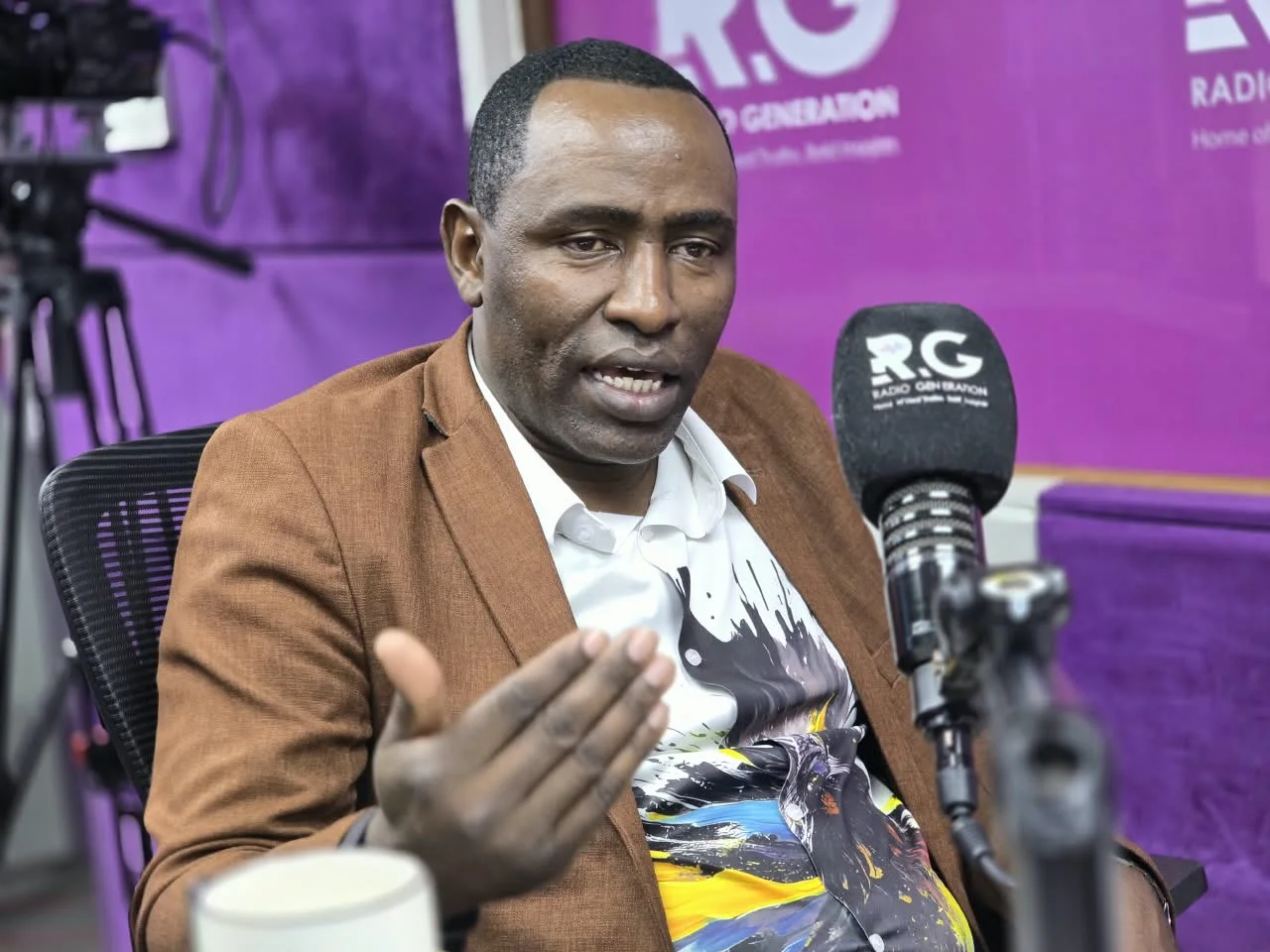
Speaking on Radio Generation on Thursday, Kung’u said the assessment of the curriculum should focus on whether learners were gaining stronger skills and values and receiving better education than those who went through the former 8-4-4 system.
His comments come as Kenya continues with the shift from 8-4-4 to CBC, which puts more focus on competencies, values, practical skills and continuous assessment instead of relying mainly on major examinations.
The Kenya Institute of Curriculum Development (KICD) has structured CBC into Early Years Education, Middle School Education and Senior School.
The system provides for three years of upper primary followed by three years of junior secondary education and another three years of senior school.
Assessment under CBC is also designed to take place throughout the learning process. Teachers are expected to use evidence from learners’ work to improve teaching and provide support, rather than depend only on one major examination to measure achievement.
Kung’u said Kenya should also assess the curriculum against the country’s commitments under the Sustainable Development Goals and Vision 2030.
He pointed specifically to Sustainable Development Goal 4, which calls for inclusive and equitable quality education and lifelong learning opportunities for all.
“Our education system is guided by the Sustainable Development Goals adopted in 2015, as well as Kenya’s Vision 2030. In particular, SDG 4 focuses on education and seeks to ensure that all citizens have access to quality education,” he said.
SDG 4 also seeks to ensure that children and young people reach minimum levels of ability in reading and mathematics.
Kenya’s official SDG data shows that reading proficiency among learners in Grades 2 and 3 has improved, with the share attaining the minimum proficiency level rising from 39.9 per cent in 2015 to 52.7 per cent in 2018 and 78.4 per cent in 2023.
Kung’u said such results should be considered alongside other measures when determining whether CBC is producing better outcomes than the previous system.
“If we have our pocket, maybe in future or even today, exactly to exactly now trying to look at: Have we achieved this? Our students are better in terms of our skills than what we had in 844; can we say that our learners are more behaved than maybe the other system?
The educationist, who has 21 years of teaching experience, admitted that CBC had not met all its targets but said there was still room to improve the system.
“We have not been able to achieve this to a larger extent. However, there is still hope for this. Maybe that's why we are here,” Kung’u said.
The implementation of CBC has continued to spread across the education system, with KICD providing curriculum designs and learning materials from pre-primary to Grade 12, covering both junior and senior school.
But Kung’u also raised concerns about the role given to teachers and other education stakeholders in decisions on curriculum changes.
He said those working directly with learners should have been more involved in shaping the reforms, arguing that their experience could help identify problems during implementation and improve the system.
“As stakeholders, particularly those in the private education sector, we expected to be involved more meaningfully in the process. While we do not necessarily disagree with the reforms that have been introduced, I believe the level of stakeholder participation was not adequate,” he said.
Kenya’s National Education Sector Strategic Plan for 2023-2027 lists curriculum and assessment among the key areas of reform, alongside measures aimed at improving learning outcomes and maintaining standards in teaching and learning.
For Kung’u, however, the real measure of CBC will be the quality of learners it produces.
He said the focus should ultimately be on whether pupils and students complete their education with useful competencies, strong values and practical abilities that show clear progress from the 8-4-4 system.
The debate over CBC is therefore moving beyond the question of whether the new curriculum has been introduced to whether it is delivering the skills, values and quality of learning that Kenya expects from its education system and its commitment to SDG 4.