
Kenya must tighten disease surveillance, border screening and the sharing of health information with neighbouring countries to stop the first imported Bundibugyo Ebola case from developing into wider community transmission, health analytics expert Faith Okwisa Okwayo has said.
Okwayo said Kenya cannot afford to lower its guard following confirmation of the case, especially as Ebola continues to spread in the Democratic Republic of Congo (DRC) and has crossed into Uganda.
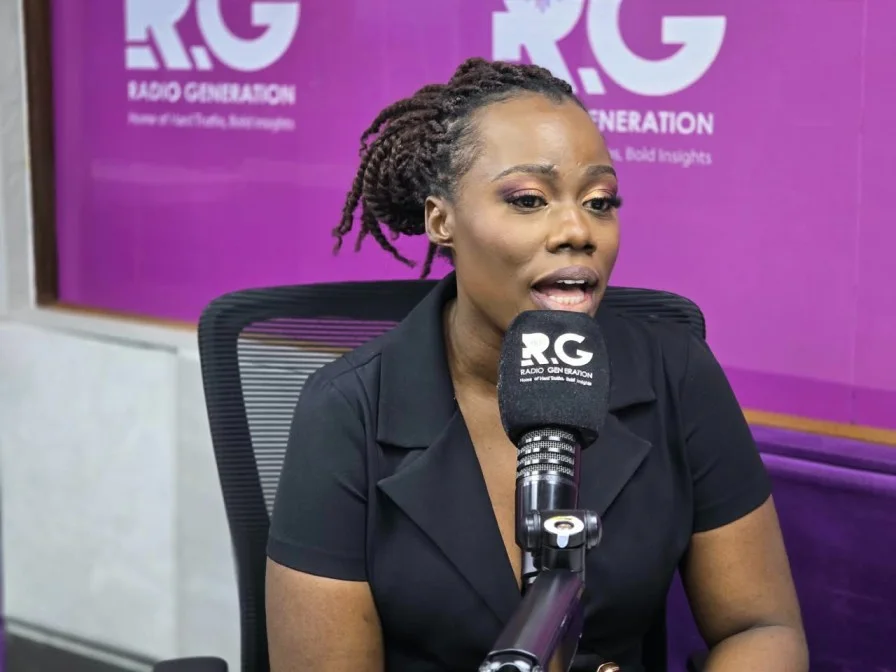
Speaking on Radio Generation on Thursday, October 8 2026, Okwayo, who is the Director of Partnerships at Afyanalytics and Chairperson of the Chronic Disease Society of Kenya, said early detection, fast testing and a quick response would be key to keeping the imported infection from gaining a foothold in the country.
The Ministry of Health confirmed on October 6 that a Kenyan national who had been living in the DRC had tested positive for Bundibugyo Ebola after travelling by road to Kampala before flying to Nairobi.
The patient arrived at Jomo Kenyatta International Airport on October 3 and was isolated before being transferred to an isolation facility, where he later died.
Although the government has maintained that the case is imported and does not amount to an Ebola outbreak in Kenya, Okwayo said the development should still be treated with a high level of caution.
“One is one too many. It's not defined as an outbreak according to WHO standards, but one is one too many. And for me, I think that one, if you look at differential equations, that one could lead to, based on the contact points, almost like 30, because you're looking at the taxi transfers, the elevators.”
She said the priority should be to stop the chain of infection before it grows into several linked cases and clusters that would be harder to control.
Health authorities have identified 28 contacts, including family members and healthcare workers, and are also working to trace 23 passengers and four crew members who were on the same flight as the patient.
The warning comes as the DRC continues to deal with a major Ebola outbreak. According to the World Health Organization, the country had recorded 7,890 confirmed cases and 3,799 deaths by September 23, 2026, giving the outbreak a crude case fatality ratio of 48.1%.
Cases had been reported in 63 health zones spread across seven provinces, with WHO describing the situation as the largest Ebola outbreak ever recorded in the DRC.
Uganda has also reported Ebola cases linked to the regional spread, with imported infections followed by secondary cases among contacts and healthcare workers.
Okwayo said the movement of people across borders makes it difficult for one country to manage the threat alone, and called for closer cooperation between Kenya, Uganda, the DRC and other countries in the region.
“Health is a global common. Health transcends borders. Health we cannot joke. It's a human right, and it's a global common. So those are some of the areas we need to collaborate.”
She called for stronger screening at airports and land border crossings, pointing to the large number of truck drivers, transport workers and other travellers moving between East and Central African countries.
“The moment your neighbor has a problem. Do not, for a single second, assume you don't have the problem because you have citizens of your country going to those places as well, and you have citizens from that country coming to yours as well.”
The government says it had screened 652,584 travelers and tested 267 samples across five laboratories by October 6 as part of efforts to prevent further spread.
The National Virology Reference Laboratory, KEMRI laboratories in Nairobi and Kisumu, and mobile laboratories at the Busia and Lwakhakha border points are supporting testing.
The Ministry of Health has also trained 4,971 healthcare workers at national and county levels on Ebola prevention and case management.
Okwayo said Kenya should go further by expanding real-time health information systems and strengthening laboratory services so that suspected cases can be detected and tested as early as possible.
She noted that the early signs of Ebola can look like those of other illnesses, making it important for health workers to consider testing sooner where there is a possible exposure risk.
“We should start testing highly flu-like symptoms for Ebola before they get to the symptoms profile.”
She also urged hospitals and other health facilities to improve screening, sample collection and reporting systems to ensure suspected infections are quickly identified and referred for testing.
Communities, she said, also have a role to play by remaining alert, understanding the risks linked to Ebola and reporting suspected cases and emergencies without delay.
Early action is important because delays in identifying Ebola cases can allow the virus to spread within households, communities and healthcare facilities.
WHO has therefore identified disease surveillance, contact tracing, clinical preparedness, infection prevention and control, community engagement and cooperation between countries as key parts of the response to the regional outbreak.
Okwayo said Kenya's ability to prevent further transmission would depend on bringing these measures together while ensuring health information is shared quickly between countries.
She said stronger cooperation, better surveillance, faster testing, and timely information sharing would give Kenya a better chance of containing the imported infection before it develops into wider community transmission.