
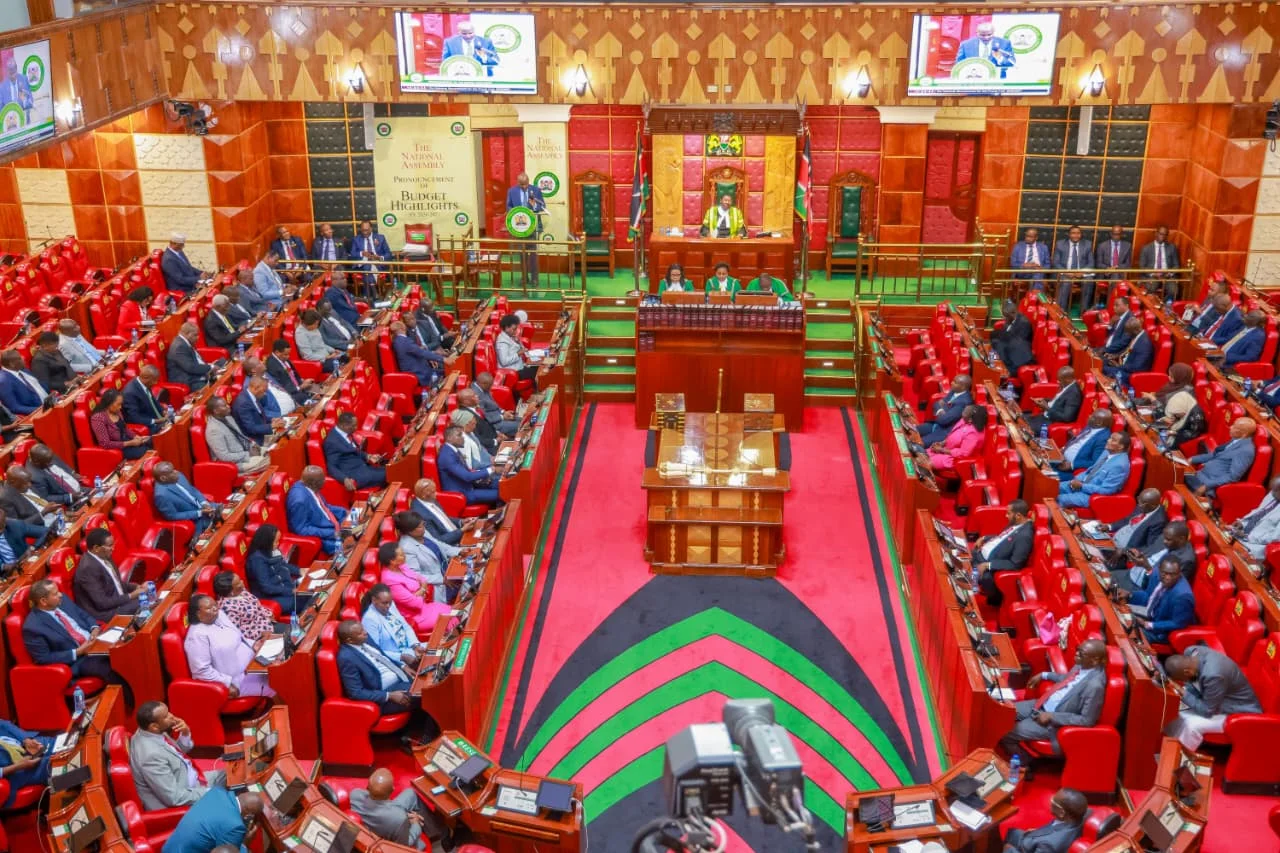
The high cost of running elections and a proposal to pack up to 1,000 voters into a single polling station triggered a heated debate in the National Assembly on Thursday, as MPs examined sweeping changes to Kenya’s electoral laws.
Lawmakers took opposing positions on whether increasing the current ceiling of 700 registered voters per polling station would make elections cheaper or create difficulties for voters in areas with unique social and geographical needs.
The disagreement emerged during debate on the Elections (Amendment) (No. 2) Bill (Senate Bill No. 29 of 2024), a consensus Bill arising from the National Dialogue Committee (Nadco) process.
The proposed law contains a range of changes touching on voter registration, transmission of results, candidate qualifications, independent candidates, the recall of MPs and the conduct of elections.
Justice and Legal Affairs Committee chairman Gitonga Murugara said the Bill was the result of extensive public consultations and efforts to reach consensus following a parliamentary resolution made in 2023.
National Assembly Majority Leader Kimani Ichung’wah backed the Bill, saying amendments were needed to strengthen the electoral process and help the Independent Electoral and Boundaries Commission (IEBC) conduct credible elections.
He maintained that results announced at polling stations in line with the Constitution should remain the final results.
“The IEBC has an obligation to conduct free, fair and credible elections. This House must facilitate the IEBC by ensuring necessary amendments are made,” Ichung’wah said.
He also said political parties should ensure their nomination exercises are free and fair, revealing that he would seek an amendment aimed at making party nominations more transparent.
But the proposed increase in the number of voters per polling station quickly became a major point of disagreement.
The Justice and Legal Affairs Committee wants the maximum number of registered voters at a polling station raised from 700 to 1,000.
According to the committee, the change would help reduce the cost of elections, in line with a proposal from the IEBC. It also wants the minimum requirement of 50 voters removed to allow the electoral commission to make arrangements for sparsely populated and far-flung areas.
Kesses MP Julius Rutto rejected the proposal, calling it “very insensitive”.
He said election officials should have enough flexibility to take account of the different circumstances in communities across the country.
“We need to appreciate the fact that our society is unique. Whether in terms of family setup, religious setup, and so on, we need to accommodate these unique challenges,” Rutto said.
Molo MP Kuria Kimani approached the matter from the cost of elections, questioning the amount of money spent to conduct each vote.
“In 2022, it was approximately Sh2,600 per vote. How does that compare with other jurisdictions? In South Africa, it costs four times more in Kenya than it does in South Africa. At the same cost as one vote in Kenya, four votes could be cast in South Africa,” he said.
Kimani questioned why such a large amount should be spent on elections when the money could be used for other national priorities.
He also raised questions over the price of ballot papers, arguing that an A4-sized ballot paper should not cost anything close to Sh2,600.
The MP compared the figure with the reported Sh6.84 cost of printing a banknote fitted with security features.
Ichung’wah also questioned the scale of resources devoted to elections, saying Kenya’s polls attract heavy policing and monitoring because political players do not trust one another.
“I have been on an observer mission in the US and the UK, and you realise that the most heavily policed or monitored elections you will ever find anywhere in the world are in Kenya, because we lack trust in each other,” he said.
He said the IEBC would be the largest spender in the next national budget because of the elections, raising questions about the value obtained from the huge public expenditure.
The commission has estimated that the next election could require more than Sh60 billion.
Bondo MP Gideon Ochanda warned that some of the proposed changes could actually increase costs at polling stations.
He, however, supported another recommendation that would allow voters to inspect the register continuously.
“One thing that I think is important and very good in the amendment is the issue of continuous voter register inspection,” Ochanda said.
Beyond the voter cap and election costs, MPs also differed over who should qualify to contest for elective positions.
The committee has recommended removal of clauses introducing education requirements for candidates seeking election as MPs and MCAs.
It said the provisions had already been declared unconstitutional by the High Court.
Baringo Woman Representative Jematiah Sergon opposed the move, saying education and literacy were important factors in leadership and policy implementation.
“This is putting a rope around our necks and killing the importance of education. We already have problems in the counties today. Literacy level is a very integral component of leadership, and it is one of the reasons we have problems in executing policies,” she said.
Ugenya MP David Ochieng also rejected the proposed removal, arguing that Parliament sometimes suffers from inadequate capacity.
“Sometimes we are judged harshly, and it’s because we run a Parliament where even someone who did not go to Class 1 can gain access. It is wrong. You can’t run a Parliament where everyone can just walk in. Across the border in Uganda, for every seat, including that of an MP, you must have A-levels,” he said.
The committee has separately proposed deleting clauses that would effectively remove the current recall mechanism for MPs.
It said the grounds for recalling an MP proposed by the Senate would be difficult to measure and suggested that the matter be dealt with through separate legislation.
The Bill also proposes changes affecting voter registration during by-elections.
The committee wants a proposed section deleted that would have prevented a person who registered as a voter while registration was suspended for a by-election from contesting in the affected electoral area.
It said Section 26, which deals with additional disqualifications for registration of candidates, would be the proper place to address the issue.
Another proposed change would require the IEBC to correct a voter's details whenever an error is discovered during inspection of the register.
The proposal replaces “revise” with “rectify” to make clear that the commission has a duty to correct errors identified by voters.
For independent candidates, the committee wants restrictions on the similarity of symbols tightened.
Under the proposal, an independent candidate's symbol should not resemble that of another independent candidate within the same county or that of a political party.
The committee said the change would correct an error in a cross-reference and ensure the restriction applies to candidates within the same county.
The lawmakers are also considering changes concerning election information for persons with disabilities.
The committee has proposed deleting provisions that would require the IEBC to ensure election information is available in accessible formats.
It argued that making the requirement mandatory could create implementation difficulties, while people who need information in a particular format could request it.
On the post-election review, the committee wants the deadline for completing an evaluation of the polls extended from one year to 18 months.
The proposed changes therefore place the cost of elections, the organisation of polling stations, voter registration and the qualifications of candidates at the centre of the ongoing debate on how future elections should be managed.