
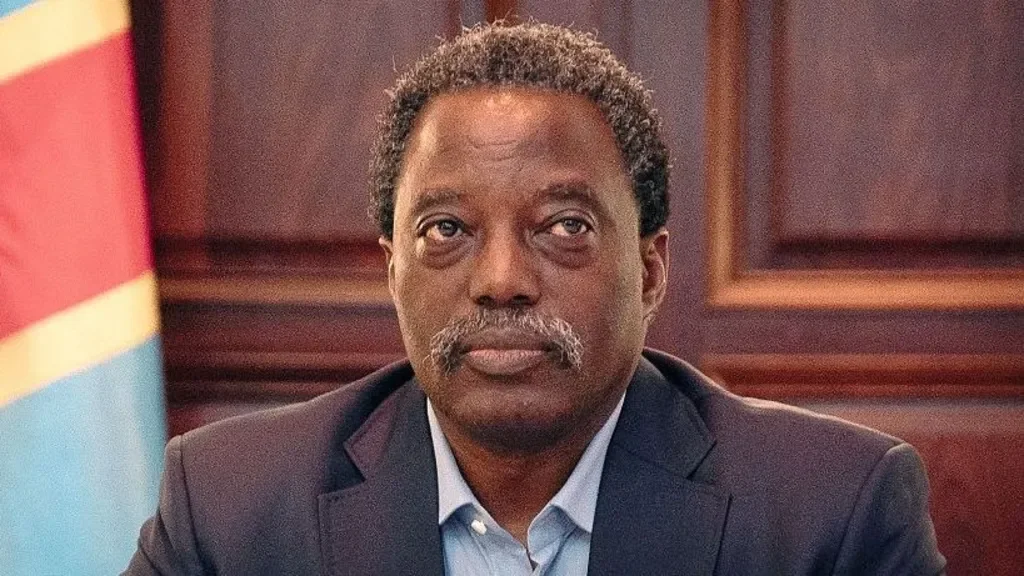
Former Democratic Republic of Congo (DR Congo) President Joseph Kabila is set to lead a new political and military alliance that includes Rwanda-backed M23 rebels, intensifying the challenge facing President Félix Tshisekedi as the country struggles to end a protracted conflict in its mineral-rich eastern region.
The movement, known as the Front for the Refoundation of the Nation (FRN), brings together M23 and its political umbrella, the Alliance Fleuve Congo (AFC), which control large parts of eastern DR Congo, including the strategic cities of Goma and Bukavu.
Kabila's entry into the alliance adds a former head of state to a rebellion that has already challenged the government's authority across vast territories.
Claude Ibalanky, an adviser to the coalition, said in a statement issued in Goma on Monday that the FRN sought to unite and coordinate resistance forces across the country to end what it described as tyranny.
The movement said it would pursue its objectives “by any means necessary, including the use of force”.
Kabila's deputies include M23 military commander Sultani Makenga and Corneille Nangaa, a former electoral commissioner who heads the AFC, linking the former president to the rebellion's military leadership and political structures.
Kabila's new role comes against the backdrop of a conflict rooted in decades of regional instability, competition over natural resources and strained relations between DR Congo and neighbouring Rwanda.
In 1996, his father, Laurent-Désiré Kabila, emerged at the head of a Rwanda-backed rebellion that toppled longtime ruler Mobutu Sese Seko. The campaign helped trigger regional upheaval that continues to shape security dynamics across the Great Lakes region.
Joseph Kabila became president in 2001 following his father's assassination and remained in office until 2019, when Tshisekedi succeeded him after disputed elections.
His presidency coincided with a mining boom that attracted substantial Chinese investment, although corruption remained entrenched. His departure from office did not end his influence in Congolese politics.
Kabila has recently accused Tshisekedi of trying to extend his rule beyond the constitutional two-term limit, which ends in 2028. He has also criticised the government's military response to the rebellion, alleged corruption, and questioned mineral agreements with Washington.
His return is particularly controversial because a court in Kinshasa convicted him of treason in absentia and sentenced him to death in September 2025 over alleged support for the rebels. The United States has also sanctioned him for supporting the insurgency.
Despite the alliance's political significance, its ability to unseat Tshisekedi remains uncertain.
M23 retains substantial territorial control in North Kivu, which contains some of the world's largest coltan deposits, a mineral used in mobile phones and other electronic devices. The rebels also control Goma and Bukavu, important urban centres in the east.
However, the coalition faces military and logistical challenges if it intends to expand beyond its existing strongholds.
A Western diplomat involved in regional peace efforts said the alliance would require substantial investments in personnel and weapons to advance into Katanga, a province rich in copper and cobalt. The diplomat described Kabila's renewed prominence as “taking to the floor to remain relevant”.
M23 has suffered setbacks in South Kivu after Rwandan troops withdrew under pressure from the United States. Rwanda denies backing the insurgency, arguing that its cross-border military movements are intended to counter ethnic extremists.
Kabila's formal alignment with the rebels threatens to complicate diplomatic efforts to end the conflict.
US President Donald Trump declared an end to the conflict between DR Congo and Rwanda at a White House ceremony in December 2025, but fighting has continued. A parallel peace process between Kinshasa and M23 has also made limited progress.
The new alliance could consolidate opposition to Tshisekedi while further complicating negotiations. Whether it can transform Kabila's political return into a viable campaign to remove the president remains an open question, with the outcome likely to depend on the coalition's military capacity, internal unity and the direction of regional diplomacy.