
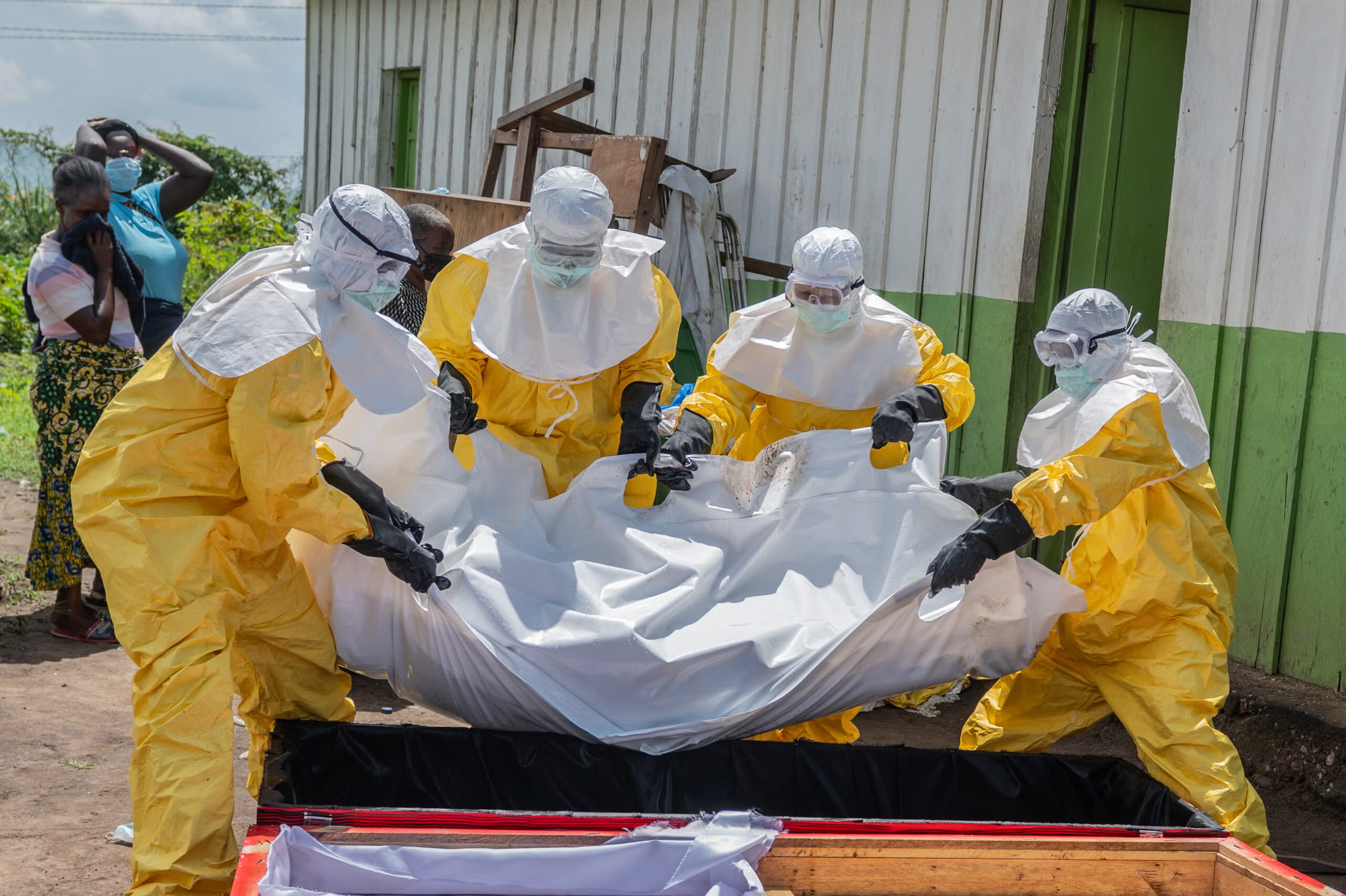
Health authorities in East Africa face renewed pressure to contain Ebola after two provinces in the Democratic Republic of Congo (DRC) bordering Uganda recorded all the latest reported infections, raising fears that continued transmission could lead to more cases across the region.
The World Health Organization (WHO), in an update issued on October 8, reported 33 new cases in Ituri and 30 in North Kivu during the latest 24-hour reporting period. The figures point to persistent transmission in eastern DRC, even as some other parts of the country begin to show signs of a slowdown.
The latest increase comes as Kenya deals with the aftermath of its first imported case of Bundibugyo Ebola. The patient, a Kenyan man who travelled from DRC through Uganda before reaching Nairobi, was isolated and treated in hospital but died on October 5.
Kenyan authorities have since identified 66 people who may have been exposed to the patient. The individuals have been placed in quarantine at the National Police Service Hospital in Nairobi as the government works to prevent further infections.
The Ministry of Health said efforts to locate and monitor the remaining contacts were still underway, with officials continuing to strengthen measures aimed at stopping the virus from spreading.
The Kenyan case has added to concerns about the regional threat posed by the outbreak, particularly given the rising number of infections in eastern DRC and the movement of people between neighbouring countries.
DRC Records Thousands of Cases and Deaths
By October 6, DRC had registered 8,728 confirmed Ebola infections and 4,205 deaths, according to the WHO. The figures put the crude case fatality ratio at 48.2 per cent, while 2,269 people had recovered from the disease.
The outbreak had spread across 64 health zones in seven provinces: Ituri, North Kivu, South Kivu, Haut-Uélé, Bas-Uélé, Tshopo and Sud-Ubangi.
The latest figures also show a sharp rise in the cumulative toll since the previous WHO situation report, published on September 25. During the period between the two reports, the country recorded 775 additional confirmed cases and 379 more deaths.
Ituri continues to carry the heaviest burden, with 6,480 confirmed cases and 2,989 deaths. North Kivu had recorded 1,755 infections and 1,013 deaths, giving the province a reported case fatality ratio of 57.7 per cent.
The outbreak has also reached Alimbongo health zone in North Kivu, where four confirmed cases, including two deaths, were reported. This brought the epidemic into one additional health zone since the previous situation report.
WHO Warns of Uneven Progress
While the overall outbreak remains severe, the WHO says the pattern of transmission differs across the affected areas. Some locations are recording signs of improvement, but others continue to experience an increase in infections.
“At the national level, transmission remains intense, although the burden is unevenly distributed. In some areas, there are clear signs the epidemic is slowing down, although in others it continues to grow,” it said.
The latest national figures show that new cases reported during the three most recent completed epidemiological weeks increased by 2.5 per cent, from 475 to 487.
Weekly deaths, meanwhile, remained broadly unchanged, rising slightly from 222 to 224 over the same period.
The figures suggest that the outbreak has not followed the same course across the country. Although transmission may be easing in some areas, continued increases elsewhere are sustaining the overall burden of the epidemic.
Ituri and North Kivu remain key areas of concern because both provinces border Uganda, increasing fears that infections could cross into neighbouring countries as people continue to move across the region.
Kenya's imported case has brought those concerns closer to home, placing additional pressure on health authorities to trace possible contacts and limit further transmission. With infections continuing to rise in parts of DRC, regional health officials face the challenge of containing the outbreak while remaining alert to the risk of cross-border spread.