

The rollout of Constituency Industrial Development Centres (CIDCs) across Kenya is facing delays over electricity connections, with the State Department for Micro, Small and Medium Enterprises (MSMEs) and Kenya Power offering different explanations for why completed facilities remain unoperational.
The National Assembly Trade Committee was told on Tuesday, October 6, that the high cost of connecting centres to three-phase electricity was among the main obstacles delaying their operationalisation.
Principal Secretary in the State Department for MSMEs, Susan Mang’eni, said the cost of power connections could undermine the government's investment in the centres if completed facilities remained unused.
“Unless we reconsider the issue of power to these projects, we will use public resources to construct them, but they will never be operationalized due to the high cost of installing three-phase power connection to the site,” said PS Mang’eni.
Kenya Power and Lighting Company Managing Director Eng. Joseph Siror, however, attributed some of the delays to unpaid connection quotations by the Ministry and failure in some cases to provide the required wiring certificates.
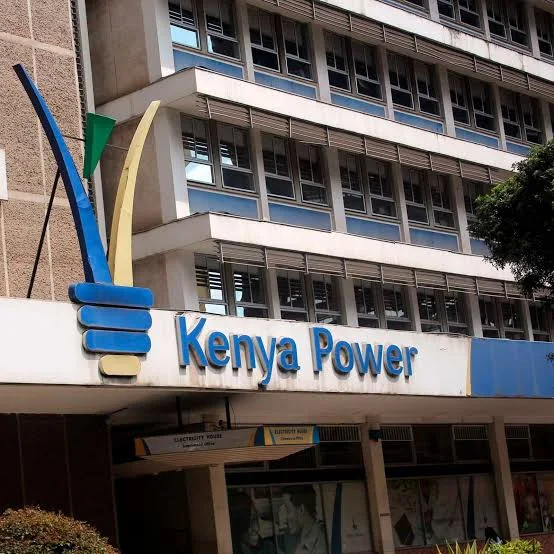
“We operate on a commercial basis, and therefore we can only do installation where the cost has been paid, and relevant documentation availed,” Eng. Siror told the committee.
The disagreement comes as the government seeks to expand the role of CIDCs in supporting small businesses, value addition and local manufacturing.
The centres were initially established under the Economic Stimulus Programme, with the government undertaking to construct and equip CIDCs in the country's 210 constituencies under the former constitutional dispensation. Parliamentary records show that the programme subsequently faced challenges around completion, electricity and the availability of facilities needed to make the centres operational.
The State Department's current strategy continues to prioritise CIDCs as part of efforts to provide infrastructure and shared facilities for MSMEs. Its 2023–2027 strategic plan targets the equipping and operationalisation of 200 CIDCs with common-user facilities, while also seeking to modernise centres and link them with Technical and Vocational Education and Training institutions.
The government has previously said CIDCs provide working spaces and common machinery that enable MSMEs to undertake activities in areas such as leather, textiles, construction, dairy and edible oils. The State Department reported that the refurbishment and equipping of 21 CIDCs had created 5,600 job opportunities.
Parliament was told that 232 CIDCs had been developed across the country by the end of the 2025/26 financial year, representing 80 per cent of the targeted 290 centres.
However, development of the physical infrastructure has not necessarily translated into operational facilities, with power connections among the outstanding requirements.
The State Department said it was pursuing interventions to accelerate the operationalisation of the completed centres, including the installation of three-phase electricity in collaboration with the Rural Electrification and Renewable Energy Corporation (REREC) and Kenya Power.
Other outstanding infrastructure needs include water supply, security fencing and access roads.
The committee called for closer coordination between the State Department and Kenya Power to resolve the outstanding issues and ensure that facilities already completed are put to use.
Committee Session Chairperson Hon. Robert Gichimu urged the power utility to work with the State Department to expedite electricity connections, particularly in centres that have already been completed but remain unoperational.
“These centres are very key in addressing the employment gap and allowing small businesses to grow. It is therefore critical to ensure the projects are completed in time and operationalized,” said Gichimu.
The push to make the centres functional also aligns with the government's broader industrialisation agenda. The 2026 Budget Policy Statement says CIDCs are expected to be linked with TVET institutions and County Aggregation and Industrial Parks to support practical training, technology transfer, industry mentorship and enterprise incubation.
The State Department says MSMEs face several barriers to growth, including limited access to finance and markets, inadequate skills, affordable infrastructure challenges, and weak coordination.
For the CIDCs, the immediate challenge remains ensuring that buildings already developed are equipped with the infrastructure required for businesses to operate.
The committee's intervention now puts pressure on the relevant agencies to resolve the electricity, documentation, and other infrastructure gaps so that the centres can begin delivering the intended benefits of supporting entrepreneurs, creating jobs and expanding manufacturing at constituency level.