
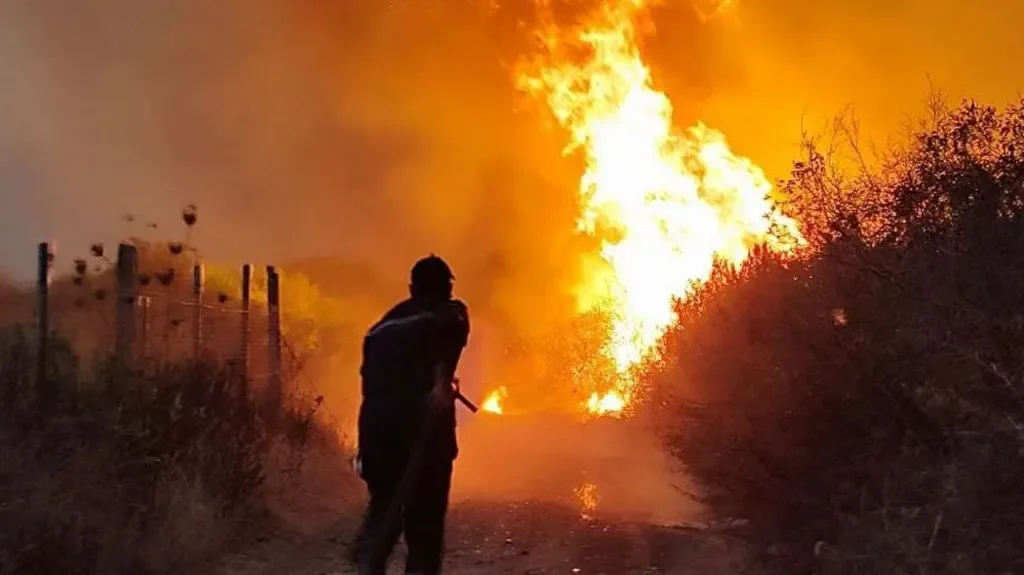
People convicted of deliberately starting forest or field fires in Algeria could now face the death penalty after parliament approved tougher criminal laws following a deadly wave of wildfires in the north-east.
The National Assembly passed the changes on Thursday, adding deliberate burning of forests, woods and fields to offences that can attract capital punishment.
The legislation was introduced after more than 100 fires were reported across north-eastern parts of Algeria during a period of extreme heat in North Africa. President Abdelmadjid Tebboune had instructed the justice ministry to amend the country's criminal laws following the fires.
Under the new provisions, a person convicted of intentionally setting fire to forests, woodland or fields could be sentenced to death.
The changes also introduce capital punishment for certain child abduction cases, specifically those involving torture, sexual assault or mutilation.
Algeria has retained the death penalty in its penal code for a number of offences, but it has not carried out an execution since 1993.
Authorities have put the official number of people killed in the wildfires at 12. Independent media organisations, however, have reported a much higher death toll.
Investigative journalist Nozha Khelalef has been compiling the names of people believed to have died in the fires by checking death notices released by families and information provided by some local authorities.
Her independent tally, published by the news website Twala, lists 200 deaths.
Justice Minister Lotfi Boudjemaa told parliament that the tougher punishment was needed to deal with the scale of the crime, according to news agency AFP.
"The adoption of the death penalty for these acts is the appropriate legal response to curb these crimes."
Boudjemaa said the authorities considered the arson cases to have reached "the level of organised crime".
He further said investigations had found indications of links to "foreign parties".
The measure still has another stage to pass before it becomes law. The Council of the Nation, Algeria's upper house, will review the bill before it is sent for official ratification by the president.
Wildfires are a regular occurrence in Algeria during the summer, but climate change has contributed to greater intensity and severity in recent years.
The latest legal changes represent a major increase in punishment for deliberate fires, while also widening the circumstances under which child abduction can result in a death sentence.