
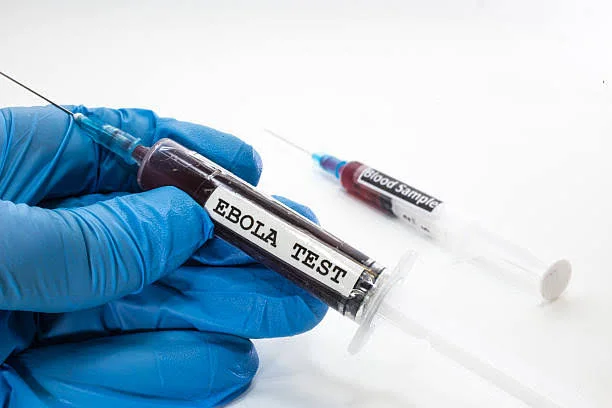
Fresh laboratory findings have revealed a genetic connection between Nigeria’s only confirmed Ebola case and the virus detected in Kenya’s index patient, but health officials say the discovery does not establish how the infection reached Nigeria or prove that the two patients were directly connected.
Nigeria’s Coordinating Minister of Health and Social Welfare, Professor Muhammad Ali Pate, disclosed the results on Friday, October 23, 2026, saying an analysis of the virus’s genetic material showed that the two samples were closely related.
Despite the finding, Nigerian authorities maintain that there is no evidence that Kenya’s index patient travelled to Nigeria or had direct contact with the Nigerian patient.
“That is all that we can say at this stage based on the genomic analysis. There is no evidence of travel of that index case in Kenya that links it to Nigeria, but the viruses are appearing to be related,” Pate said.
The Federal Ministry of Health subsequently confirmed the findings in a statement issued early on Saturday, October 24, noting that the virus identified in Nigeria was genetically related to the one detected in Kenya.
“The Federal Government has provided an update on the confirmed Ebola Virus Disease (EVD) case in the Federal Capital Territory (FCT), reporting that genomic analysis indicates that the virus identified in Nigeria is genetically related to the virus identified in a case in Kenya,” the ministry said.
The results mark the first reported genetic connection between the two cases, although investigators have not established whether the infections are part of the same direct transmission chain.
Authorities are now seeking to determine where the Nigerian patient was exposed to the virus and whether the new evidence can help explain the infection’s origin.
Nigerian patient had travelled from Uganda
Nigeria confirmed its first Ebola case on October 20, 2026, after laboratory tests detected the virus in a woman who had recently arrived from Uganda.
The World Health Organization (WHO) reported that the woman developed symptoms on October 7, four days after arriving in Nigeria. She sought treatment at a private health facility in Abuja on October 11, with her infection confirmed nine days later.
She was placed in isolation and received medical care as health authorities began tracing people who might have been exposed to the virus.
At the time the case was announced, officials had identified 44 contacts for monitoring as part of efforts to prevent further infections.
Health workers also strengthened infection prevention and control measures at the private facility where the woman had sought treatment.
The Nigeria Centre for Disease Control and Prevention activated its incident management system to coordinate the response and support efforts to contain the infection.
The genetic investigation was carried out by the agency alongside researchers from the Institute of Genomics and Global Health at Redeemer’s University, led by Professor Christian Happi.
Their analysis established the relationship between the Nigerian virus and the strain detected in Kenya, prompting officials to share the results while stressing that the source of the infection remains unknown.
The WHO has also reported the woman’s recent travel to Uganda, which remains an important part of efforts to reconstruct her movements and identify where she may have contracted the disease.
Kenya’s outbreak reaches nine confirmed cases
The findings come as Kenya continues to respond to an outbreak of Bundibugyo Ebola virus disease linked to an imported infection involving a man who travelled from the Democratic Republic of Congo through Uganda.
By October 23, 2026, Kenya had recorded nine confirmed cases, with two deaths reported by the Ministry of Health.
The eight cases beyond the initial patient were linked to the index case and included four relatives and four healthcare workers.
The Ministry of Health announced the second death on October 23, after a 65-year-old woman who was a close relative of the first patient died while receiving treatment.
The woman had been among those placed under quarantine and monitoring as part of the response.
Kenyan health teams have continued contact tracing, isolating confirmed patients, screening and implementing other measures intended to limit further spread.
The WHO has said two additional cases identified earlier in the Kenyan outbreak were already in quarantine when they were detected, enabling health teams to respond promptly.
The organisation has also maintained that Kenya remains open, with no restrictions on travel, trade or public gatherings recommended in its guidance.

Genetic similarity does not prove direct transmission
Genomic analysis allows researchers to study the genetic material of a virus and compare samples from different patients to establish how closely related they are.
The results can help investigators understand possible links between infections and guide further research into how a virus may be spreading.
However, genetic similarities alone cannot establish where a patient became infected, identify the person who transmitted the virus or confirm that one case directly caused another.
Such conclusions require additional evidence, including patients’ travel histories, contact records and other findings from epidemiological investigations.
In Nigeria’s case, officials have not established a direct connection between the infected woman and Kenya’s index patient. There is also no evidence that the Kenyan patient travelled to Nigeria.
The Nigerian patient’s recent travel from Uganda remains part of the inquiry into her possible exposure.
Investigators will need to combine the genetic findings with other evidence to determine whether the two cases share a direct transmission route or reflect a broader connection between infections in the region.
For now, the findings confirm a genetic relationship between the viruses but leave key questions about the source and route of Nigeria’s infection unanswered.
Health authorities continue to investigate the case as Nigeria monitors identified contacts and Kenya maintains measures to contain its outbreak.