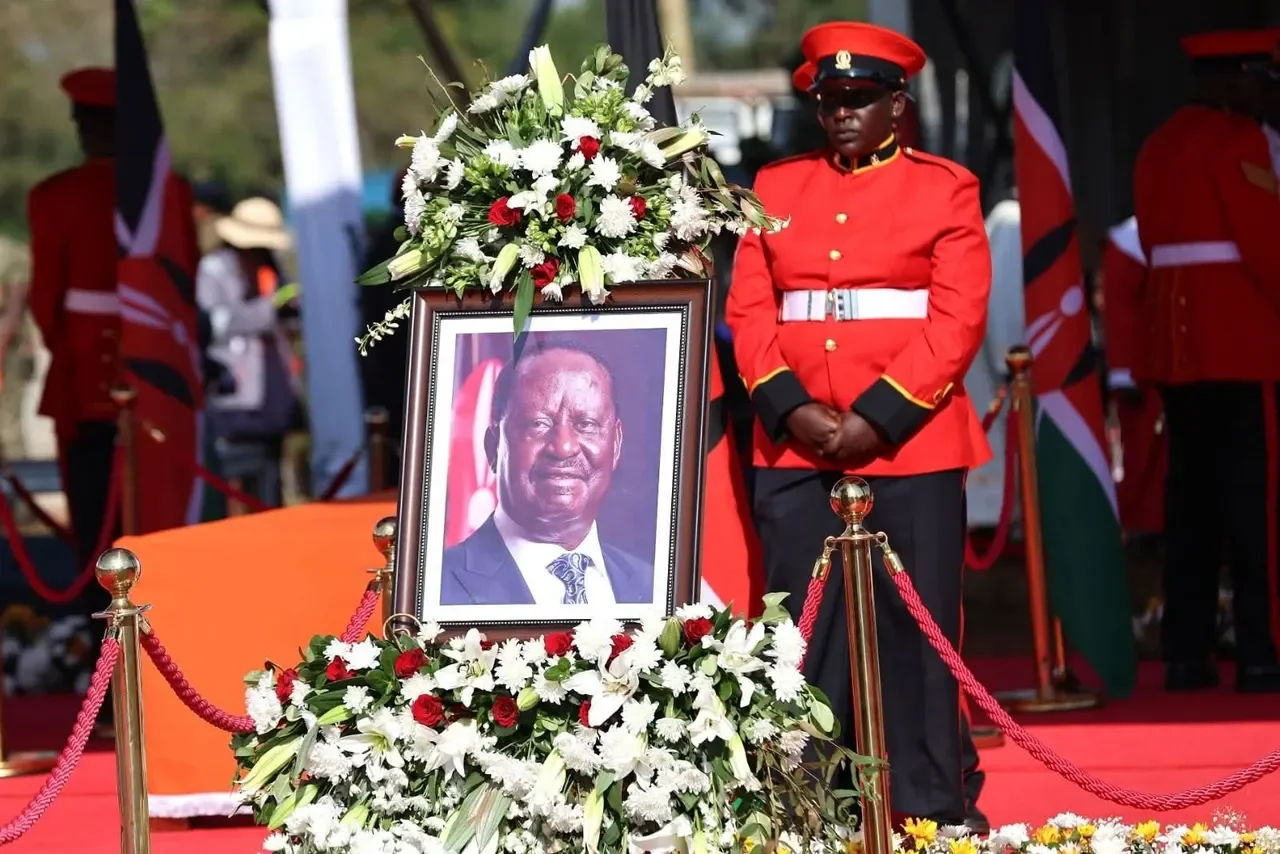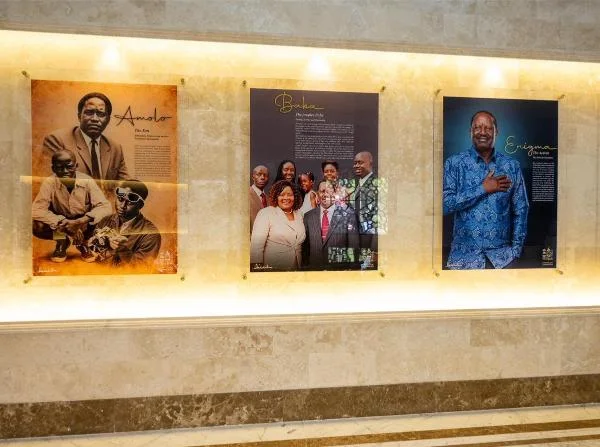
One year after Raila Odinga’s death, the fight over his political inheritance is emerging as a defining battle ahead of Kenya’s 2027 General Election, with former allies splitting into rival camps, launching alternative parties and competing to win the support of the millions of Kenyans who stood behind him for decades.
As the country marks the first anniversary of his death on October 15, 2026, the question is no longer just how Raila will be remembered, but who can command the political influence he left behind.
Raila died on October 15, 2025, aged 80, after collapsing during a morning walk in India.
His death ended one of the country’s longest and most consequential political careers, spanning the fight for multiparty democracy, the 2007-08 post-election crisis, the Grand Coalition Government, the making of the 2010 Constitution and five unsuccessful presidential bids.
His absence has since exposed divisions within the Orange Democratic Movement (ODM), the party he led for decades, while opening the door to a new struggle for political leadership ahead of the next election.
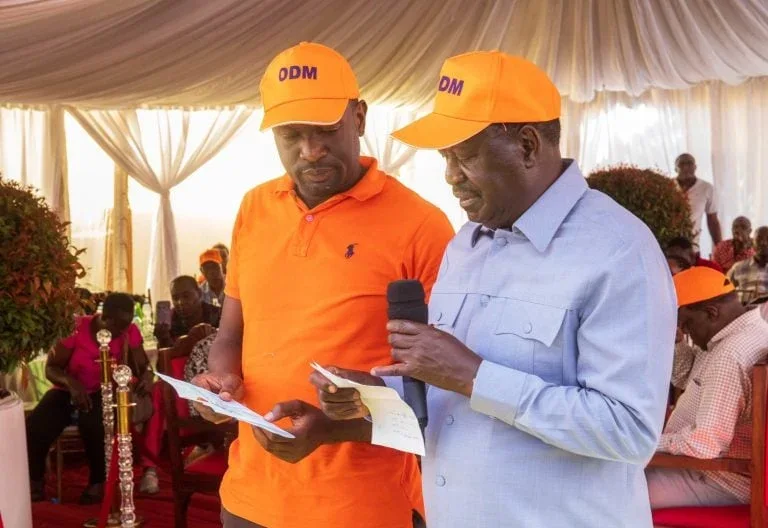
For years, Raila was the figure who held together competing interests within ODM. He served as the party’s chief mobiliser, negotiator and final point of reference when disagreements threatened to divide its ranks.
His influence allowed him to manage internal disputes while determining the party’s position on major national political questions.
His death came at a sensitive time, when ODM was already facing difficult decisions over its relationship with President William Ruto’s administration and the direction it should take in the run-up to the 2027 General Election.
Without Raila at the centre of these discussions, disagreements that had previously been contained have spilled into the open. His former allies are now pursuing different political paths, with some seeking to retain influence within ODM while others establish new parties and explore alternative alliances.
One of the clearest signs of this changing landscape is the emergence of Nairobi Senator Edwin Sifuna as a potential national political player.
Sifuna, who served as ODM secretary-general, was among Raila’s most vocal defenders. However, his disagreements with the party leadership led to his removal from the position and the loss of his Senate leadership role, pushing him towards a new political platform.
On October 4, 2026, Sifuna was unveiled as the leader and presidential candidate of The Equitable Party (TEP), giving him a vehicle to pursue his political ambitions ahead of the 2027 election.
The launch brought together several leaders associated with the Linda Mwananchi movement, including Embakasi East MP Babu Owino, Siaya Governor James Orengo and Trans Nzoia Governor George Natembeya, among others.
The development came days after the Political Parties Disputes Tribunal overturned the Registrar of Political Parties’ rejection of the Linda Mwananchi name, allowing it to be reserved.
Sifuna’s new political vehicle is part of a wider effort by a section of Raila’s former allies to build a formation outside ODM’s traditional structure. It also reflects the growing contest over who should represent the interests of Raila’s supporters and carry forward the political causes associated with him.

Raila’s absence leaves a leadership gap
Government spokesperson Charles Owino believes Raila’s political career offers important lessons on handling disagreements and building national unity.
Speaking to Radio Generation, Owino said one of Raila’s greatest strengths was his ability to forgive political opponents and return to negotiations even after bitter contests.
“Even when he lost, he still came back and shook hands with them and supported them in ensuring that there is peace, and that is what we need as a country. We need people who can forgive,” he said.
Owino said Raila’s death had come at a difficult moment for the country, leaving a gap that younger politicians were now seeking to fill.
“The loss of Raila at this time, before we had the next elections, was a very big loss,” he said.
He warned that without experienced political figures capable of bringing rival sides together, leaders could become more focused on personal ambitions at the expense of national unity.
The growing number of political formations associated with Raila’s former allies illustrates the difficulty of filling the space he occupied. While some leaders are seeking to preserve his influence through ODM, others are building independent support bases and positioning themselves for a bigger role in the next election.
Embakasi East MP Babu Owino is among those seeking to establish an independent political platform.
Babu has formed the Mwananchi Party, which he says will provide an avenue for fresh leadership and competitive party nominations.
Despite establishing his own party, he has continued to support Sifuna’s presidential ambitions, placing him among the leaders seeking a different political arrangement from the one taking shape within ODM.
On October 4, Babu said the fallout within ODM had pushed Sifuna towards a new political vehicle, arguing that the development could eventually work in the senator’s favour.
Siaya Governor James Orengo, another veteran of Raila’s political journey, has also become part of the emerging realignment.
Orengo initially presented the Linda Mwananchi movement as a platform to reclaim what he described as the “soul and body” of ODM. However, as disagreements within the movement grew, he began positioning himself for an alternative political route, including plans to revive the Liberal Democratic Party.
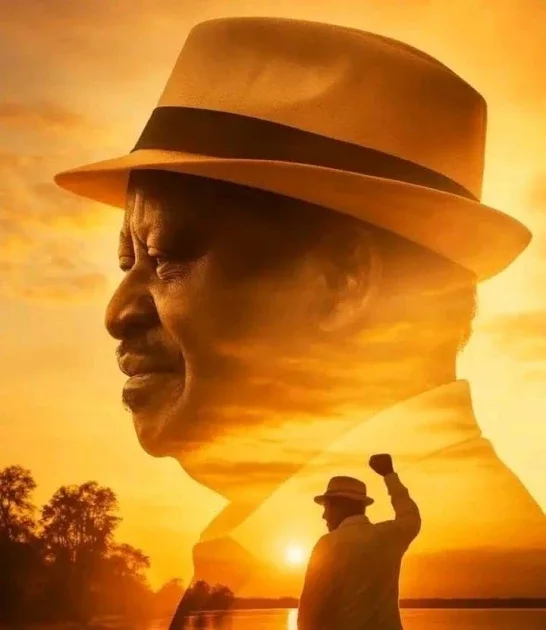
The developments highlight the challenge facing Raila’s former allies as they seek to preserve his political legacy while pursuing their own ambitions. His influence was built not only on his leadership of ODM but also on his ability to bring together different political interests and negotiate agreements that shaped the country’s political direction.
A legacy bigger than ODM
Within ODM, the party’s communication director, Philip Etale, maintains that Raila’s influence extends beyond the political organisation he led.
Etale, who describes Raila as a confidant, adviser and father figure, said those who worked closely with the former prime minister now have a responsibility to uphold the principles he championed.
“The people of Kenya know what he fought for. The people of Kenya know what Baba stood for,” Etale said.
He said Raila had consistently challenged those in power but remained willing to negotiate when he believed cooperation could serve the country’s interests.
“He was always fast to speak truth to power, but at the end of the day, he would sit down and reason with those that he believed would work together with him to make Kenya better than it is today.”
Etale said the lessons Raila passed on to those who worked with him would continue to shape the country’s politics long after his death.
“The spirit of Baba is in everyone who was close to him. The spirit of Baba is in everyone who used to sit with him, because we learnt a lot from him, not just a single individual,” he said.
Raila’s record is therefore likely to feature prominently in the campaigns ahead of the 2027 General Election. His former allies and other political leaders can appeal to voters through different aspects of his legacy, including constitutional reform, social justice, opposition politics, national unity and his willingness to negotiate with political opponents.
However, the competition to claim that legacy could also weaken the political base he spent decades building.
Rather than rallying behind a single successor, Raila’s supporters now face several political choices, with different leaders presenting themselves as the most suitable custodians of his ideals and influence.
Democracy for the Citizens Party (DCP) Secretary for Planning and Economic Affairs Peter Mbae believes Sifuna could attract a substantial share of Raila’s former supporters.
Mbae estimates that “75% of Raila supporters” could back the Nairobi senator and follow him to the national negotiating table.
“Many people will follow Sifuna because they still suspect that they still are not sure about the role of government in the demise of Raila and, number two, on the dismantling of ODM,” he claimed.
His remarks point to one of the politically sensitive questions that has emerged since Raila’s death: whether his supporters will remain loyal to ODM or move towards leaders offering a different political direction.
The competing claims over Raila’s support base could become a major factor in determining the strength of the various political formations ahead of 2027.
ODM’s relationship with Ruto deepens divisions
The future of ODM’s relationship with President Ruto has emerged as one of the main points of disagreement among Raila’s former allies.
Sifuna, Orengo and Babu Owino were among the leaders who opposed ODM’s engagement with the government, while a faction led by Oburu Oginga supported cooperation with the Ruto administration.
Under Raila, such differences could be managed within the party, with his authority allowing him to bring competing positions together and determine the political direction ODM would take.
His death removed that central point of authority, leaving rival camps to contest the party’s future and its role in the next election.
The dispute has accelerated the search for alternative political vehicles, giving Raila’s former allies options outside the established ODM structure.
Sifuna has TEP, although his camp intends to rebrand it as Linda Mwananchi following the successful reservation of the name. Babu is building the Mwananchi Party, while Orengo is positioning himself outside ODM’s traditional structure.
The emergence of these parties could widen political choices for voters and give leaders new platforms from which to challenge the existing political order. However, it could also complicate efforts to agree on common candidates, coordinate campaigns and form alliances ahead of the 2027 polls.
Although the politicians associated with the Linda Mwananchi movement appear to share a political platform, their separate party structures and individual ambitions could make it difficult to maintain a united front.
The challenge will be whether these leaders can agree on a common strategy or whether their competing interests will deepen divisions among voters who previously rallied behind Raila.
The stakes are high because the 2027 election will be the first in decades to take place without Raila as a presidential candidate, a central coalition negotiator or a political figure capable of influencing decisions across rival camps.
His absence has not ended his political influence. Instead, it has created a contest among those seeking to use his record, support base and reform credentials to strengthen their own positions.
As Kenya marks one year since his death on October 15, the struggle over Raila’s political inheritance is likely to remain closely tied to ODM’s future, the growth of alternative parties and the alliances that emerge before the next election.
Whether the contest produces leaders capable of carrying forward his political ideals or fragments the movement he built over decades remains one of the major questions facing Kenya’s 2027 political landscape.