
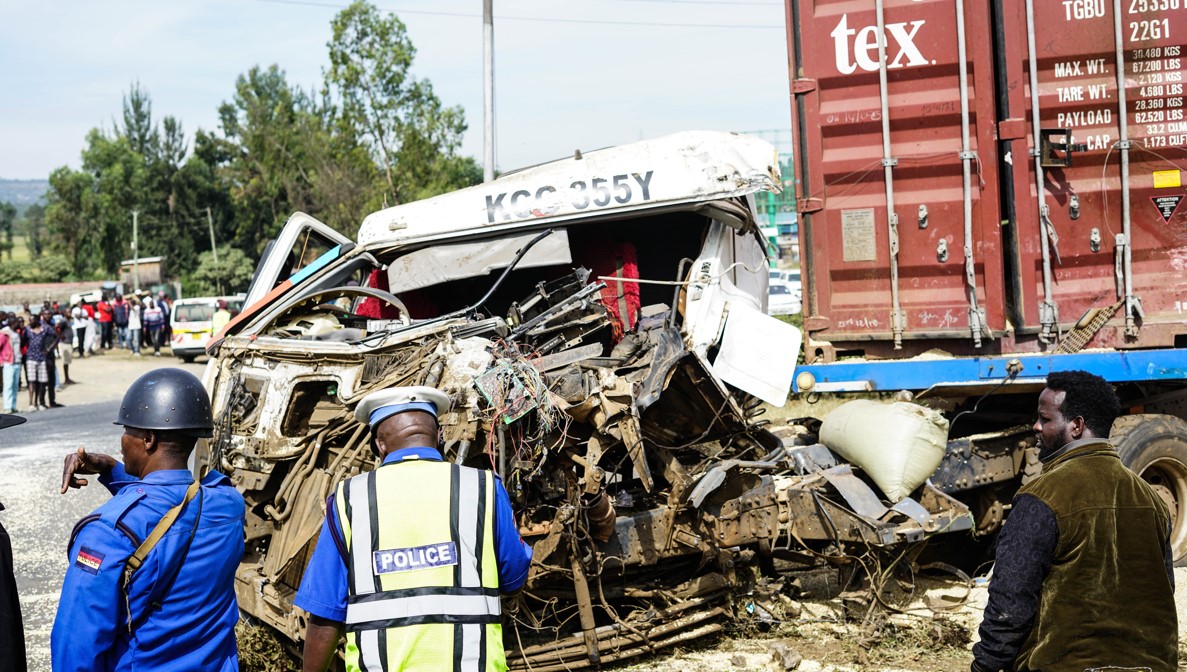
The World Health Organization (WHO) has raised concern over the growing number of road traffic deaths in Africa, warning that the region is moving against the global trend despite years of progress in improving road safety. The agency says stronger laws, safer roads, lower speed limits and better protection for vulnerable road users are urgently needed after new data showed fatalities in Africa rose by 17% over the past 15 years.
The warning comes after United Nations member states adopted a new UN General Assembly Progress Declaration on Road Safety, committing countries to step up efforts to reduce road deaths and serious injuries by half by 2030 in line with the Sustainable Development Goals.
New WHO figures show the global road traffic death rate dropped by 21% between 2011 and 2025, even as more than one billion additional vehicles were added to roads around the world. Despite that progress, road crashes still claimed 1.16 million lives in 2025, with traffic injuries remaining the leading cause of death among children and young people aged between five and 29 years.
While many parts of the world recorded fewer road deaths, WHO said Africa remains the only region where fatalities continue to rise.
"Yet progress is uneven, with **36% drop in deaths in the WHO European Region, a 15% drop in the Western Pacific Region, a 2% drop in the WHO South-East Asian Region, no change in rates in the Americas and a 17% rise in deaths in the WHO African Region," the agency said.
WHO Director-General Dr Tedros Adhanom Ghebreyesus said the global decline proves that investing in safer transport systems saves lives, but warned that countries must strengthen their efforts to protect road users.
"This progress shows that change is possible when countries invest in safe road systems," Tedros said. "I commend countries for the strong political declaration they adopted at the UN High-Level Meeting on Global Road Safety, which aims to accelerate action to ensure more roads are designed for people first, not motor vehicles, with safety as priority. All road deaths are preventable and none are acceptable."
WHO said the newly adopted declaration commits governments to implementing the Safe System Approach, which accepts that human error cannot be completely avoided and instead focuses on making roads, vehicles, infrastructure and speed management safer so that crashes are less likely to result in death or serious injury.
The agency also warned that pedestrians, cyclists and motorcyclists continue to face the highest risks on the roads.
"More than half of all road deaths are people who aren't even in a car – they are walking, cycling or riding a motorcycle. When roads are designed as if only car drivers matter, these people are left dangerously exposed," said Dr Etienne Krug, Director of WHO's Department of Health Determinants, Promotion and Prevention.
He added that stronger laws, effective enforcement, safer road infrastructure and action against speeding and impaired driving remain the most effective ways to reduce road fatalities.
The findings reflect concerns already raised by Kenya during the UN High-Level Meeting on Improving Global Road Safety in New York, where the country said road crashes continue to pose one of its biggest public health and development challenges.
National Transport and Safety Authority (NTSA) Director-General Eng. Nashon Kondiwa told the meeting that Kenya records between 4,000 and 5,000 road deaths every year, while more than 20,000 people are injured annually.
"Road safety remains one of Kenya's foremost public health and development challenges. Over the last five years, Kenya has continued to record approximately 4,000 to 5,000 road fatalities annually," Kondiwa said.
He said pedestrians and motorcyclists remain the most affected road users, adding that crashes cost Kenya an estimated 5% of its Gross Domestic Product (GDP) every year through lost productivity, healthcare expenses, emergency response, property damage and long-term disability.
Kondiwa said Kenya has adopted the Safe System Approach, built around engineering, enforcement and education. The country has also invested in safer road infrastructure, technology-driven traffic management, digital enforcement systems and nationwide public awareness campaigns to improve safety.
Reaffirming Kenya's commitment, he said the country will continue working with international partners to reduce road deaths and injuries.
"Kenya remains fully committed to delivering safer roads through stronger partnerships, smarter technologies, safer infrastructure, effective enforcement and sustained public education," he said. "Together, through shared commitment and global cooperation, we can save lives, protect livelihoods and build safer, more sustainable transport systems for the present and future generations."