
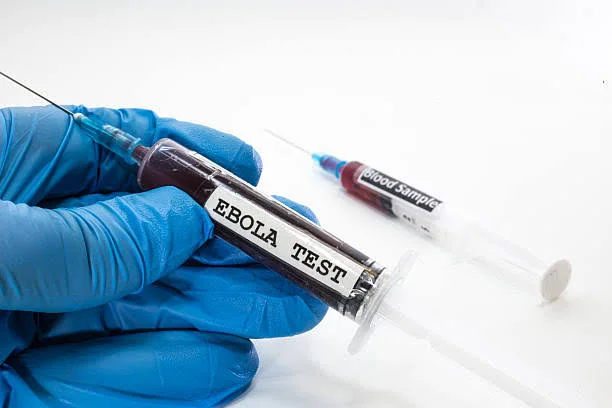
Fears over a possible Ebola infection in Wajir have eased after laboratory tests on a 20-year-old man who had been placed under assessment returned negative, with Health Cabinet Secretary Aden Duale also dismissing reports that the patient had the disease.
When contacted by the Radio Generation for comment on Thursday, Duale dismissed the reports, saying: “Negative”
The patient had been assessed at Habaswein Sub-County Hospital after arriving in Wajir following travel from the Democratic Republic of Congo through Uganda. His sample was later taken to the National Public Health Virology Laboratory in Nairobi, where preliminary testing found no evidence of Ebola Virus Disease.
Wajir County Government, in a statement said the patient's travel history and the symptoms he presented with had led health workers to investigate the possibility of Ebola and activate the required public health procedures.
The county said the patient remains under the care of health officials, who will continue to monitor his condition and provide treatment where necessary.
Wajir Governor Ahmed Abdullahi welcomed the laboratory findings, saying: “These results are reassuring,” in a statement issued on Thursday.
The Ministry of Health and the County Department of Health will continue overseeing the case as part of the measures put in place to manage suspected viral haemorrhagic fever cases.
The patient had travelled from the Democratic Republic of Congo through Uganda before reaching Kenya and later seeking treatment in Wajir South. His movements raised the level of caution among health officials because of his recent travel from a country where Ebola has previously been reported.
At Habaswein Sub-County Hospital, health workers responded after the man presented with symptoms that required further investigation when considered alongside his travel history.
The county said the response brought together personnel from the hospital, the County Department of Medical Services, the Department of Public Health and Sanitation and national health authorities.
The teams worked to have the patient assessed, tested and managed according to the established public health procedures.
The case came to public attention after reports circulated claiming that authorities in Wajir were holding a man who had travelled from the Democratic Republic of Congo and was suspected of having a viral haemorrhagic disease.
The reports alleged that the man had become seriously ill and had failed to improve after receiving treatment.
They further claimed that he had been admitted to a nursing home after developing fever, headache and cough. His haemoglobin was also reported to have fallen to 4g/dL, with the reports describing him as suffering from severe anaemia.
Preliminary accounts also indicated that the man told authorities he had travelled by trailer across several countries, spending about five days in different places and seeking medical care along the way before being transported to Malaba.
From Malaba, he reportedly travelled through Nairobi and Isiolo before reaching his home in Wajir.
He was then reportedly treated for pneumonia and septicaemia for about three days but did not improve, prompting further concern and assessment.
Despite the claims that circulated, there has been no confirmation that the patient had Ebola. Duale dismissed the reports, while preliminary laboratory testing of the patient's sample also returned negative for the disease.
Viral haemorrhagic fevers refer to a group of infectious diseases that can be severe and life-threatening and may affect the body's circulatory system. Ebola is one of the diseases classified under this group.
Kenya has confirmed its first imported Ebola Virus Disease case, with the patient dying while receiving treatment in Nairobi.
The deceased was buried safely under established public health protocols.
The government has said surveillance and rapid response teams remain in place, building on preparedness and monitoring systems that have been maintained since the Ebola outbreak began in May.
Wajir County has appealed to residents to avoid circulating information that has not been verified by health authorities, warning that unconfirmed reports could cause unnecessary concern.
Residents have been advised to rely on information issued by the County Government of Wajir and the Ministry of Health for updates on the situation.
The county has also urged anyone who develops unusual symptoms to seek medical attention at the nearest health facility rather than wait for the illness to worsen.
Health authorities will continue monitoring the patient and the wider situation as part of the ongoing public health response.