
The United States has imposed fresh sanctions on International Criminal Court (ICC) President Tomoko Akane and senior trial lawyer Abdoulaye Seye, widening the Trump administration’s campaign against the court and its efforts to investigate alleged war crimes.
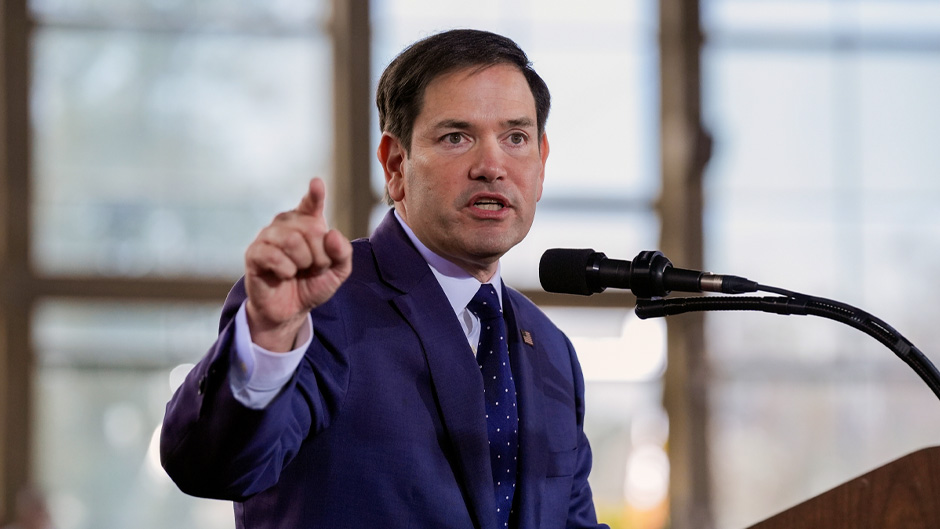
US Secretary of State Marco Rubio on Tuesday announced the measures, saying Akane, from Japan, and Seye, from Senegal, were targeted under an order issued by President Donald Trump last year. He accused the two ICC officials of taking part in efforts to investigate, arrest, detain or prosecute officials from governments that have not agreed to the court’s jurisdiction.
Rubio said the sanctions were part of Washington’s wider opposition to the ICC, which has more than 120 member countries and was established to investigate and prosecute serious international crimes.
"The International Criminal Court (ICC) is a corrupt and fatally politicized supranational court that has maliciously abused its authority and exceeded its mandate. We will not tolerate its assault on state sovereignty," Rubio said.
The ICC has been approached for comment on the latest sanctions.
Neither Trump nor the White House has so far issued a comment on the new measures.
The latest action adds to a growing list of ICC officials targeted by the Trump administration. Washington has already sanctioned at least 11 officials from the court, including nine judges and its chief prosecutor.
The sanctions include freezing assets, imposing travel bans and restricting the ability of US companies to provide services to those targeted.
The US previously imposed sanctions in response to ICC investigations involving US personnel in Afghanistan, as well as arrest warrants issued by the court against senior Israeli officials, including Prime Minister Benjamin Netanyahu, over alleged war crimes in Gaza.
Netanyahu has denied the war crimes allegations and accused the ICC of being driven by antisemitism. Neither the US nor Israel is a member of the ICC.
Trump’s opposition to the court goes back to his first term in office. At the time, he described the ICC as a "threat" and told the United Nations General Assembly that the court had "no jurisdiction, no legitimacy, and no authority" over the US.
The administration has since stepped up its efforts to pressure the court and its members.
Last month, Rubio called on the ICC’s 125 member countries to leave the court as part of a US campaign aimed at dismantling the institution "brick by brick".
A US official said Washington would "watch with interest" which countries responded to the call and which chose to remain members of the court.
The ICC was established in 2002 and has international jurisdiction to prosecute genocide, crimes against humanity and war crimes in member states, or in cases referred to it by the UN Security Council.
The Trump administration’s campaign has drawn opposition from rights organisations, which have accused Washington of trying to weaken international law and make it harder to hold governments accountable for serious crimes.
Liz Evenson, international justice director at Human Rights Watch, criticised the administration’s actions during a press conference last week.
"The Trump administration seeks a get-out-of-jail-free card for whomever it chooses," Evenson said.
Her comments came as four major US human rights organisations filed a lawsuit against the Trump administration over its campaign against the ICC.
Human Rights Watch, the Open Society Institute, the American Friends Service Committee and the Center for Constitutional Rights filed the case in New York, arguing that the sanctions were unconstitutional.
The organisations said the restrictions had made it harder for them to work with the ICC in efforts to seek justice for genocide, war crimes and crimes against humanity around the world.
The administration is also facing a separate legal challenge from three ICC judges who were sanctioned last year.
In June, judges Kimberly Prost of Canada, Solomy Balungi Bossa of Uganda and Reine Alapini-Gansou of Benin sued the Trump administration in a New York federal court over the sanctions imposed on them.
The judges argued that the measures were unlawful and intended to place pressure on them outside the normal legal process.
They said the sanctions were designed to exert extrajudicial pressure with the objective of punishing and coercing the judges.
The White House had previously defended the sanctions, saying Trump had lawfully used his authority under the International Emergency Economic Powers Act (IEEPA) to impose the measures.
The sanctions can also have a direct effect on the targeted individuals’ ability to handle ordinary financial transactions.
Banks with links to the US or those involved in transactions using US dollars are expected to comply with the restrictions, making it difficult for sanctioned individuals to access routine financial services.
Since Trump returned to office, the administration, led in its campaign by Rubio, has taken a harder position against the ICC.
In a video statement released in July to announce the campaign to dismantle the court, Rubio accused the ICC of "waging a war against our country" through "statutes, compacts and the force of so-called international law".
"Today, it threatens every aspect of our political and legal system," he added. "If they believe they can deprive us of our sovereignty, we will teach them the full meaning of American resolve."