
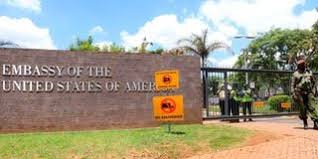
The US Embassy in Nairobi has issued a health alert to American citizens in Kenya, urging them to exercise caution and monitor their health after the country confirmed its first imported case and death from Bundibugyo Ebola virus disease.
The alert was issued on Wednesday, October 7, a day after Health Cabinet Secretary Aden Duale confirmed that a 40-year-old Kenyan man had died after testing positive for the virus.
The case is Kenya's first reported imported Ebola infection and death and has prompted health authorities to begin tracing people who may have come into contact with the patient.
“The Government of Kenya reported a case of Bundibugyo virus disease (‘Ebola’) on October 6. Health officials are tracing the patient's contacts,” the US Embassy in Nairobi said.
The man had been living in the Democratic Republic of Congo (DRC) for seven years before travelling to Kenya.
Information released by the Health Ministry showed that he had been unwell for about a month and had sought treatment at several hospitals in the DRC before travelling by road to Kampala, Uganda.
From Uganda, he later boarded a Jambojet flight and arrived at Jomo Kenyatta International Airport (JKIA) in Nairobi on the afternoon of Saturday, October 3.
His condition later worsened after he fell ill and was admitted to Nairobi Hospital. He developed severe symptoms, including fever, fatigue and bleeding under the skin, before dying at 11:30 pm on Monday, October 5.
His death came about 58 hours after he arrived in Kenya.
Bundibugyo virus disease is caused by a virus in the Ebola virus family and can lead to severe illness. Ebola infections may cause symptoms such as fever, weakness and muscle pain, while severe cases can involve bleeding.
The US Embassy has advised Americans who believe they may have been exposed to the virus to keep watch for symptoms and seek medical advice if they become unwell.
Those who may have been exposed have also been advised to tell healthcare providers about the possible exposure before seeking medical care.
“If at risk for Ebola, alert your healthcare provider if you are experiencing symptoms consistent with Ebola to receive guidance before presenting for care,” the embassy said.
The warning applies particularly to people who may have travelled through areas affected by an Ebola outbreak or had contact with someone infected with the virus.
US citizens who have travelled in affected areas have been advised to monitor their health for 21 days after travel.
The embassy has also reminded Americans to continue taking malaria prophylaxis when it has been recommended by their doctors, noting that malaria can produce symptoms similar to those associated with Ebola.
“Continue to take malaria prophylaxis as recommended by your doctor. Symptoms of malaria can mimic symptoms of Ebola, leading to preventable health scares,” the US government said.
The confirmed case has put renewed attention on Kenya's disease surveillance efforts, including screening and monitoring at airports and other points of entry.
The patient's movements from the DRC to Uganda and then Nairobi have also made contact tracing a key part of the response as health officials work to establish who may have been exposed.
Authorities are expected to identify, notify and monitor people who had close contact with the patient as they work to prevent further spread of the virus.
The US Embassy has also asked American citizens who need urgent health assistance or consular support to contact its office in Gigiri.
The case comes as Kenya responds to an infectious disease threat linked to an international travel route, placing greater focus on early detection, isolation, contact tracing and public health monitoring.
For health authorities, identifying people who may have been exposed and detecting any additional suspected cases early will remain a central part of the response.
The development also highlights the need for travellers and healthcare workers to remain alert to possible Ebola symptoms while avoiding unnecessary alarm, particularly because illnesses such as malaria can cause some similar symptoms.
Kenya's response will now largely depend on contact tracing and health monitoring as authorities seek to determine whether the imported case has led to any secondary infections.