
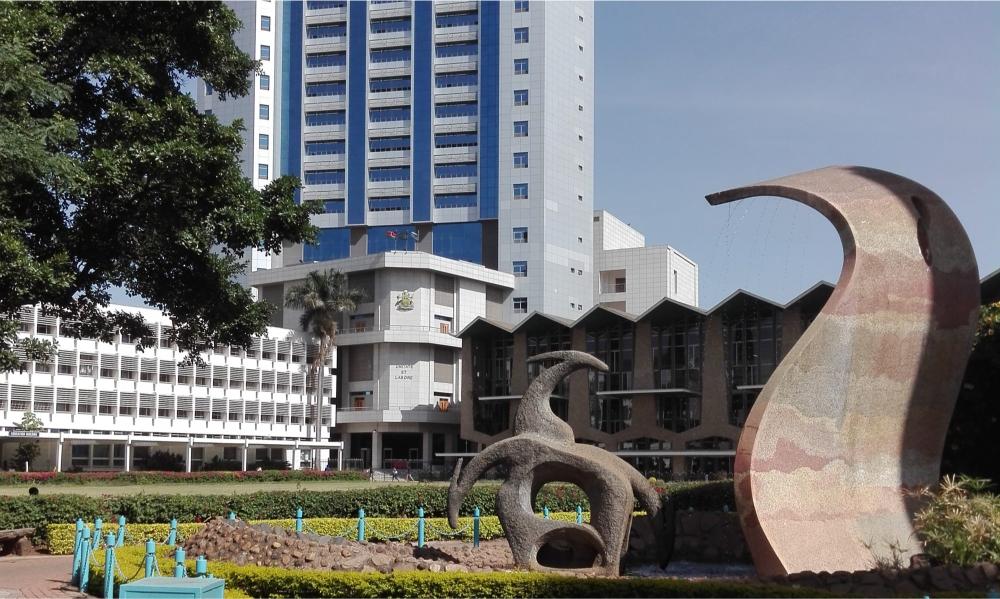
Kenya has recorded a limited presence in the latest global university rankings, with only two institutions making the Times Higher Education 2027 list as universities in neighbouring countries secured stronger representation.
The University of Nairobi retained its position as the country’s leading university but was placed in the 1,601-1,800 band, while Kenyatta University ranked in the 1,801-2,000 category.
The results put Kenya behind Uganda, whose two universities include Makerere University, ranked in the 801-1,000 band. Tanzania also had three universities on the list, led by Muhimbili University of Health and Allied Sciences, which was placed in the 1,601-1,800 band.
“Kenya has two universities in the rankings, compared with three in Tanzania, five in Ghana, 17 in South Africa and 29 in Nigeria,” reads the report.
Botswana, Kenya and Uganda each had two universities represented in the rankings, with Makerere recording the highest position among institutions from the three countries.
The 2027 edition comes with a revised ranking format that makes it harder to compare universities directly with their positions in the previous edition. Times Higher Education increased the number of bands from 11 to 18, while universities are now given individual positions up to 300 before being placed in wider ranking groups.
The changes come as the number of African universities included in the global rankings continues to grow.
A total of 69 universities from 16 sub-Saharan African countries made the 2027 list, up from 55 institutions representing 14 countries in the previous edition.
South Africa continued to have the largest presence among universities in the region. The University of Cape Town returned to the global top 150, taking a joint 147th position.
The University of Witwatersrand was placed in the 301-325 band, while Stellenbosch University came in the 326-350 band.
Nigeria had the largest number of African universities represented, with 29 institutions making the list. Covenant University, the University of Ibadan and the University of Lagos were among those placed in the 801-1,000 band.
Ghana had five universities in the rankings, including the University of Cape Coast and the University of Ghana, both of which were placed in the 801-1,000 band.
At the global level, the University of Oxford held on to first place for an 11th straight year. The Massachusetts Institute of Technology was second, while Princeton University and Stanford University shared third place.
The University of Cambridge was fourth, followed by Harvard University, California Institute of Technology and Imperial College London. The University of California, Berkeley and Yale University shared the ninth position.
Times Higher Education evaluates research-focused universities using measures covering teaching, research, knowledge transfer and international outlook.
The ranking system is based on 17 performance indicators divided into five areas: teaching, research environment, research quality, international outlook and industry.
Among the measures used are research volume, research income, research reputation, citation impact, research excellence, international staff and students, research links, industry income and patents.
Teaching reputation carries the highest weighting within the teaching category and is drawn from the Times Higher Education Academic Reputation Survey conducted between November 2025 and February 2026.
Times Higher Education chief global affairs officer Phil Baty said African universities were becoming more visible in the international higher education system.
“Africa is a growing force in the geopolitics of knowledge, and its universities are earning a growing presence on the world stage,” Mr Baty said.
He added: “Africa south of the Sahara not only has a university back in the world top 150, it has more institutions represented on the global stage in the elite university rankings than ever before (69, up from 55), from more nations (16) than ever.”
The 2027 rankings cover 2,297 universities and other institutions across 118 countries and territories, highlighting the growing participation of African institutions while Kenya remains represented by only two universities.