
University students have threatened to join striking lecturers and university staff in industrial action, warning that the prolonged disruption is putting their education at risk, increasing their living expenses and delaying their plans to graduate.
The warning comes three weeks after lecturers and non-academic staff at public universities across the country downed their tools over stalled negotiations on the 2025-2029 collective bargaining agreement (CBA), with students now demanding urgent government intervention to restore normal learning.
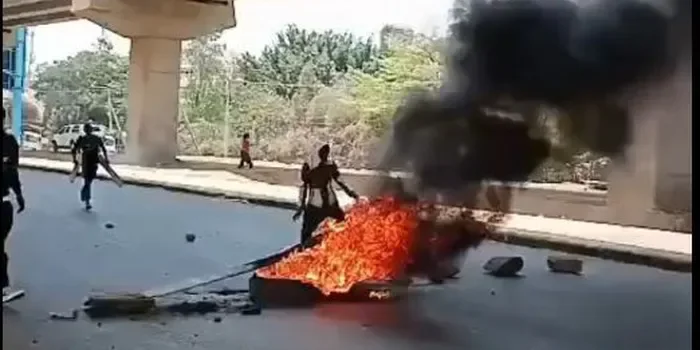
Students at the University of Nairobi staged demonstrations on Wednesday to protest the continued closure of lecture halls, warning that they would organise further protests if the dispute remains unresolved. They accused the government of allowing the disagreement with university unions to drag on at the expense of students, many of whom are struggling to cope with the uncertainty surrounding their academic programmes.
At the University of Nairobi, students say the strike has disrupted their studies, placed additional pressure on their families and left them unsure when they will return to class. They fear that the longer the standoff continues, the greater the risk of delayed examinations, extended academic calendars and postponed graduation dates.
Ahmed Rashid, president of the University of Nairobi Students Association, said learners were growing increasingly frustrated as the disruption continued, with many eager to complete their studies after spending years at university.
"We are frustrated. We fear that the prolonged standoff could further derail our academic plans, leaving us uncertain about when normal learning will resume. We have been in school for so many years, and we want to graduate," said Rashid.
He said the situation had also worsened financial difficulties among students, while some were facing growing pressure from their families to complete their education. He added that the suspension of university activities had affected students who relied on work within the institutions to support themselves.
"We are facing financial difficulties and pressure from our families. Many of our comrades have also been working within the university, but everything has stopped. Nothing is running," he said.
Rashid also raised concerns about the emotional distress facing students during the prolonged disruption, pointing to cases of students who had died by suicide.
Ian Ochieng, a student at the University of Nairobi, said repeated strikes had become a familiar experience, leaving learners frustrated by the recurring interruptions to their education.
"This is the third year in a row that we have faced this situation. We keep repeating the same script," he said.
Ochieng warned that students could join the lecturers' industrial action if the government failed to intervene and find a lasting solution to the dispute. The threat signals a possible widening of the standoff, with learners now considering direct action over the disruption of their studies.
Beyond missed lectures and delayed academic programmes, students say the strike is draining money they had set aside for accommodation, food, transport and other daily needs.
With no clear date for the resumption of classes, learners are being forced to decide whether to remain near their campuses and continue paying for their upkeep or return to their homes and spend more money travelling back when teaching resumes.
Remmy Osoti, a fourth-year student at Multimedia University of Kenya, said repeated journeys between campus and home were adding to the financial burden, leaving students with less money for other essential expenses.
"For me to travel upcountry, I spend about Sh2,500. When the strike is called off, I have to spend another Sh2,500 to return. That is already Sh5,000, money I could have used for other things," he said.
Students say such costs are particularly difficult to manage because they have no certainty about when the strike will end. Those who remain in their hostels must continue meeting their living expenses despite the suspension of learning, while those who travel home risk spending more money when universities reopen.
The disruption is affecting learners at different stages of their university education. First-year students face interruptions as they adjust to university life, while those in their final years risk falling behind on coursework, examinations and graduation requirements.
Universities may also be forced to revise their academic calendars to make up for the time lost during the strike, potentially extending students' stay in school and increasing the cost of completing their studies.
Meanwhile, the government is seeking to improve its financial offer to university unions in an effort to end the dispute.
Education Cabinet Secretary Julius Ogamba said the government was consulting the National Treasury on the possibility of increasing its Sh9.7 billion offer, which the unions have rejected.
Ogamba said the cost of meeting the unions' demands had been estimated at about Sh100 billion, a figure the government considers too high to sustain.
"The technical team said it would cost about Sh100 billion, which is unaffordable and unsustainable," Ogamba said.
He said the Education Ministry was assessing how much additional funding could be made available, taking into account the country's economic outlook over the next three years.
"We are discussing with the Treasury to enhance the Sh9.7 billion and see how far up we can go. Once we have a working figure, we'll call them, then we'll discuss," he said.
Ogamba appealed to students to remain calm as the government works towards resolving the disagreement, saying the aim was to reach an agreement quickly and allow learning to resume.
However, concerns remain over the amount of teaching time that students have already lost and whether universities will be able to recover it once the strike is called off.
Vice-Chancellors Committee of Public Universities chairman Daniel Mugendi warned that some academic programmes could face difficulties making up for the lost time because of the way their teaching schedules are structured.
"When students lose learning time, they have to try to catch up when they return. However, there are programmes like Medicine where it may not be possible to recover the lost time because they run back-to-back," Mugendi said.
His warning points to the challenges universities could face in restoring their academic schedules, particularly in courses that require students to complete a series of lessons and practical sessions within set periods.
Mugendi urged the government and university unions to reach a compromise and find a way out of the current impasse. He also called for future collective bargaining negotiations to be concluded before new agreements take effect, saying this would help prevent labour disputes from interfering with academic calendars.
As the strike continues, students are demanding a speedy resolution, warning that they should not be left to bear the academic, financial and personal consequences of a dispute they have no direct role in negotiating.
With the government still consulting on a possible revised offer and the unions having rejected the amount on the table, the return to normal learning remains uncertain, leaving thousands of students waiting for a breakthrough.