
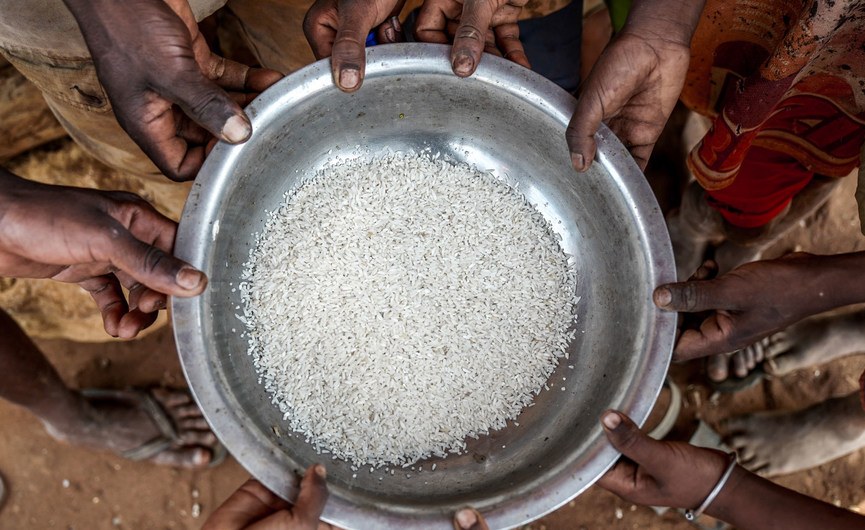
Africa has become the region with the highest number of hungry people globally, with about 309 million people estimated to have faced hunger in 2025, even as the world recorded a third straight year of decline in hunger levels, a new United Nations report shows.
The latest State of Food Security and Nutrition in the World 2026 (SOFI 2026) report warns that while global hunger is reducing, progress remains uneven, with Africa continuing to carry the heaviest burden due to rising population numbers, food insecurity and the high cost of nutritious meals.
The report was released on Tuesday by five UN agencies — the Food and Agriculture Organization (FAO), International Fund for Agricultural Development (IFAD), UNICEF, World Food Programme (WFP) and World Health Organization (WHO).
Globally, the number of people facing hunger dropped to an estimated 645 million in 2025, representing 7.8 per cent of the world’s population.
This was a decline from 8.1 per cent in 2024 and 8.6 per cent in 2022, translating to nearly 14 million fewer hungry people compared to the previous year and 43 million fewer than in 2022.
However, the report shows that the improvement has not been experienced equally across all regions.
Africa recorded the highest number of people facing hunger at 309 million, surpassing Asia, which had an estimated 292 million people affected.
Although the share of Africans experiencing hunger reduced slightly from 20.3 per cent in 2024 to 20 per cent in 2025, the report notes that the continent’s fast-growing population has pushed up the total number of people struggling to access enough food.
The report further highlights the wider food insecurity crisis facing the continent, estimating that 56.6 per cent of Africa’s population experienced moderate or severe food insecurity in 2025.
This means more than half of Africans faced periods where they had to reduce the quality or amount of food they consumed.
The cost of maintaining a healthy diet also remains a major challenge, with 66.6 per cent of Africa’s population unable to afford nutritious meals in 2025.
The figure is more than twice the levels reported in Asia and Latin America and the Caribbean, where access to affordable healthy food has improved.
According to the report, the average global cost of a healthy diet increased to 4.28 purchasing power parity (PPP) dollars per person per day in 2025, making foods such as fruits, vegetables and animal-source products difficult for many households to afford.
The UN agencies warned that recent global challenges could slow down efforts made in fighting hunger.
"The 2026 Middle East conflict, along with weather extremes and the reductions in official development assistance and humanitarian funding, are threatening to undermine the progress made to end global hunger," the report states.
FAO Director-General Qu Dongyu said more action was needed to ensure the world moves faster towards ending hunger and improving access to nutritious food.
"The report shows that progress is possible, but we must move faster. Ending hunger and making healthy diets affordable requires political commitment, sustained investment and enabling policies," he said.
WHO Director-General Dr Tedros Adhanom Ghebreyesus said the decline in global hunger was encouraging but warned that millions of people still cannot afford proper nutrition.
"While we welcome the clear progress we have made in reducing hunger, a healthy diet still remains unaffordable for one in three people globally. Healthy diets are not a luxury – they are the foundation of health and must be within everyone's reach," he said.