
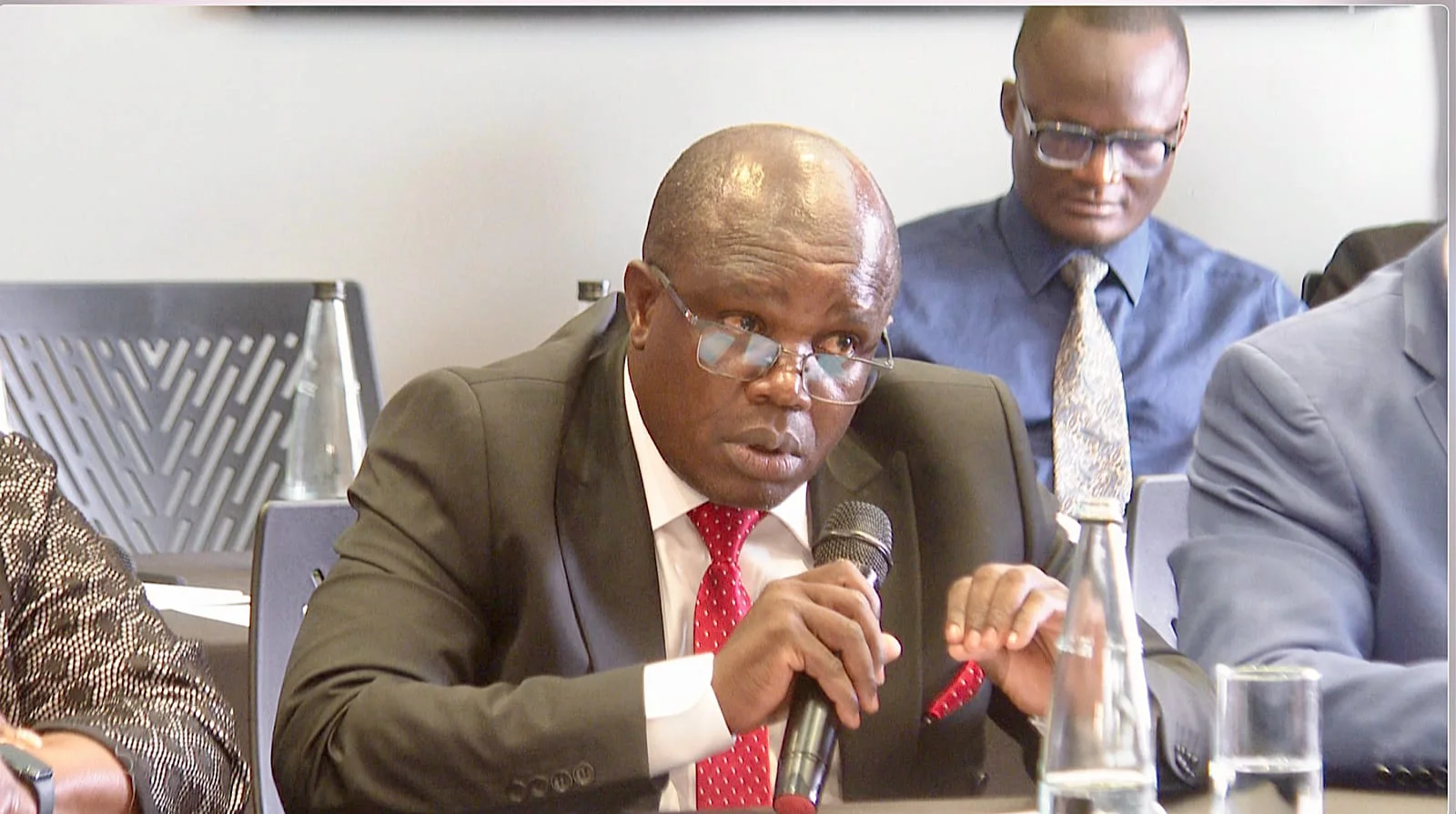
The union wants Parliament to guarantee public funding for university staff, research and institutional operations, warning that student financing must not become a substitute for funding universities.
The Universities Academic Staff Union (UASU), led by its National Secretary General, Constantine Opiyo Wasonga, has urged Members of Parliament to substantially amend the Tertiary Education Placement and Funding Bill, 2026, before its enactment, warning that the proposed framework could expose public universities to financial instability and put academic staff remuneration at risk.
Wasonga in submitting the memorandum to the National Assembly Committee on Education, the union called on lawmakers to establish a clear legal distinction between financing students and funding the institutions responsible for delivering university education.
UASU said Parliament must not approve a framework that finances students without guaranteeing universities the resources needed to pay salaries, meet pension obligations, honour collective bargaining agreements and sustain teaching and research.
“The Union recommends that the Bill should not be enacted in its current form without substantive amendments addressing the financing and sustainability of public Universities,” Wasonga said.
The proposed legislation, National Assembly Bill No. 49 of 2026, seeks to establish a Tertiary Education Funding Authority (TEFA) and consolidate functions currently performed by the Higher Education Loans Board, the Universities Fund and the TVET Funding Board. It also proposes a new statutory framework for the Kenya Universities and Colleges Central Placement Service.
But UASU has challenged Parliament to address what it considers a fundamental weakness in the proposed reforms: the absence of sufficient safeguards for institutional funding.
“The Union underscores that the distinction is fundamental because funding the student is not equivalent to funding the University,” the memorandum states.
The union warned that universities could face pressure to meet their financial obligations through tuition fees, loan recoveries, commercial borrowing and other uncertain sources if the Bill does not expressly guarantee government funding.
“If universities are subsequently expected to meet salary obligations from student fees or commercially raised funds, academic remuneration could become contingent on enrolment, fee collection, loan recovery or capital market conditions.” Wasonga stated.
UASU wants MPs to insert provisions requiring adequate and predictable funding through the National Exchequer and parliamentary appropriations. It argues that salaries, pensions and other employment obligations must remain protected from fluctuations in student numbers and fee collections.
The union also wants the Bill to safeguard existing collective bargaining agreements, employment rights, scholarships, loans and institutional commitments during the transition to the new funding authority.
On governance, UASU has called for representation of public university management and recognised academic staff unions on the boards of TEFA and the placement service, saying decisions affecting universities should incorporate sector expertise.
The union further proposed a funding structure that separates student support from institutional financing and capital development, with government and development partners supporting research facilities, laboratories, libraries and other essential infrastructure.
UASU’s message to Parliament is that widening access to higher education cannot come at the expense of the institutions delivering it.
“It is UASU’s position that the success of the proposed reforms will ultimately depend on whether the new system adequately finances both the student and the institution.” Wasonga urged.