The stakeholders on Saturday in Machakos County presented their views before the National Assembly’s Departmental Committee on Agriculture and Livestock, chaired by Tigania West MP John Mutunga, as lawmakers scrutinise the proposed legislation.
Kagwe said the government would continue limiting sugar imports as part of wider efforts to support local producers and make the country’s sugar industry more competitive.
Data released by the Kenya National Bureau of Statistics (KNBS) shows that sugar production rose by 21.98 per cent to 348,143 tonnes between January and May this year, compared to 285,418 tonnes produced during the same period in 2025.
Presentations at the conference showed that Brazil has replaced more than four billion barrels of gasoline with ethanol, with ethanol-based fuel remaining cheaper than conventional petrol. Deputy President Kithure Kindiki, who also attended the seminar, said the government will review the Sugar Act and related regulations to formally support ethanol production within Kenya’s legal and economic framework. He added that the government will work with the Energy and Petroleum Regulatory Authority to develop fuel blending regulations. Kagwe defended ongoing reforms under the Sugar Act 2024, saying leasing state-owned sugar factories to private investors has already improved efficiency and increased farmer earnings. “We have discovered that the private sector is a much stronger player, a much more efficient player in the sugar sector than the government sector,” he said. He added that the government has already seen “immediate benefits” within the last year after some public mills were leased to private operators. At the same time, Kagwe stressed that farmers remain central to the reforms, noting that more than six million Kenyans directly or indirectly depend on the sugar industry for their livelihoods. “The farmer is the most important person in the sugar sector, and I say this without any fear of contradiction,” Kagwe said. The government says expanding ethanol production will help reduce Kenya’s dependence on imported fuel, strengthen energy security and create more stable income opportunities for farmers amid volatile global oil prices.
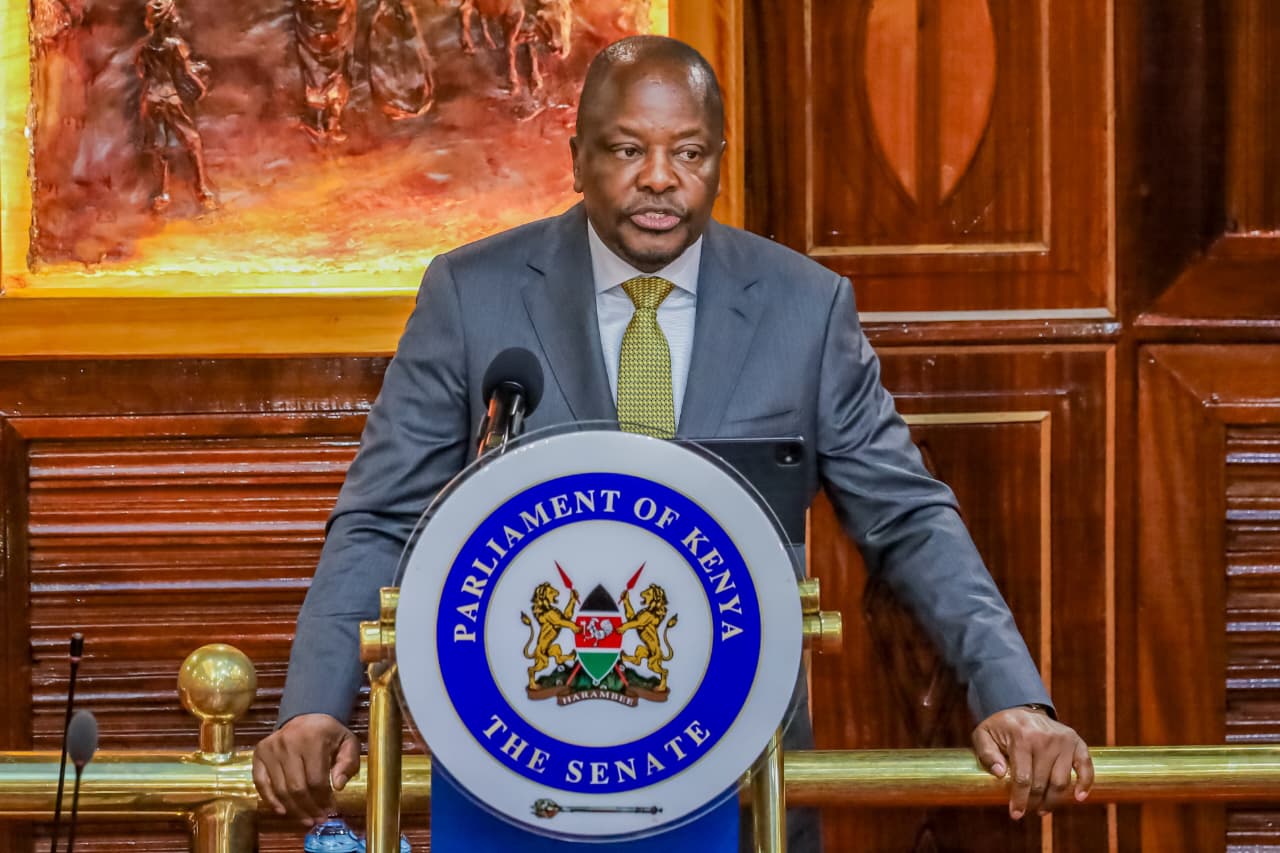
Agriculture CS Mutahi Kagwe told Parliament that private leases of four state sugar mills will modernize production, protect farmers, and see all investments revert to government after 30 years.