
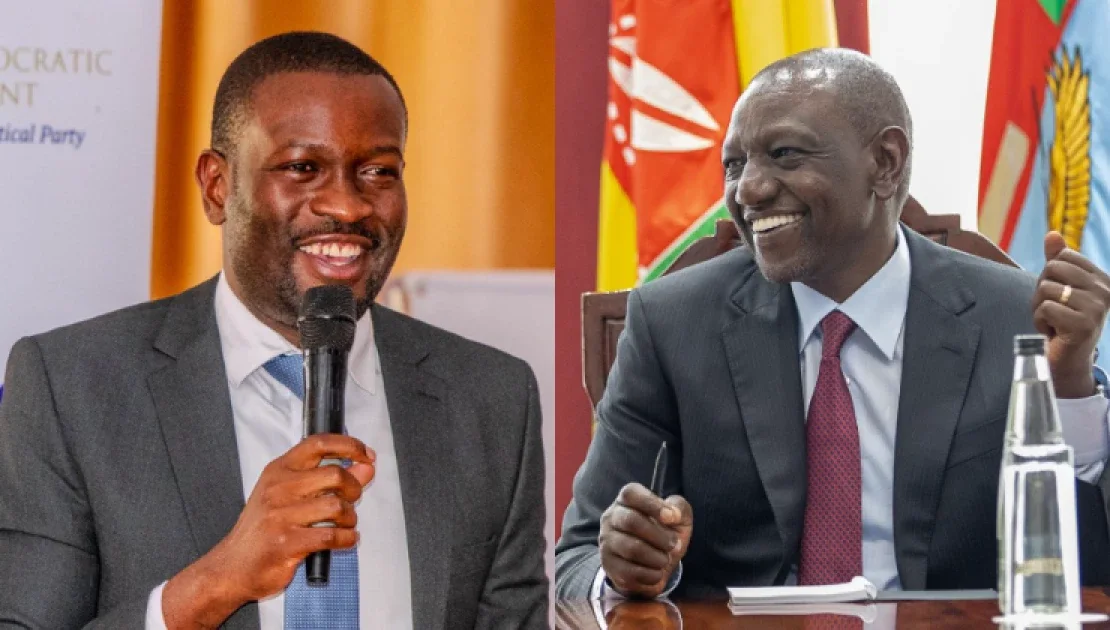
President William Ruto and Nairobi Senator Edwin Sifuna have escalated their war of words over compulsory salary deductions, with Sifuna vowing to abolish the affordable housing levy if his political camp wins the 2027 General Election, setting up a fresh political showdown over the cost of the President’s flagship programmes.
The latest exchange has brought the housing levy and Social Health Authority (SHA) contributions into the centre of their political dispute, with Sifuna questioning the financial burden on workers and accusing the government of failing to account for its spending, while Ruto continues to defend the programmes as key to his development agenda.
Taking to his X account on Wednesday, Sifuna challenged the deductions made from his earnings to finance affordable housing and healthcare, arguing that the amounts involved deserved public scrutiny.
“Is he done ranting about the 24K I pay for his housing scam because kuna hii 43K I pay every month for his SHA scam we also need to discuss,” Sifuna wrote.
The senator also turned his criticism towards expenditure at State House, alleging that taxpayers were shouldering the cost of government programmes while public money was being spent wastefully.
“Tukimaliza hio ndio tuongee juu ya the 500k in PAYE he takes every single month and splashes on tea and mandazi pale State House all the while insulting us the taxpayers that carry the burden of his greed,” he added.
Sifuna went on to outline his political camp’s plans for government expenditure, promising to cut what he considers unnecessary spending and provide relief to Kenyan workers if his side wins the next election.
“In 2027 we are cutting the fat out of our budget to bring relief to all Kenyan workers. The housing levy will go with Ruto,” he declared.
Ruto defends housing programme amid criticism
The senator’s remarks follow Ruto’s renewed defence of the Affordable Housing Programme, which the President has repeatedly presented as a way to create employment, support the construction industry and increase access to decent homes.
During his North Rift tour in Marakwet East, Elgeyo Marakwet County, on Tuesday, Ruto criticised leaders seeking to end the initiative, questioning why elected representatives would oppose a programme he says is intended to benefit ordinary citizens.
“I heard another fellow the other day saying that he pays Sh24,000 from his salary for housing, yet he is a Senator. Now he wants to stop the housing programme simply because he pays Sh24,000.” Ruto said.
Although the President did not identify Sifuna by name in the quoted remarks, his reference to a senator paying Sh24,000 towards housing came amid the Nairobi lawmaker’s objections to the levy.
Ruto has argued that stopping the housing projects would threaten employment opportunities for young people working in construction and undermine plans to provide affordable homes, markets and student hostels.
His administration maintains that the programme will deliver wider economic benefits, while critics have questioned whether the compulsory deductions place an excessive burden on workers.
The disagreement has therefore extended beyond the amount deducted from individual salaries to a broader debate over how the government should finance its development priorities and whether the programmes justify their cost to taxpayers.
Court ruling clears way for continued housing levy collection
The Affordable Housing Act, 2024, provides the legal framework for collecting the housing levy, which is administered by the Kenya Revenue Authority (KRA).
Under the arrangement, employees contribute 1.5 per cent of their gross monthly salaries, with employers required to make a matching contribution.
The levy has faced legal challenges since its introduction, with opponents questioning its constitutionality, fairness and impact on workers’ take-home pay.
However, on September 25, 2026, the Court of Appeal upheld the Affordable Housing Act, dismissing 42 consolidated appeals challenging the legislation and allowing the collection of the levy to continue.
The decision marked a significant development in the legal dispute surrounding the programme, although the political debate over the deductions has continued.
Sifuna’s latest pledge introduces another dimension to the controversy, placing the levy among the policies his political camp could seek to reverse if it secures power in 2027.
His position contrasts with Ruto’s insistence that the housing initiative is necessary to expand access to homes and sustain employment in the construction sector.
SHA deductions become another point of contention
Sifuna has also questioned the financial obligations imposed on salaried workers under SHA, the healthcare financing system introduced in October 2024 to replace the National Health Insurance Fund (NHIF).
Under the Social Health Insurance Regulations, salaried households contribute 2.75 per cent of their gross salaries or wages to the Social Health Insurance Fund, subject to a minimum monthly contribution of Sh300.
The system forms part of the government’s broader plan to expand healthcare financing and coverage. However, its implementation, alongside the deductions required from households, has become a source of political debate.
Ruto has defended SHA and affordable housing as central pillars of his administration’s development agenda, arguing that the initiatives are intended to improve public services, create employment and expand economic opportunities.
Sifuna’s criticism brings the two programmes together in a wider argument over the cost of government policies, with the senator demanding relief for workers and questioning the use of public funds.
The confrontation also signals that compulsory contributions could feature prominently in political discussions ahead of the 2027 General Election, as leaders debate the balance between financing national development programmes and protecting household incomes.
With Ruto defending the housing and healthcare schemes and Sifuna promising to scrap the housing levy if his camp takes power, the dispute has placed taxation, public spending and accountability firmly within the emerging election debate.