
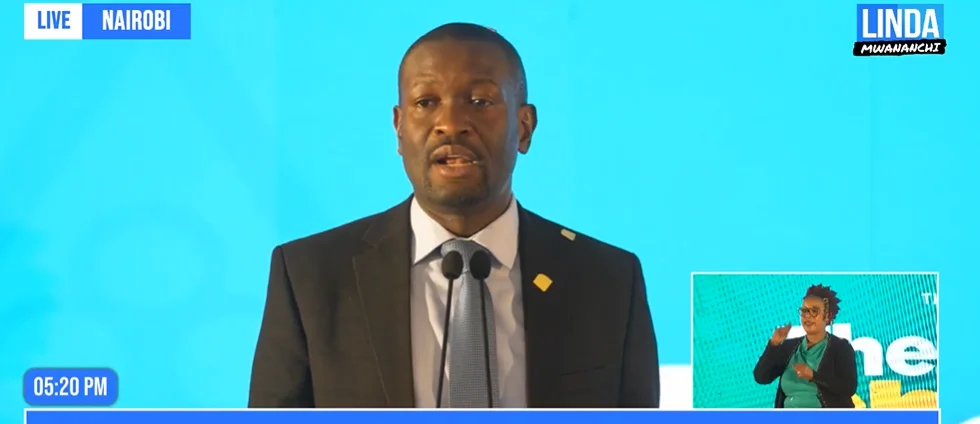
Nairobi Senator Edwin Sifuna has asked the Senate Standing Committee on Energy to provide comprehensive details on the proposed Dangote oil refinery in Lamu County, citing concerns over public financing, environmental impact, community participation, and ownership of the multibillion-shilling project.
In a request for a statement received by the Senate on October 2, Sifuna called for the disclosure of the refinery's financing structure, implementation model, government investment, public participation process, environmental assessments and beneficial ownership.
His request comes days after President William Ruto and Nigerian businessman Aliko Dangote officially broke ground for the $16 billion (about Sh2.2 trillion) Dangote East Africa Petroleum Refinery in Mokowe, Lamu County, on September 30.
The facility is planned to process up to 700,000 barrels of crude oil per day, making it one of the largest refineries in Africa and the largest planned refinery in East and Central Africa.
The integrated project is expected to include a 1,000-megawatt power plant, petrochemical, fertiliser and chemical manufacturing facilities, storage infrastructure, pipelines and marine facilities.
Project organisers estimate that the wider development could create up to 60,000 direct and indirect jobs.
Sifuna, however, said the scale of the investment makes transparency and accountability essential before the project proceeds.
“Whereas no one is opposed to development or foreign investment and whereas the country is eager for major infrastructural projects, such projects must fundamentally be undertaken within the auspices of the law,” he said.
He cited Article 10 of the Constitution, which establishes national values and principles of governance, including transparency, accountability, public participation and sustainable development.
Sifuna also referred to Articles 201 and 227, which provide for openness and accountability in public finance and procurement, as well as Article 35(3) on access to information held by public entities and private bodies where necessary for the exercise or protection of rights.
The senator wants the Energy Committee to table records showing how the refinery will be financed and implemented, including the amount, if any, that Kenyan taxpayers will contribute and the source of funds for any government allocation.
He has also requested a value-for-money assessment of any investment made by the government on behalf of taxpayers, arguing that the public should understand the justification for state participation in the project.
Sifuna further wants the committee to disclose all beneficial owners of the overall project and companies involved in its implementation.
The demand comes as the refinery faces questions over land, environmental protection and community participation.
A court has ordered parties to maintain the status quo over disputed land involving local residents, with the case scheduled for hearing on October 14. Residents have raised concerns over ancestral land, compensation and environmental safeguards.
The refinery's proposed capacity is significant compared with Kenya's current petroleum market. Kenya National Bureau of Statistics reported that domestic demand for petroleum products rose 9.9 per cent to 5.7 million tonnes in 2025, while petroleum-product imports increased 12.2 per cent to 5.5 million tonnes. Kenya therefore remains heavily dependent on imported refined petroleum products.
The Dangote Group is seeking to replicate its Nigerian refining model in East Africa.
Its Lekki refinery in Nigeria, which began production in January 2024, has a current crude-processing capacity of about 700,000 barrels per day following an expansion, and has helped Nigeria reduce reliance on imported refined products.
In Kenya, the Lamu refinery is expected to supply petrol, diesel and jet fuel to the domestic and wider East African markets while supporting industrial development along the Lamu Port-South Sudan-Ethiopia Transport (LAPSSET) Corridor.
The project has also attracted major international engineering partnerships, with Engineers India Limited securing a contract valued at more than $450 million, while Honeywell Technologies is providing engineering and technology services.
Sifuna said the project's potential economic benefits should not override constitutional safeguards.
He wants the Energy Committee to explain the extent of public participation undertaken before approvals were granted, including concerns raised by affected communities, as well as provide details of the project's environmental impact assessment.
For Sifuna, the central question is not whether Kenya should attract large-scale investment, but whether a project involving public resources, communities and significant environmental implications is being implemented transparently and within the law.
The Senate Energy Committee is expected to consider the request and provide the information sought, placing renewed scrutiny on the financial, environmental and ownership arrangements behind Kenya's proposed $16 billion refinery.