National Assembly Deputy Speaker Gladys Boss Shollei has defended the government’s development agenda, citing affordable housing, healthcare reforms and infrastructure projects as evidence of progress, while acknowledging challenges in delivering services to Kenyans.
Speaking on Radio Generation on Wednesday, the Uasin Gishu Woman Representative said the administration initially struggled to convince the public that its development plans would deliver tangible results.
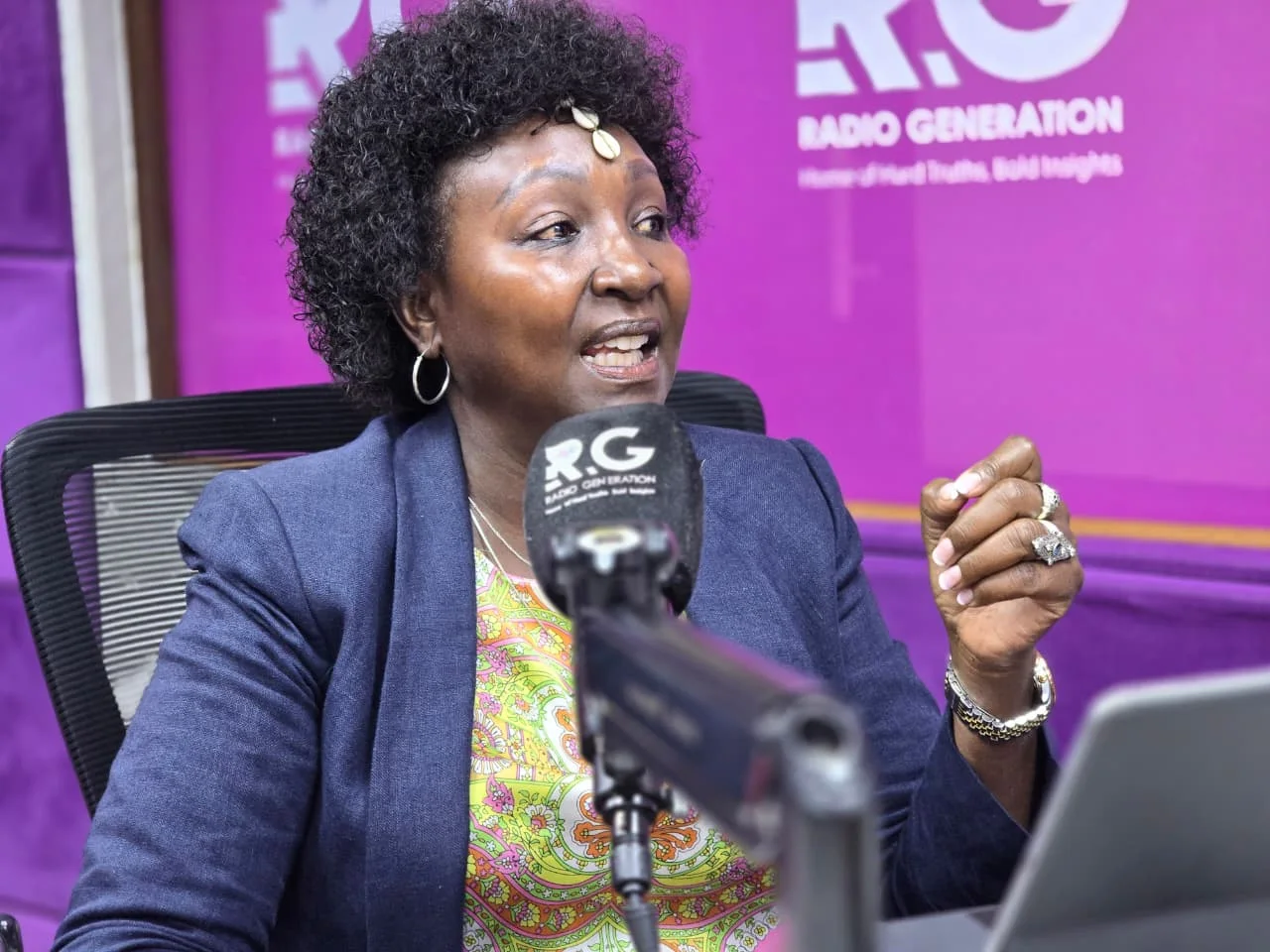
“We started with a trust deficit because many people did not believe the Ruto administration would deliver on its promises. The early stages were difficult because, like constructing a house, you must first lay the foundation. That involves significant investment in materials such as steel and cement before the structure becomes visible. Similarly, some of the government’s initial investments were not immediately apparent to the public.”Shollei said.
Her defence comes as the government pursues major investments under its Bottom-Up Economic Transformation Agenda, including housing, roads, healthcare and sports facilities.
However, the scale of spending has also increased scrutiny over project completion, affordability and whether the intended beneficiaries are receiving the promised services.
Data from the Kenya National Bureau of Statistics (KNBS) shows construction activity rebounded in 2025, growing by 6.8 per cent after contracting by 0.7 per cent in 2024. Government expenditure on housing rose from Sh79 billion in the 2024/25 financial year to a projected Sh116.7 billion in 2025/26.
Shollei cited the affordable housing programme as an example of investments whose impact was becoming more visible.
She recalled the handover of homes to the first tenants at the Pioneer Affordable Housing project in Uasin Gishu County, highlighting a 21-year-old woman who worked at the construction site before becoming a homeowner.
According to Shollei, the woman saved her earnings from casual work, paid a deposit of Sh34,000 and secured a unit with monthly repayments of Sh3,800.
The government’s housing programme has expanded considerably, although construction and completion remain important measures of delivery.
A 2026 Budget Policy Statement reported that 214,057 housing units were under construction across the 47 counties, while 1,189 units had been handed over to beneficiaries.
The Deputy Speaker maintained that the programme incorporates social housing, affordable housing and market-rate units, alongside facilities such as schools and health centres.
She also cited developments near the Uasin Gishu special economic zone, where housing is intended to accommodate workers expected to be employed in factories and assembly plants.
On healthcare, Shollei defended the Social Health Authority (SHA), saying the new insurance framework was designed to extend coverage beyond formally employed people.
“The biggest issue is that NHIF was covering employed people. If you don’t have a payslip, you’re out. But right now, anybody can be on that insurance, even if they don’t have a job, as long as they pay the required amount,” she said.
Government figures reported in August 2026 showed that 32.3 million Kenyans had registered with SHA. However, registration figures alone do not establish how easily members can access treatment or whether all services are affordable.
Shollei cited a woman with a broken leg who, she said, underwent surgery at a private hospital with treatment covered by SHA after assistance with registration. She nevertheless acknowledged problems involving referrals to specialist hospitals and the need to educate patients about the process.
She also said concerns over cancer coverage had prompted further review, arguing that implementation challenges needed to be addressed as the system developed.
The legislator further defended stadium construction, saying sports infrastructure could attract international events, create jobs and support businesses. Kenya is preparing to co-host the 2027 Africa Cup of Nations with Uganda and Tanzania, with major facilities being developed or upgraded.
A parliamentary inspection in October reported that Talanta Stadium was about 94 per cent complete, while identifying outstanding accessibility, transport and operational requirements.
While Shollei maintained that government investments were beginning to show results, questions around access to healthcare, project completion, and the distribution of benefits remain central to assessing their impact.
Public confidence will ultimately depend not only on announced plans and spending, but also on completed projects and services that Kenyans can reliably access.