
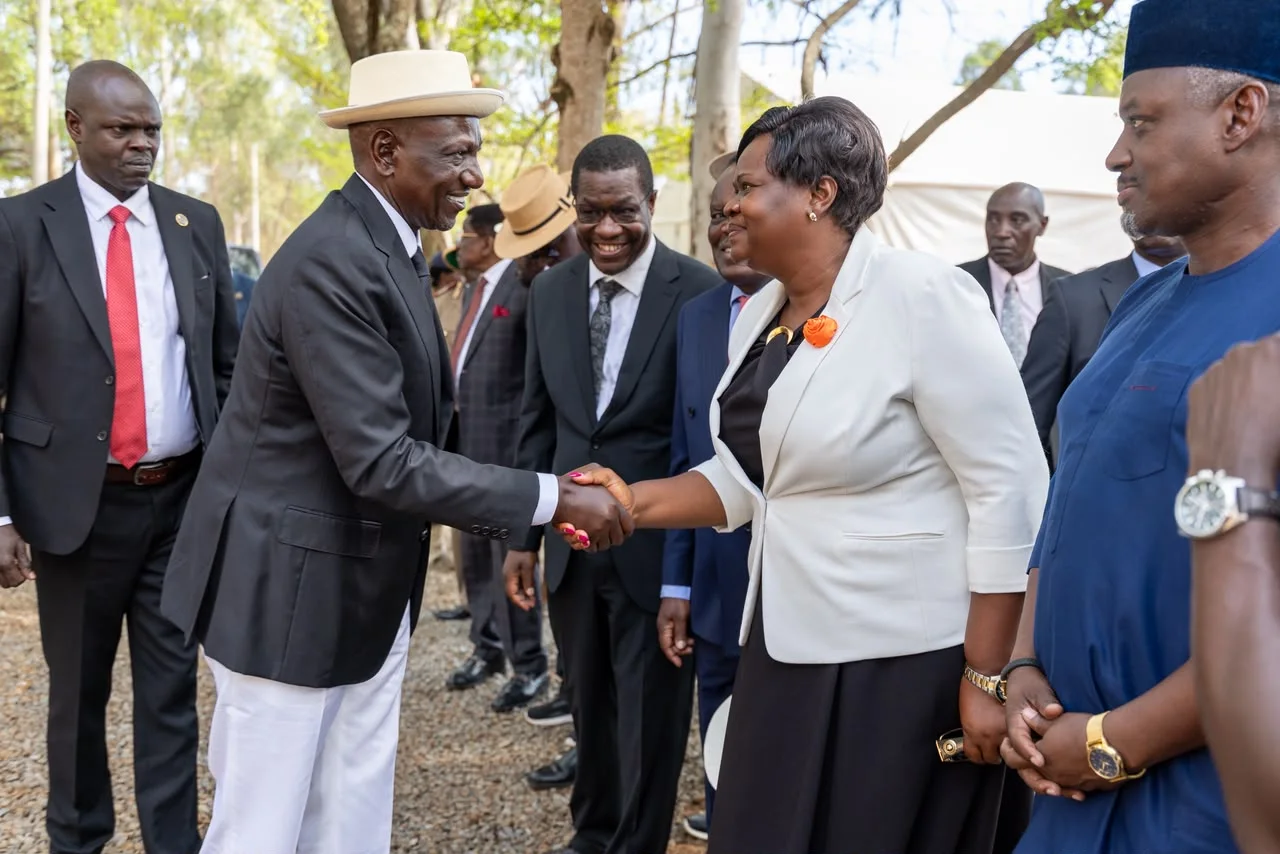
ODM Chairperson and Homa Bay Governor Gladys Wanga has praised the late former Prime Minister Raila Odinga for helping women gain a stronger foothold in Kenya’s political leadership, saying he stood with them even when their push for greater representation faced strong opposition.
Speaking during the dedication and handover of Raila’s mausoleum in Bondo, Siaya County, on Wednesday, Wanga said Raila was a strong supporter of women seeking leadership positions and played an important role in efforts to advance the two-thirds gender principle.
She said Raila’s belief in equal participation was not limited to political statements, but was reflected in the way he supported women leaders as they sought to overcome barriers within political institutions.
“Baba believed deeply in inclusion of women in leadership; he held our hands against all odds, and I think the women leaders here know that Baba went above and beyond to get the women leaders to the front, even when it wasn’t popular,” she said.
Wanga recalled Raila’s support for efforts to achieve the two-thirds gender rule, saying he remained committed to the cause even when the issue faced challenges in Parliament.
She said Raila would personally attend parliamentary proceedings in support of women leaders, including at a time when some male MPs were absent from the chambers.
According to Wanga, his presence and backing gave women leaders the support they needed as they pushed for greater representation in political decision-making.
Her remarks come against the backdrop of Kenya’s continued struggle to fully realise the constitutional promise of gender balance in leadership.
The Constitution provides that no more than two-thirds of members of elective or appointive bodies should be of the same gender. Article 100 also requires Parliament to put in place legislation to promote the representation of women and other marginalised groups.
Despite these provisions, Kenya has yet to fully implement the two-thirds gender principle through legislation.
Women currently make up about 23 per cent of the National Assembly, with 80 women among the 348 sitting members, according to the Inter-Parliamentary Union. The figure remains below the constitutional requirement for balanced representation.
The 2022 General Election resulted in 82 women being elected to the National Assembly, accounting for about 23.5 per cent of the chamber at the beginning of the current Parliament.
In the Senate, women secured 21 of the 68 seats, translating to about 31 per cent representation.
Wanga said Raila’s support had a direct impact on women who ventured into politics and those who went on to take up senior leadership positions, including herself.
She said his approach to leadership was built around ensuring that different groups and regions had an opportunity to participate in the affairs of the country.
According to Wanga, the same belief in inclusion informed Raila’s long-standing support for devolution, which she said was intended to ensure that development and decision-making were not concentrated in a few parts of Kenya.
“Baba believed in inclusion, and that is why he fought for devolution, so that no part of this country could be left behind. Baba believed in inclusion, and that is why, whenever he had an opportunity, he made sure that every part of this country was part of it.”
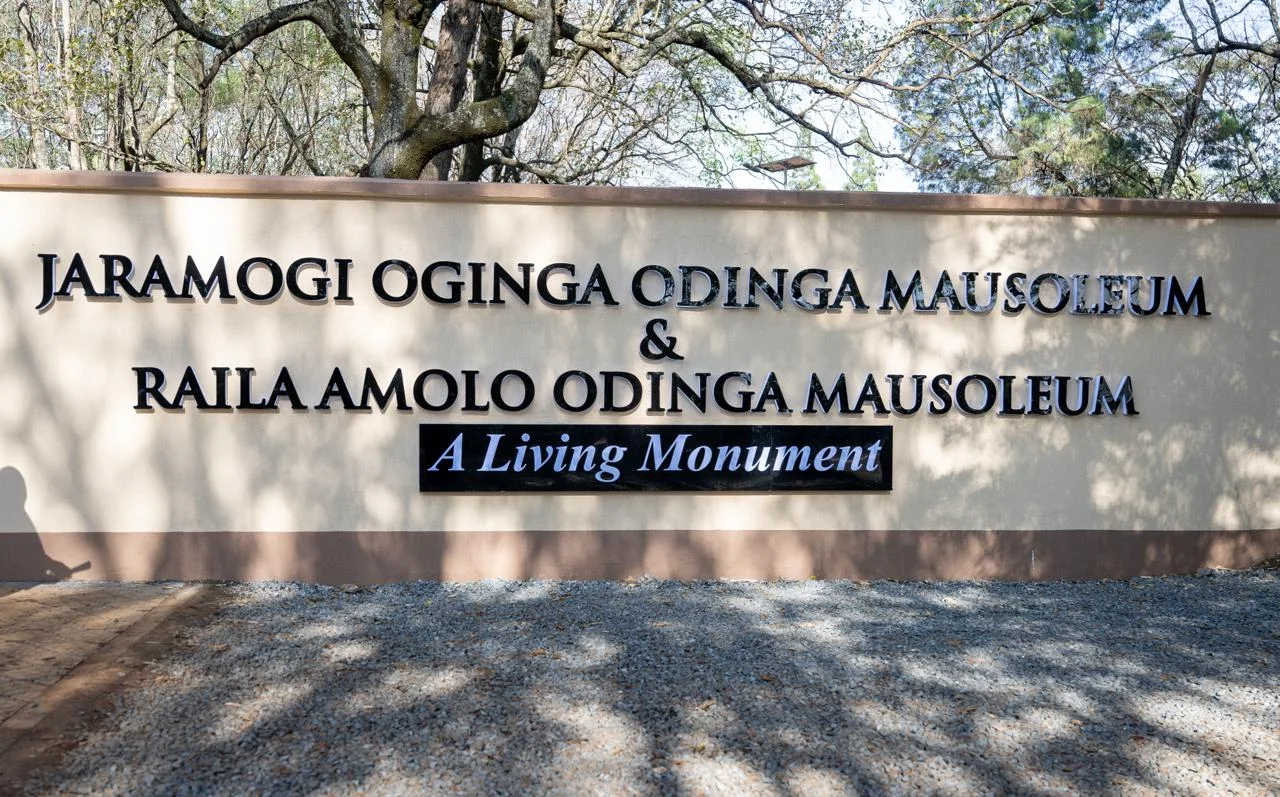
Wanga said Raila’s political legacy should therefore be viewed beyond his contribution to national politics, arguing that his push for inclusion also sought to give different communities and regions a stake in the country’s development.
She said the principle remained relevant under the current broad-based government, which she credited with making progress towards a more inclusive approach to national development.
“And in addition to Baba’s mausoleum today on that legacy, I am grateful that, Your Excellency, we have moved forward as the broad-based government on this agenda of inclusion, which you also deeply believed in, and we have said usawa ni sawa,” Wanga maintained.
She pointed to Siaya, West Pokot, Kajiado and Narok as examples of regions that should all have an equal opportunity to benefit from national resources and development.
Wanga said the need for equal participation remained central to Raila’s legacy, particularly his support for women and communities that had historically faced barriers to political representation.
She maintained that his contribution to creating space for women in leadership should continue to be recognised as part of his wider political legacy.
Her remarks placed the question of women’s representation alongside Raila’s broader advocacy for inclusion, at a time when Kenya continues to fall short of the constitutional goal of achieving greater gender balance in its political institutions.