
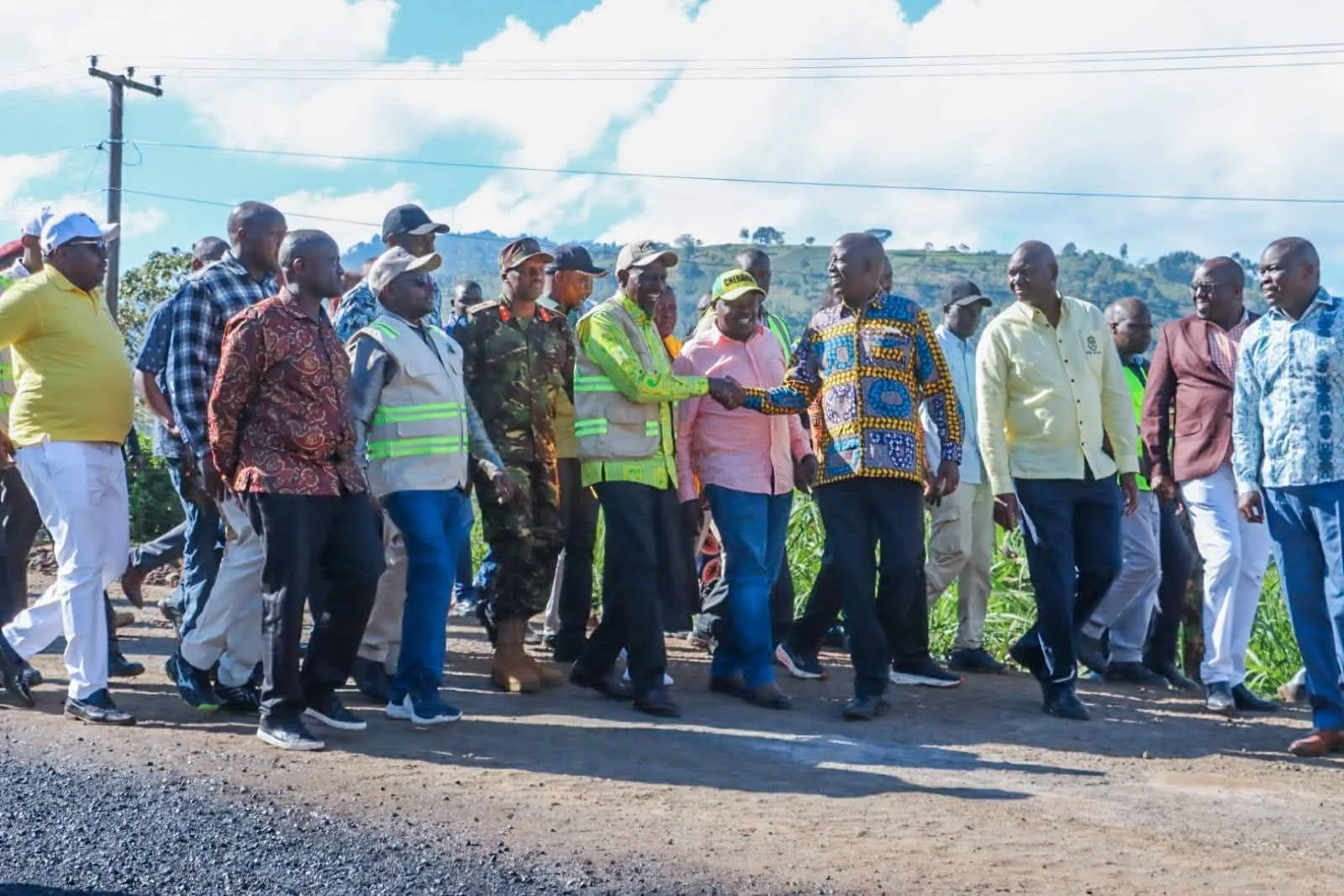
President William Ruto has pledged billions of shillings in investments in healthcare, electricity and affordable housing as he outlined his development agenda during a tour of Tinderet, Nandi County, on Monday.
Ruto defended the Social Health Authority (SHA), urging residents to register for the government-backed health insurance scheme and dismissing criticism from political opponents.
He said the programme was intended to protect households from the financial burden of medical treatment, which he argued had forced some families to sell land, livestock and other assets to pay hospital bills.
“We do not want Kenyans to continue selling their land, cows or other livestock to pay hospital bills. These medical expenses will be covered by the Social Health Authority, which is funded by contributions from Kenyans, to ensure equality across the country,” Ruto said.
The President challenged residents to demonstrate whether they had enrolled in SHA, maintaining that the scheme was central to the government's efforts to achieve universal health coverage.
Kenya's health financing reforms have expanded registration under SHA since its introduction in October 2024. The Ministry of Health reported in August 2026 that more than 32.3 million people had been covered, compared with a system that previously reached approximately a quarter of the population. The ministry said the transition was intended to make healthcare financing more inclusive and reduce dependence on direct payments by patients.
However, registration and access to treatment remain distinct measures, with the effectiveness of the scheme depending on adequate funding, participating health facilities and the availability of medical services.
On electricity access, Ruto announced a Sh55 million project to connect 4,000 households in Tinderet to the national grid.
He added that the government had allocated Sh2.1 billion to connect 23,000 households across Nandi County, directing Kenya Power to complete the connections before April 2027.
“We have allocated Sh2.1 billion to Nandi County to connect 23,000 households to electricity. I have instructed Kenya Power to ensure all these households are connected before April next year. We want to eliminate darkness and bring more light to the county,” Ruto said.
The pledge comes amid continued expansion of Kenya's electricity network. The Energy and Petroleum Regulatory Authority reported that the country had 10,432,707 grid-connected customers by June 2026, following 411,710 new connections during the financial year. The additional connections in Nandi would extend access to households while potentially supporting businesses, education and other economic activities.
Ruto also announced Sh1 billion for a stadium in Nandi County, citing the region's contribution to Kenya's international athletics success.
On housing, he said the government was constructing 3,500 housing units in the county, backed by Sh9 billion, while the broader housing budget for Nandi stood at Sh18 billion.
The projects form part of the government's wider Affordable Housing Programme, which seeks to increase the supply of homes for low- and middle-income earners.
According to the Kenya National Bureau of Statistics' 2026 Economic Survey, 138,474 affordable housing units were under construction nationally as of December 2025, with an estimated construction cost of Sh385.8 billion.
The figures illustrate the scale of the programme, although construction alone does not establish how many units have been completed, occupied or made affordable to intended beneficiaries.
The President further announced that 15 markets were being developed using Sh1.5 billion in government funding. He said the investments were intended to improve trading conditions and create economic opportunities for residents.
He also outlined plans to provide accommodation for 6,000 students attending technical and vocational education and training institutions, medical training colleges and universities in the area.
In agriculture, the President maintained that subsidised fertiliser prices had fallen from Sh7,000 to Sh2,000 and pledged to reduce maize seed prices by half. He urged residents to preserve agricultural land for food production and cash crops rather than subdividing farms into smaller plots.
The President concluded by pledging to unite Kenyans across ethnic and regional divisions ahead of the 2027 general election.
He argued that discrimination, ethnic divisions and political hostility had slowed development, promising to bring together leaders and communities from across the country.
The commitments place healthcare financing, electricity access, housing, agricultural support and national cohesion at the centre of Ruto's development message, with implementation timelines and the delivery of promised projects likely to shape assessments of the government's performance ahead of the next election.