
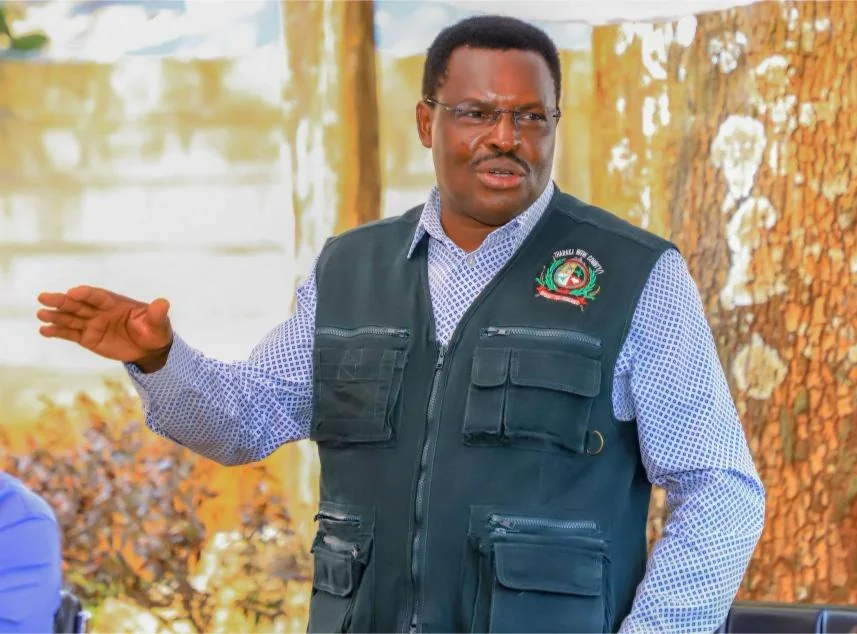
Tharaka Nithi Governor Muthomi Njuki has been elected Chairperson of the Council of Governors (CoG), succeeding Wajir Governor Ahmed Abdullahi, who had held the position since 2024.
Bungoma Governor Ken Lusaka has been elected deputy chairperson following changes in the leadership of the governors’ umbrella body.
Meru Governor Rev Mutuma M’Ethingia announced the appointments in a statement on Monday, congratulating the two governors and describing the elections as a reaffirmation of the commitment to institutional leadership, intergovernmental cooperation and the protection of devolution.
The elections took place during a full Council meeting on Monday, October 12, 2026, followed by the selection of the new executive leadership.
Ahmed Abdullahi, who has served as Wajir Governor and CoG chairperson since 2024, previously succeeded Kirinyaga Governor Anne Waiguru, who had led the Council for two years.
M’Ethingia, elected Chairperson of the Youth, Gender and Culture Committee, said he would focus on expanding opportunities for young people, promoting gender equality, and supporting women and girls.
“The elections reaffirm our collective commitment to strong institutional leadership, intergovernmental cooperation and the protection of devolution as a cornerstone of Kenya’s Constitution,” said M’Ethingia.
He added that he was grateful for the confidence fellow governors placed in him and pledged to approach his new responsibilities with dedication.
“I am deeply honoured and grateful to my fellow governors for electing me Chairperson of the Youth, Gender and Culture Committee of the Council of Governors. I sincerely appreciate the confidence they have placed in me and accept this responsibility with humility, dedication and a firm commitment to results,” he stated.
M’Ethingia said his committee would position cultural heritage as a contributor to social cohesion, identity, and economic development, alongside efforts to empower young people and promote gender equality.
“My focus will be on advancing youth empowerment, promoting gender equality, strengthening opportunities for women and girls, and positioning our rich cultural heritage as a driver of social cohesion, identity and economic development.”
The leadership changes also saw governors assigned responsibilities across the Council’s committees.
Baringo Governor Benjamin Cheboi was appointed Council Whip, while Kakamega Governor Fernandes Barasa was assigned the Finance Committee.
Mombasa Governor Abdullswamad Nassir was appointed chair of the Health Committee, Kirinyaga Governor Anne Waiguru will lead the Agriculture Committee, and Laikipia Governor Joshua Irungu will chair the Climate Change Committee.
M’Ethingia congratulated the governors appointed to the various positions and pledged to work with the new leadership to strengthen county governments and improve service delivery.
“I congratulate all my colleagues entrusted with these responsibilities and look forward to working closely with the Council’s leadership to strengthen county governments, improve service delivery and deliver meaningful development to our people,” he added.
The Council of Governors comprises the governors of Kenya’s 47 counties and operates under the Intergovernmental Relations Act, 2012.
Section 19(2) of the Act provides that the Council must elect its chairperson and vice-chairperson from among its members. Under Section 19(3), both officials serve one-year terms and are eligible for re-election for one additional year.
The Council provides a platform for consultation among county governments, sharing information on performance, addressing matters of common interest, resolving inter-county disputes and promoting best practice.
Its chairperson also serves as vice-chairperson of the National and County Government Co-ordinating Summit, which brings together the President or Deputy President and the 47 governors to facilitate cooperation between the two levels of government.
M’Ethingia said the new leadership should ensure devolution delivers practical benefits to citizens, particularly through improved services and opportunities for vulnerable groups.
“Devolution must translate into opportunity for our youth, dignity for our women, preservation of our heritage and better services for every Kenyan,” he concluded.