
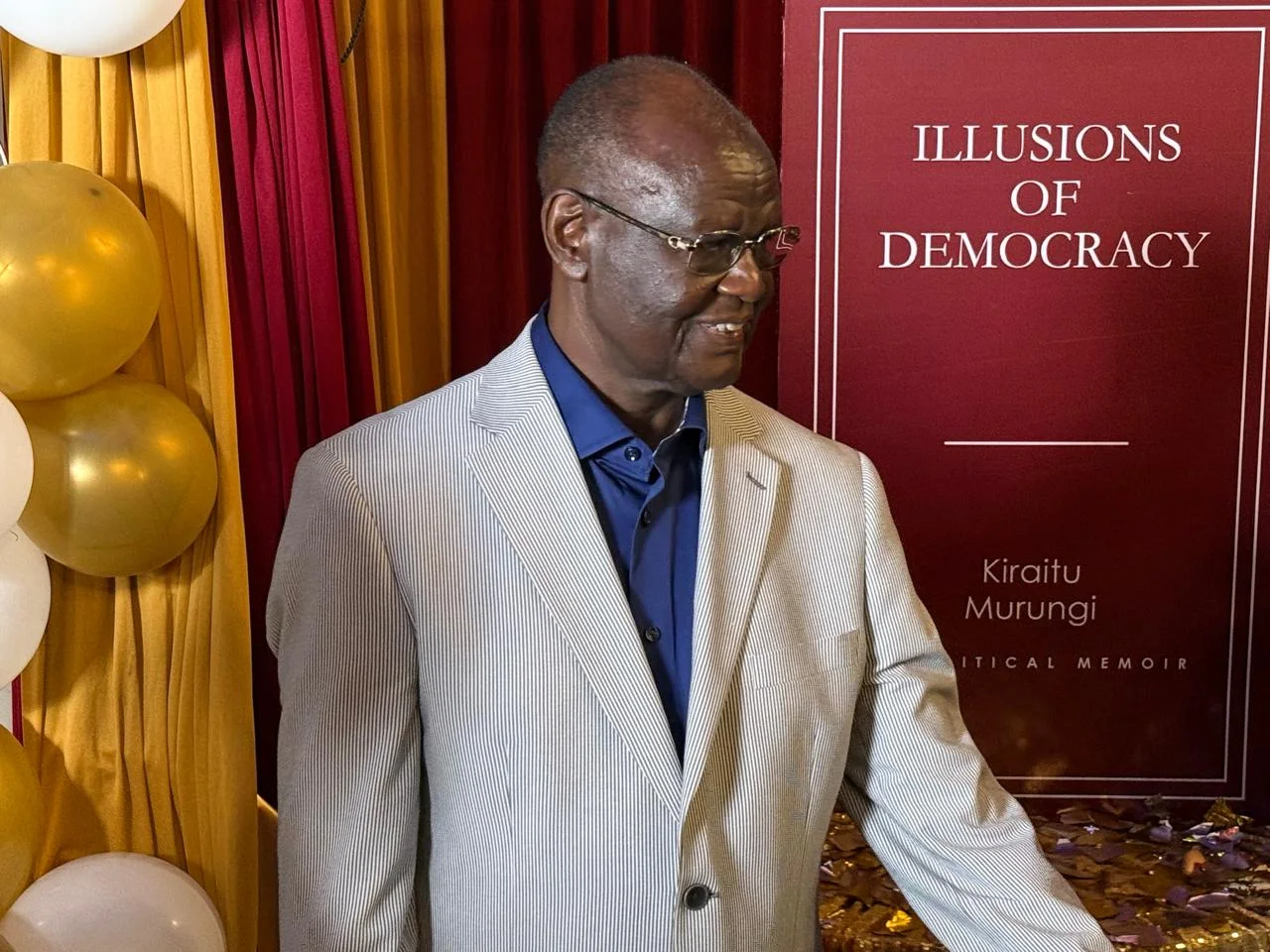
Kenya’s democracy risks becoming a contest of cash rather than ideas, with poverty and voter bribery increasingly shaping political choices, former Meru Governor Kiraitu Murungi has warned, raising concerns over the country’s electoral culture and the future of accountable leadership.
Speaking at the launch of his book Illusions of Democracy on Friday, Murungi said financial hardship had made many Kenyans more interested in immediate monetary gains than in examining candidates’ policies, demanding accountability or considering the country’s long-term development.
“Simply, what we celebrate today as democracy is not democracy,” he said, questioning whether the large crowds that politicians attract during rallies represent genuine support for their ideas.
“What we actually celebrate, even when we see all these massive crowds, is just a celebration of money. They are not celebrating ideas. They are celebrating cash,” he added.
Murungi argued that money had become a major influence in electoral politics, with politicians using handouts to attract supporters instead of winning them over through their plans and proposed solutions to the country’s problems.
He linked the trend to the economic difficulties facing ordinary citizens, particularly in rural areas, where the daily struggle to meet basic needs often takes priority over broader political discussions.
“The main talk in the rural areas is about rain, about drought, about crops and animals, children, sickness and death,” he said.
According to the former governor, the pressure to survive has created opportunities for politicians to use cash to influence political participation and voting decisions.
He criticised the practice of voters expecting money before attending political meetings or casting their ballots, saying it had contributed to a system in which political gatherings are valued for the financial rewards they offer rather than the ideas presented by candidates.
Murungi said some people attend rallies mainly to collect transport money at the end of meetings instead of listening to candidates’ manifestos and assessing their ability to lead.
He warned that this culture weakens public accountability by shifting attention away from policies, development priorities and the responsibility of elected leaders to deliver on their promises.
The former governor also expressed concern over the growing influence of political slogans and online exchanges, arguing that they have displaced meaningful debate and discouraged citizens from critically assessing competing political ideas.
He cautioned that political engagement should go beyond popular slogans and digital arguments, with voters expected to examine the plans and leadership abilities of those seeking public office.
Murungi also raised concerns about the possible consequences of the Gen Z movement succeeding in removing established political structures without putting alternative leadership arrangements in place.
“This Gen Z revolution is, if successful, they can create the leadership vacuum because you are winning without the rider,” he said, cautioning that the resulting instability could pave the way for dictatorship.
He warned that bringing down existing political structures without building sustainable democratic institutions could leave a country without clear leadership and create conditions that threaten democratic governance.
To support his argument, Murungi cited political developments in Sudan and Madagascar, as well as military rule in Burkina Faso, as examples of the risks associated with political movements that fail to establish lasting democratic institutions.
He urged young people to protect multiparty democracy and constitutional term limits, insisting that changes in government should take place through elections rather than violence or military coups.
Murungi’s concerns are explored in his book, Illusions of Democracy, which examines the gap between the democratic principles set out in Kenya’s Constitution and the political realities experienced by citizens at the grassroots.
The memoir looks back at Kenya’s democratic journey, acknowledging the gains made through political reforms while examining the challenges that continue to affect the country’s political system.
Among the issues addressed are poverty, corruption, ethnic politics and the use of money to influence electoral choices, which Murungi identifies as persistent obstacles to a democracy founded on ideas, public participation and accountability.