
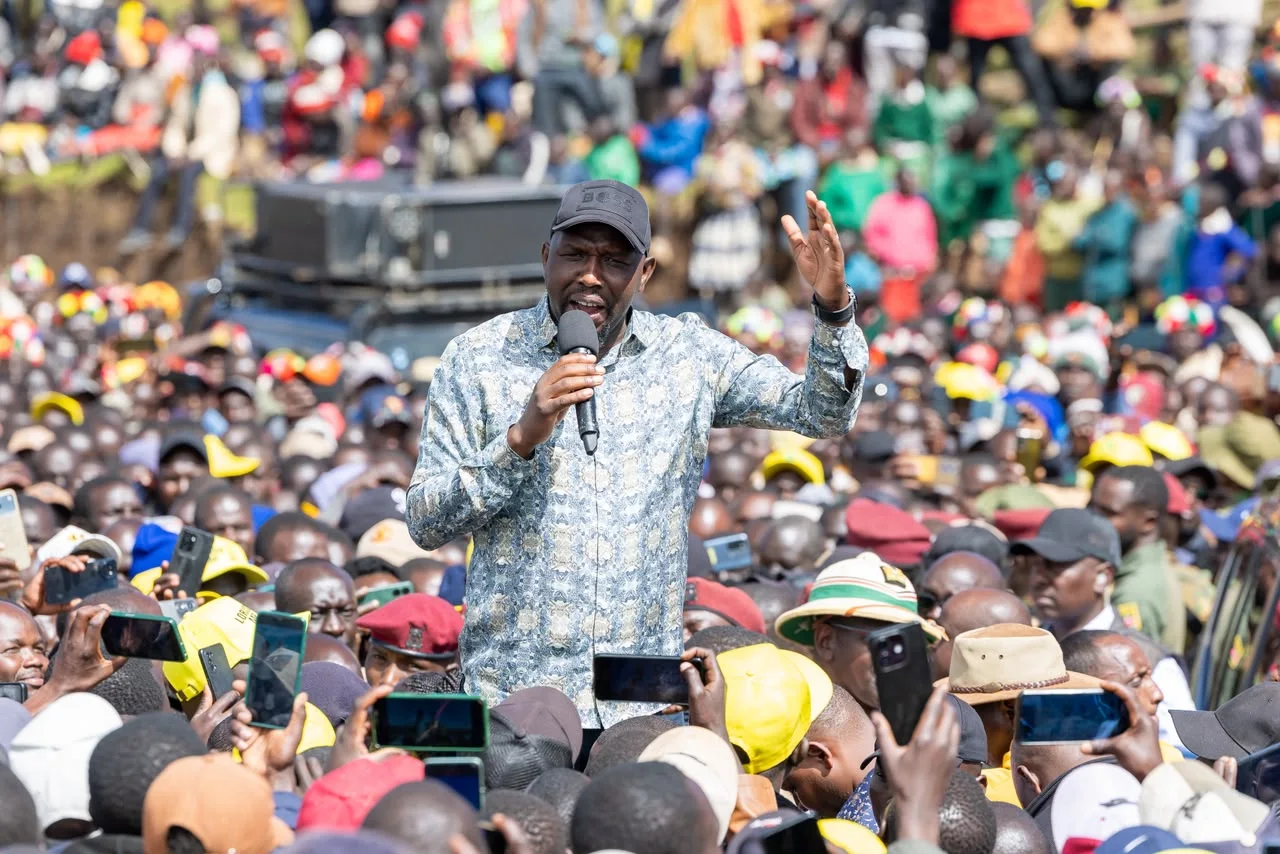
Interior Cabinet Secretary Kipchumba Murkomen has linked President William Ruto’s development projects to efforts to tackle insecurity in West Pokot County, arguing that roads, electricity and investment in marginalized areas can help address the root causes of conflict.
Speaking during Ruto’s inspection of the Kapsait-Sondany Road and Last Mile Connectivity projects on Wednesday, Murkomen said historical marginalisation contributed to insecurity by limiting economic opportunities and fuelling competition among communities.
He argued that the government’s development agenda was helping improve relations between communities, including the Pokot and Marakwet, which have experienced tensions in parts of the North Rift.
“The real solution to insecurity is dealing with historical marginalization that has kept people thinking that stealing from each other is the only way to become rich,” Murkomen said.
He added that infrastructure development was helping replace conflict with opportunities for trade, movement and economic activity.
“Where there was a gun, you have put a road. Where there was a fight, now we have electricity,” he added.
His remarks come against the backdrop of persistent insecurity in parts of the North Rift, where cattle rustling, armed attacks and disputes over resources have contributed to deaths and property losses.
In September 2026, seven people were reported killed in fresh clashes along the Turkana-West Pokot border. The violence involved longstanding boundary disputes, cattle rustling, and disagreements linked to mining activities.
The clashes renewed concerns about security in the Turkwel belt, including areas where residents face limited access to essential services.

The region has seen repeated security operations to curb banditry and livestock theft. The National Police Service’s 2024 annual report recorded 696 cattle-rustling and stock-theft cases nationally during the period under review, down from 998 in the comparable period.
It also reported 97 fatalities, compared with 202 in 2023, a reduction in the reported toll despite the continued threat.
The Interior CS maintained that addressing historical inequalities was central to achieving lasting peace, suggesting that security interventions needed to be accompanied by development that expands livelihoods and access to services.
The CS pointed to road construction and electricity connections as part of the government’s efforts to improve living conditions in previously underserved areas.
He cited routes serving Kabieko and Tamkaldi, saying improved connectivity made it easier for residents to reach markets and access economic opportunities.
Murkomen argued that roads could strengthen links between neighbouring communities while enabling residents to participate more fully in local trade.
The CS explained that such investments could help address the socioeconomic conditions he associated with insecurity.
He maintained that development had helped bring communities together, contrasting the government’s infrastructure projects with the conflict that has affected parts of the region.
The CS also praised Ruto for visiting remote villages and engaging residents directly, saying the President had shown an understanding of the challenges communities outside major urban centres face.
“You are the only leader Kenyans have ever had who has walked through villages and visited people in their small, humble homes, even in the most remote areas.”
He argued that the President’s visits to rural areas helped him identify local needs and direct attention to communities that had experienced marginalisation.
Murkomen maintained that the long-term solution to insecurity lay in combining security measures with infrastructure development, economic inclusion and improved relations among neighbouring communities.