
Questions are mounting over how the Kenya Revenue Authority (KRA) walked away from a tax demand of more than Sh2.15 billion on imported raw sugar, with Members of Parliament now probing whether the agency changed its stand after intervention from the National Treasury.
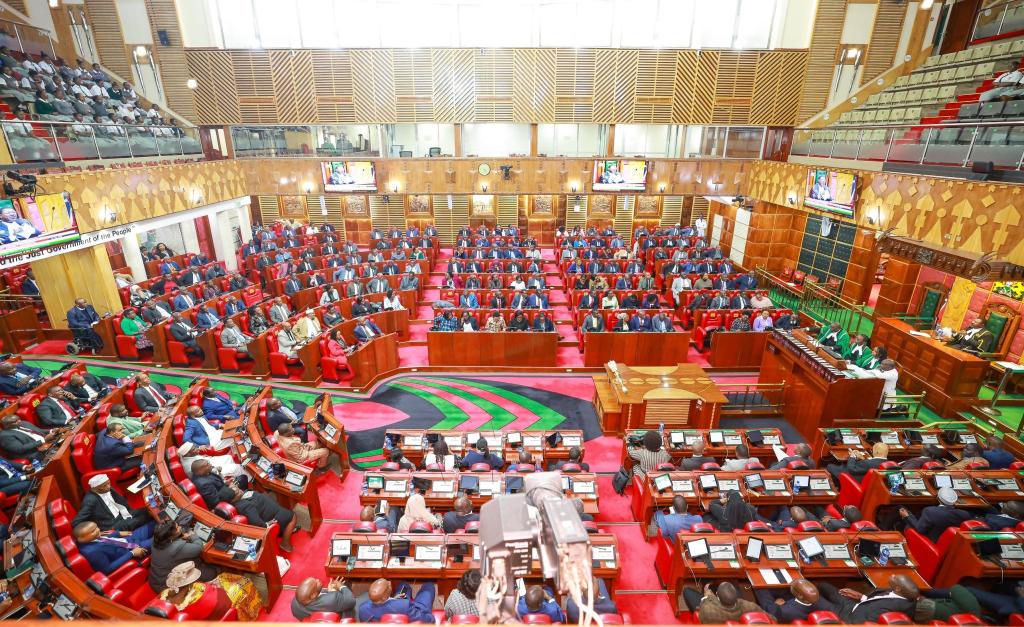
The matter came under sharp focus on Thursday when KRA Commissioner for Customs and Border Control Lilian Nyawanda appeared before the National Assembly Trade Committee to explain why the authority abandoned its initial assessment and cleared the consignment after a meeting convened by the Cabinet Secretary for the National Treasury and Economic Planning.
The inquiry follows fresh details showing that KRA had first demanded about Sh2.9 billion in taxes after disputing the tariff classification of a shipment of raw cane sugar imported by Mombasa Sugar Refinery Limited from South Africa.
Customs officers had maintained that the consignment did not qualify for the preferential treatment granted to raw sugar imported for industrial refining.
According to documents submitted to Parliament, the importer eventually paid Sh511.8 million in taxes, including VAT and other charges.
KRA also confirmed that it did not collect Sh2.152 billion in import duty after the consignment was allowed under the East African Community Duty Remission Scheme.
The authority further disclosed that it also forgone Sh208.8 million in excise duty, Sh490.1 million in VAT, Sh57.8 million in Import Declaration Fees and Sh46.3 million in Railway Development Levy, among other taxes.
The committee sought to understand what led to the dramatic shift in KRA’s position after customs officers had already completed laboratory tests and rejected the importer’s classification.
Trade Committee chairman Bernard Shinali repeatedly pressed Nyawanda on whether KRA had changed its position only after the matter reached the Treasury.
“So until you went to the CS, KRA had a position that taxes must be collected. Is that true?” Shinali asked.
“That’s true, yes,” Nyawanda responded.
Her response confirmed that KRA had initially insisted the taxes were payable before later reversing its position, an admission that has now become a key focus of the parliamentary probe.
Nyawanda explained that the importer challenged the assessment through the dispute resolution process provided for under the East African Community Customs Management Act. She said the matter later proceeded to a multi-agency meeting chaired by the Treasury Cabinet Secretary.
The meeting brought together representatives from KRA, the Kenya Bureau of Standards (KEBS), the Kenya Sugar Board, the Ministry of Agriculture and the importer. Following those discussions, KRA released the sugar under a controlled multi-agency monitoring framework.
“The classification dispute has since been resolved following the direction from the Cabinet Secretary, National Treasury and Economic Planning to align with the KEBS determination,” Nyawanda said.
The explanation did little to convince members of the committee, who questioned whether it was normal for the Treasury Cabinet Secretary to be involved in resolving tax assessment disputes.
“Is it a process to go to the CS in KRA to resolve a matter?” Shinali asked.
Nyawanda described the case as “unique”, saying it marked the first time Kenya was implementing a legal notice issued by the East African Community Council of Ministers allowing duty remission for imported raw sugar meant for industrial refining.
When lawmakers sought to know whether any law gives the Cabinet Secretary authority to convene such a meeting and determine the outcome of a tax dispute, KRA officials referred to the dispute resolution provisions under the customs law. However, they admitted they could not point to any legal provision specifically granting the Cabinet Secretary that power.
The hearing also exposed differing views between KRA and KEBS over the classification of the imported sugar, with MPs now questioning whether the tax authority made its final decision independently.