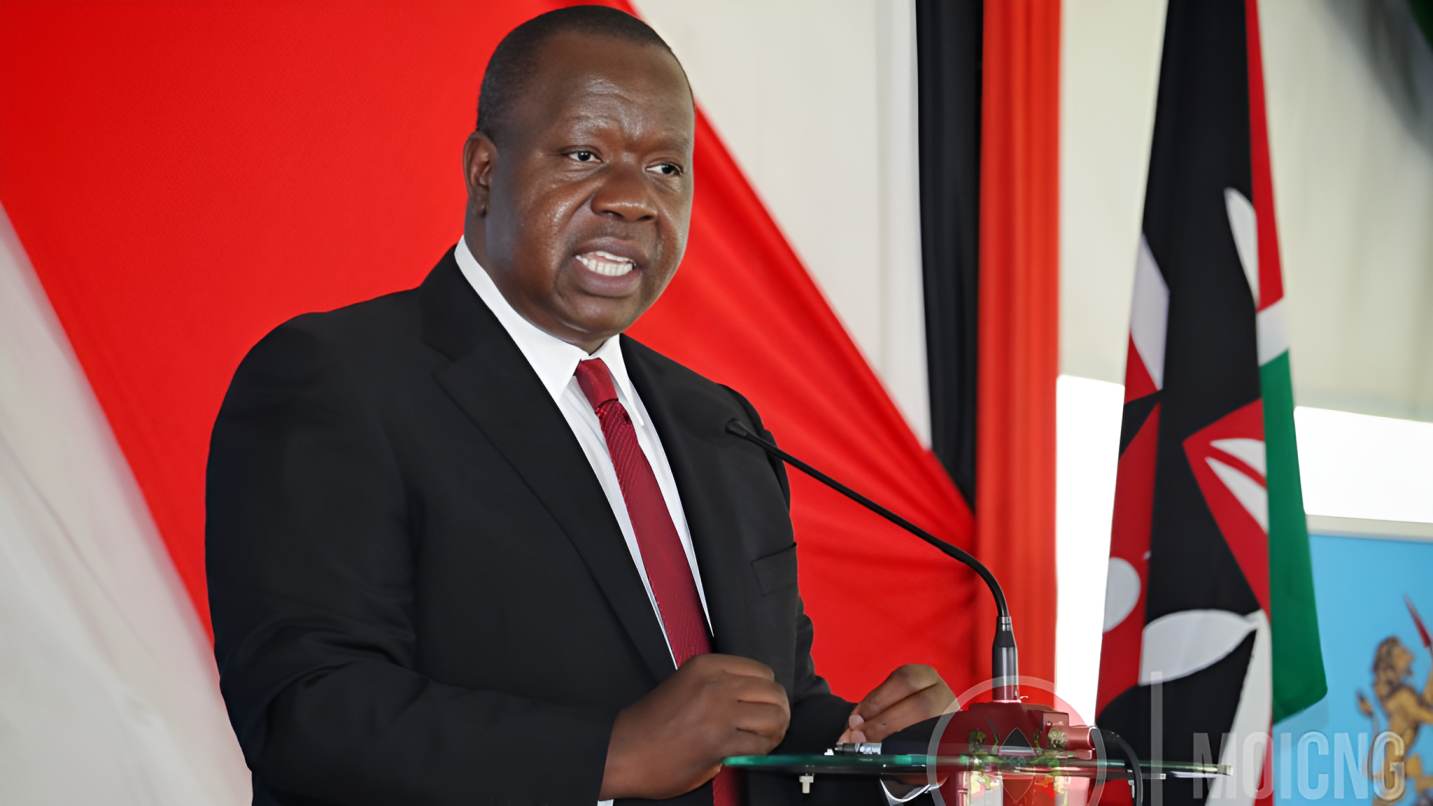
Jubilee Deputy Party Leader Fred Matiang’i has called for the full publication of Kenya’s Government-to-Government (G2G) oil agreement, saying remarks by Ugandan President Yoweri Museveni that Uganda had been buying fuel through middlemen in Kenya raise serious questions about the arrangement.
In a statement on Sunday, Matiang’i said he had opposed the deal from the outset, telling Citizen TV’s Sunday Live on April 19 that he would not have signed it and had called for the agreement to be made public.
“President Yoweri Museveni has now revealed that Uganda was buying fuel through middlemen in Kenya and paying significantly higher premiums, raising serious questions about an arrangement presented as Government-to-Government,” Matiang’i said.
He said Kenyans should be able to establish how the arrangement operates, who is involved and how much money changes hands.
“The G2G agreement must be published in full,” he said.“The role of the middlemen must be disclosed and scrutinized.”
Matiang’i also called for the National Oil Corporation of Kenya (NOCK) to be restored to what he described as its proper role in securing fuel supplies and helping stabilise the local market.
“When public money is involved, secrecy cannot be the policy,” he said.“Kenyans deserve to know who benefited, at what cost, and why.”
His comments follow remarks by President Museveni that a Kenyan senator had alerted him that Uganda was buying petroleum products through middlemen in Kenya.
Museveni said the information prompted Uganda to pursue direct sourcing through the Uganda National Oil Company (UNOC), working with global energy trader Vitol. He said the shift resulted in lower premiums on petrol, diesel and aviation fuel.
Kenya introduced its G2G fuel import arrangement in 2023 as the government sought to ease pressure on foreign-exchange reserves and stabilise petroleum supplies.
Under the arrangement, Gulf-based suppliers provide petroleum products while nominated Kenyan oil marketing companies are involved in procurement and distribution.
The issue has also drawn demands from motorists for an independent audit of the system.
The Motorist Association of Kenya (MAK) has called for a full forensic audit covering fuel imports, procurement, pricing and distribution, including the role of intermediaries.
“MAK therefore demands: First, a full forensic audit of the G-to-G petroleum procurement system, including all intermediaries, commissions, contracts, pricing formulas and beneficiaries,” the association said.
MAK also wants the actual landed cost of every fuel cargo and the margins added before petroleum products reach consumers disclosed.
The association has further called for an independent review of the Energy and Petroleum Regulatory Authority (EPRA) and its fuel-pricing mechanism, saying every cost factored into pump prices should be independently verified and protected from political or commercial interference.