
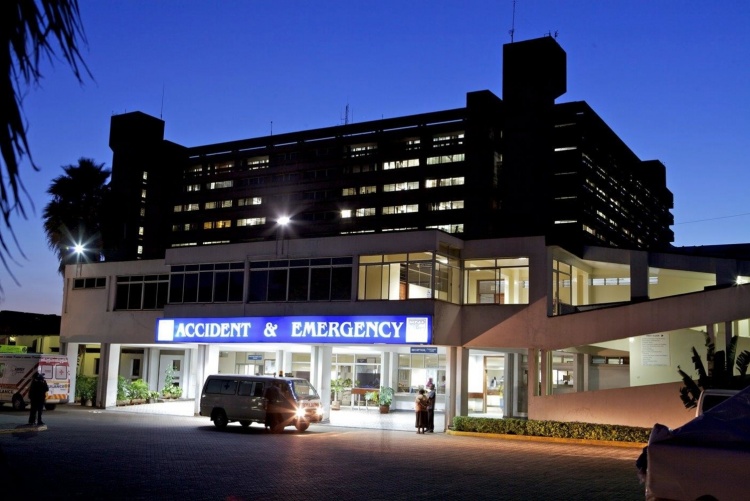
Eleven patients at Kenyatta National Hospital (KNH) are set to undergo a specialised coronary artery bypass procedure that doctors can perform without stopping the heart, as the hospital introduces the technique in Kenya’s public healthcare system.
The operation, known as coronary artery bypass graft surgery, is performed to improve blood supply to the heart when the coronary arteries are unable to deliver enough blood.
Instead of stopping the heart during the operation, surgeons work while it continues beating. Blood vessels from other parts of the patient’s body are used to create new pathways through which blood can reach the heart.
Cardiothoracic Surgeon Simon Nderitu said the technique could help reduce complications associated with stopping the heart during surgery.
“The goal of operating on the heart when it is still beating is to avoid problems related to stopping the heart,” Nderitu said.
Nderitu spoke to the media on Wednesday, September 23, 2026, as specialists explained the procedure and its potential benefits to patients requiring complex cardiac care.
Surgeons explain the operation
Cardiovascular Surgeon Niinami Hiroshi said the number of grafts required during the operation depends on the condition of each patient.
He said some patients may require five or six grafts, while one of the patients treated received four.
“So sometimes we have to do like a five, six, but this patient I did the four grafts with the internal mammary artery and the saphenous vein taken, taken down from the, the leg,” Dr Hiroshi said.
The internal mammary artery and saphenous vein are among the blood vessels surgeons can use to create alternative routes for blood to reach the heart.
Hiroshi said conventional bypass surgery can involve a heart-lung machine, which takes over the work of circulating blood and supplying oxygen while the heart is stopped.
He said avoiding the machine can remove some of the risks associated with its use.
“Using the heart-lung machine, it may cause a brain stroke,” Hiroshi said.
“So to eliminate that kind of complication, which is, without using the heart-lung machine is good,” he added.
The procedures have given patients and their families renewed hope as they seek treatment for serious heart conditions.
A male relative said his wife had been scheduled for valve replacement surgery and had undergone the procedure.
“Alikuwa afanyiwe replacement ya valve. Saa hii, venye tunaongea saa hii, ameshatolewa kwa theatre jana. Nimeleta bibi yangu, amekuwa mgonjwa for the past like two years,” he said.
Another female relative spoke about a family member who had initially recovered but later suffered a stroke.
“Alikuwa amepona. By this year, mwezi wa pili hapo, ndio alipigwa na stroke,” she said.
Nderitu said strengthening the ability of local hospitals to perform specialised heart procedures would help patients who have previously lacked access to such services.
“By building the capacity to do it, we’ll be able to help people who may have suffered for lack of service,” he said.
He added that some patients who can afford it have been forced to seek treatment outside the country.
“And a few people who can afford sometimes travel out of the country to get treatment,” he added.