
Alcohol manufacturers across Kenya will face fresh inspections to establish whether their premises meet quality and public health requirements before their products are allowed onto the market, Deputy President Kithure Kindiki has said.
Kindiki said the government would intensify its crackdown on manufacturers accused of producing illicit alcohol, including those suspected of mixing chemicals into alcoholic drinks intended for public consumption.
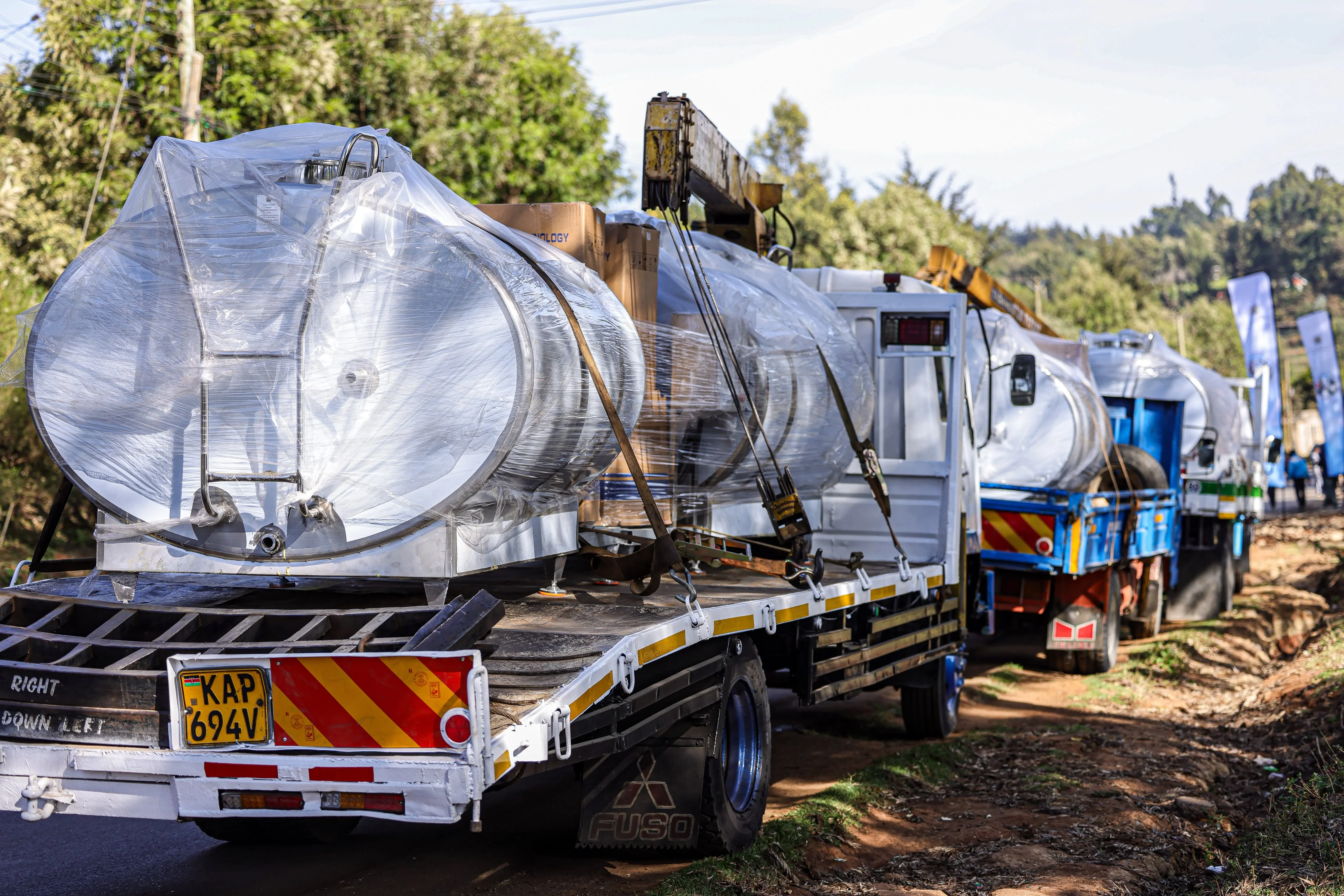
Speaking on Friday during the distribution of milk coolers to dairy farmer cooperatives in Limuru, Kiambu County, the Deputy President said the inspections would be carried out to ensure alcohol producers meet the required standards before their products reach consumers.
“Manufacturers of alcoholic drinks will undergo fresh inspections to ensure their premises comply with quality and public health standards before their products are released to the market.”
He warned manufacturers operating outside the law that the government would take firm action against those involved in making and distributing what he described as poisonous alcohol.
“And to those who operate outside the law, including those who manufacture alcohol in factories, mix it with chemicals and distribute it to the public, your days are numbered. We are coming for you.”
Kindiki said the government had previously taken on terrorist groups and criminal gangs and would apply the same determination in dealing with people involved in the production of illicit alcohol.
“We have fought terrorists, Al-Shabaab and criminal gangs before, and we cannot be defeated by people involved in the production of poisonous alcohol. We will deal with you firmly and without delay.”
His warning comes as the Mt Kenya region continues to face concerns over alcohol use, with data from the National Authority for the Campaign Against Alcohol and Drug Abuse (NACADA) showing substantial levels of consumption.
NACADA's 2022 national survey found that 20.3 per cent of people aged between 15 and 65 in the former Central region had consumed alcohol in the previous year. This was estimated to represent 699,108 people.
Among people aged 15 to 24, past-year alcohol use stood at 17.5 per cent, while the rate among those aged 25 to 35 was 26.7 per cent.
NACADA has since expanded its regional classification of Central Kenya to cover Nyeri, Murang'a, Laikipia, Nyandarua, Embu, Meru, Tharaka Nithi and Kirinyaga.
Kiambu is covered separately under NACADA's Nairobi regional structure, which also includes several neighbouring counties.
Earlier research by NACADA also pointed to the spread of second-generation alcohol in the traditional Central Kenya region.
A baseline survey conducted in 2010 covered Kiambu, Kirinyaga, Murang'a, Nyandarua, Nyeri, Thika and Maragua, with 3,500 people taking part across the seven study areas.
More than 80 per cent of respondents in the study viewed the consumption of second-generation alcohol as a growing trend.
The survey also showed differences in the types of alcohol consumed in the areas covered. Second-generation alcohol accounted for 52.8 per cent of reported alcohol use in Murang'a and 51.3 per cent in Kirinyaga, while Kiambu recorded 38.9 per cent.
Nationally, NACADA's 2022 survey showed that alcohol consumption was higher among men than women. Past-year alcohol use among men aged 15 to 65 stood at 30.3 per cent, compared with 10.1 per cent among women.
The government has previously announced tougher measures against illicit and counterfeit alcoholic drinks.
In March 2024, then Interior Cabinet Secretary Kithure Kindiki announced measures that included the suspension of liquor manufacturing licences as part of efforts to address illicit alcohol.
NACADA said the measures were described as "irreversible and non-negotiable" following a meeting involving government agencies, alcohol manufacturers and distributors.
The authority's enforcement directorate is responsible for carrying out compliance checks at alcohol outlets, collecting suspected substance samples for laboratory testing, coordinating intelligence-led operations and seizing suspected counterfeit alcoholic products.
NACADA has also stated that county liquor licensing committees are responsible for licensing bars and other alcohol-selling outlets.
The authority coordinates enforcement efforts with county inter-agency committees and security agencies, while members of the public can report suspected violations through its toll-free 1192 helpline.
Beyond the alcohol crackdown, Kindiki said he had been given a wider responsibility by elders to help bring communities together, prevent political violence and promote peace across the country.
He said elders from different parts of Kenya were being brought together as part of efforts to strengthen cooperation and unity.
“I have also been entrusted with the responsibility of bringing all communities together. The elders have asked me to give them time as they reach out to elders from the Rift Valley, Coast, North Eastern, Nyanza and Western regions. Through the Kenya Council of Elders, we will continue these efforts to fight drug abuse and promote peace within our communities.”
The Deputy President said the campaign against illicit alcohol would not be limited to Limuru or the wider Mt Kenya region, but would be extended to other parts of the country.
He said Kenyans belonged to one nation and one community, while also warning against the use of gangs and political violence.
Kindiki said the government would not allow citizens to be harmed by illicit alcohol or young people to be mobilised to fight, destroy property or turn against one another.
He also called for an end to divisive politics, linking the fight against alcohol and drug abuse to broader efforts to promote peace and national unity.
The Deputy President said these efforts would continue across the country, stressing the need for unity and declaring that Mt Kenya and the rest of Kenya are one.