
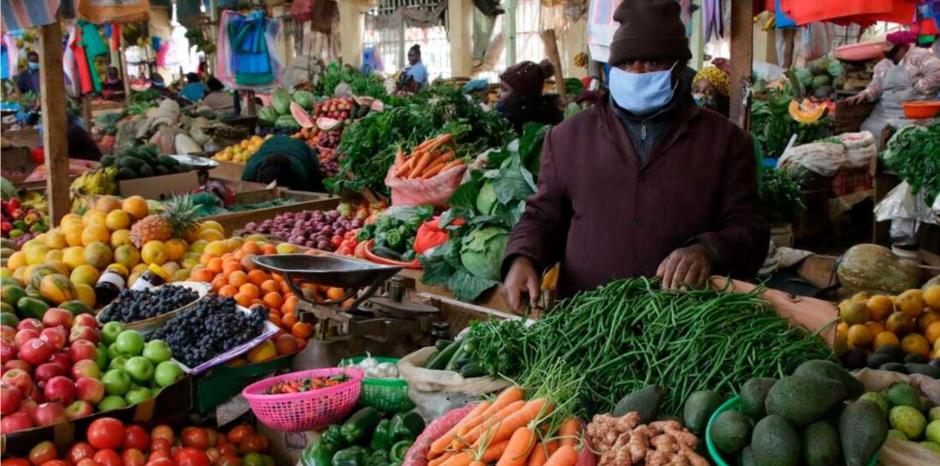
Rising transport and food costs pushed Kenya’s annual inflation to 6.8 per cent in September, with the latest figures showing that consumers paid more for several essential goods and services than they did a year earlier.
The Kenya National Bureau of Statistics (KNBS), in its Consumer Price Index report released on September 30, 2026, said food and non-alcoholic beverages, transport, and housing, water, electricity, gas and other fuels were the main drivers of the increase.
Food prices rose by 9.5 per cent over the 12 months to September, while transport recorded the highest annual increase at 15.6 per cent.
Prices under housing, water, electricity, gas and other fuels went up by 3.2 per cent over the same period.
The three divisions account for more than 57 per cent of the total weight of the 13 major expenditure categories used by KNBS to calculate the Consumer Price Index (CPI).
“The general price level was 6.8 per cent higher in September 2026 than it was in September 2025,” KNBS said.
The overall CPI increased from 155.85 in August to 156.47 in September, resulting in a monthly inflation rate of 0.4 per cent.
Food and non-alcoholic beverages were also among the main contributors to the monthly increase, with the division recording a 0.9 per cent rise between August and September.
During the month, the price of white wheat flour increased by 4.5 per cent. Fresh unpacketed cow milk rose by 5.8 per cent, while fresh packeted cow milk increased by 6.0 per cent.
Some food items, however, became cheaper during the period. Tomato prices declined by 4.1 per cent, while loose maize flour fell by 1.9 per cent and sugar by 0.4 per cent.
Despite recording the largest annual increase, transport prices fell by 0.4 per cent between August and September.
Country bus and matatu fares for intertown travel declined by 1.0 per cent, while city bus and matatu fares dropped by 0.3 per cent.
International flight prices moved in the opposite direction, rising by 8.1 per cent during the month.
On an annual basis, petrol prices increased by 15.8 per cent, while diesel recorded a larger increase of 26.9 per cent.
KNBS also reported that a country bus or matatu fare from Isiolo to Nairobi was 20 per cent higher in September than it was a year earlier.
The housing, water, electricity, gas and other fuels division recorded a mixed trend during the month, with electricity prices declining.
The cost of 50 kilowatt-hours of electricity fell by 2.4 per cent, while the price of 200 kilowatt-hours declined by 2.2 per cent.
KNBS also reported changes in inflation after excluding relatively volatile commodities from the calculation.
Core inflation, which excludes such commodities, increased to 4.0 per cent in September, while non-core inflation stood at 14.0 per cent.
Core inflation contributed 4.2 percentage points to the overall inflation rate, compared with 2.6 percentage points from non-core inflation.
Food and non-alcoholic beverages alone contributed 2.8 percentage points to the overall inflation rate in September, making the division one of the biggest sources of the increase in the cost of living.