
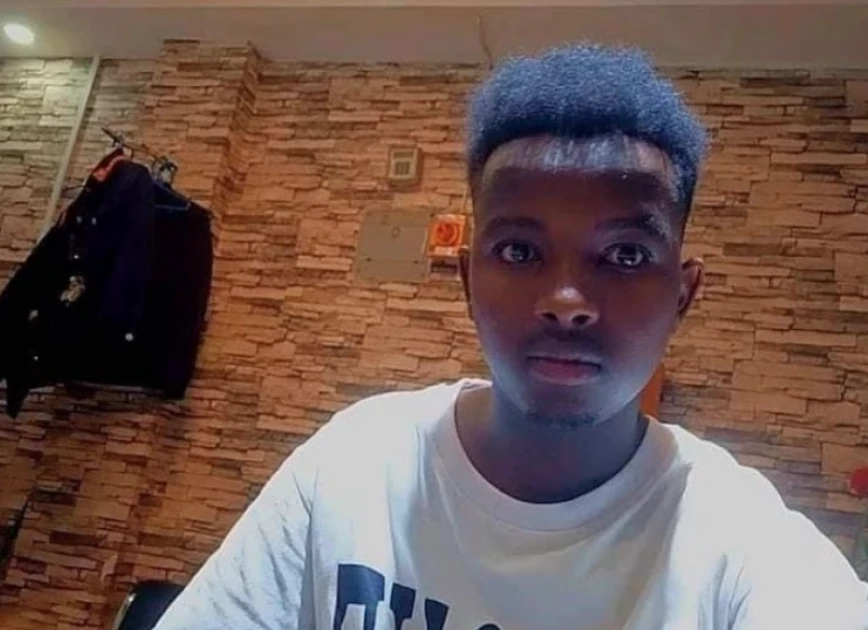
Questions over how Jeff Mwathi’s death was investigated have taken centre stage at the ongoing inquest, after officers admitted that key forensic work at the apartment was carried out weeks after the interior designer died.
The court on Wednesday heard that detectives only examined the apartment about three weeks after the February 2023 incident, by which time the premises had been cleaned and handed back to its occupants.
Investigating officer Charles Mutua told Milimani Principal Magistrate Rose Ndombi that police officers who responded to the scene found Mwathi with serious head injuries and brain matter scattered on the ground.
Mutua said detectives from the Homicide Unit found that Mwathi’s head had burst open following the fall from the 10th floor of the Nairobi apartment.
Mwathi died on February 22, 2023, after visiting the home of musician Lawrence Njuguna, popularly known as DJ Fatxo.
Evidence presented in court showed that Mwathi’s trousers were pulled down below his knees when his body was found, supporting details given in earlier testimony.
A postmortem conducted by pathologist Dr Peter Ndegwa found that Mwathi had suffered multiple organ injuries caused by blunt-force trauma. The injuries were consistent with a fall.
The circumstances surrounding the fall have remained a key issue in the inquest, with defence lawyers using cross-examination to question how the original investigation was conducted and whether the crime scene was properly secured.
Chief Inspector Timothy Bett told the court that CCTV footage captured Mwathi’s body falling 59 minutes after DJ Fatxo had left the apartment.
The footage showed the musician leaving the premises with three women, leaving the driver and his cousin inside the house with Mwathi.
Defence lawyers questioned why the two men who were left with Mwathi were not immediately treated as primary suspects.
The court also heard that the two men were captured on CCTV walking downstairs and later returning to the apartment. However, investigators did not find footage showing them leaving afterwards, leaving their movements after the incident unclear.
Chief Inspector Francis Kieti, a Crime Scene Investigations officer, said he went to the apartment about three weeks after Mwathi’s death.
Kieti told the court that the premises had already been cleaned by the time he arrived. As a result, the condition of the apartment no longer fully reflected what investigators would have found on the night Mwathi died.
Under questioning, Kieti admitted that his reconstruction of the scene could not determine whether Mwathi had been pushed, jumped or was otherwise manipulated before passing through the window.
He further said the window had not been dusted for forensic evidence, reducing the amount of material that could have been recovered from the suspected exit point.
Kieti was the second scene-of-crime officer to inspect the apartment.
Mutua also told the court that seven people had entered the apartment that night. CCTV footage showed DJ Fatxo leaving with three women, after which the two men remained inside with Mwathi.
Mwathi had earlier met the musician to discuss an interior design contract. The two later went out for drinks with several companions before returning to the apartment.
The case attracted widespread public attention after initial police reports indicated that Mwathi may have died by suicide.
His family rejected that account and called for a full investigation into what happened, leading authorities to exhume his body for a second postmortem examination amid claims of foul play.
During an earlier hearing, Mwathi’s father, Peter Ngugi, dismissed the suggestion that his son had taken his own life.
He told the court that Jeff was killed and that “narratives of him having been consumed by suicidal thoughts to the extent of taking away his life are misleading”.
Samidoh, Mwathi’s uncle and a popular musician, also rejected the suicide theory during his testimony.
He told the court that the bedroom window grills were too narrow for Mwathi to have forced his way through voluntarily.
Mwathi’s family has since asked the magistrate to expedite the proceedings, citing the trauma and prolonged suffering they have experienced since his death.
The court recognised the high level of public interest in the matter and assured the family that it would seek to bring the inquest to a swift conclusion.
The proceedings will continue, with additional witnesses expected to appear before the magistrate as the court seeks to establish what happened before Mwathi’s fatal fall.