
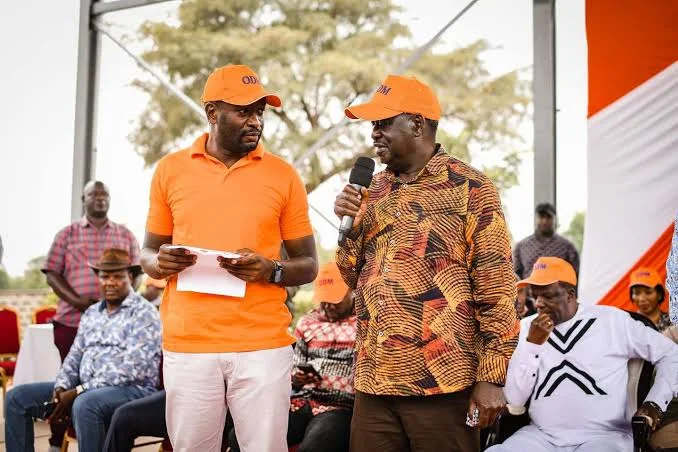
For years, Nairobi Senator Edwin Sifuna could speak his mind knowing that when political disagreements threatened his position in the Orange Democratic Movement (ODM), Raila Odinga was there to defend him.
Today, that safety net is gone, leaving him to navigate a bitter party dispute, growing concerns about his personal security and an uncertain political future without the mentor he says shaped his career.
Sifuna says Raila’s death has changed the weight of leadership on his shoulders, forcing him to make difficult political choices on his own while adjusting to a life in which even routine activities require greater caution.
Speaking during a media roundtable in Nairobi on Friday, October 9, the senator described how the loss has affected both his political responsibilities and his private life, including where he goes, what he eats and drinks, and how he interacts with people during public engagements.
His recent remarks in the Senate offered a lighter glimpse of the changes he has experienced. While discussing restrictions that have kept him away from Fred Obachi Machoka’s ranch, Sifuna recalled how frequently he used to visit the premises before his circumstances changed.
"He knows that before my life changed dramatically, I was a regular visitor at his premises" he told senators.
But behind the lighter account is what Sifuna describes as a much deeper loss: the absence of a political mentor who provided direction and stood by him when tensions arose within ODM.
"I personally miss my mentor," he said.
Sifuna explained that Raila’s presence had eased the burden on younger leaders because the former Prime Minister often took charge when the party faced difficult decisions. With Raila at the helm, Sifuna said, responsibility for resolving major disputes did not fall entirely on those below him.
"When Baba was around, the sense of responsibility was not as heavy as now because we knew that even when there were difficult issues for the party, it was not up to you to make that decision," he said.
He recalled that Raila would ask party members to leave contentious matters to him, a position that gave younger politicians room to operate without having to settle every internal disagreement.
"Now, it is you. You are supposed to now give direction, as I have always said, give direction to the party."
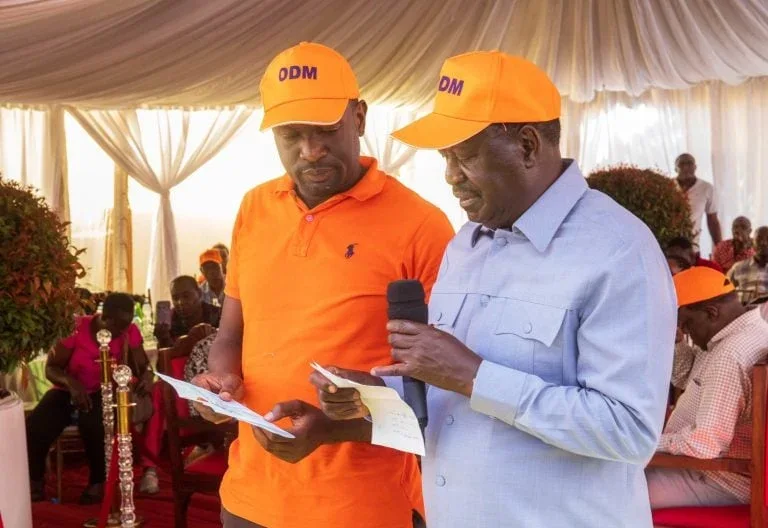
The absence of that guidance has coincided with one of the most difficult periods in Sifuna’s political career. Attempts to reconcile opposing camps within ODM did not prevent his removal as secretary-general, leaving him to confront the fallout of a dispute over the party’s future.
Sifuna said he attended reconciliation meetings at the homes of party officials and believed the discussions were moving towards a solution. Despite those efforts, differences over ODM’s political direction remained unresolved.
At the heart of the disagreement was the party’s relationship with President William Ruto’s administration. Sifuna and his allies wanted ODM to maintain a distinct political identity rather than become indistinguishable from its broad-based arrangement with the President’s government.
The dispute escalated into disciplinary action against Sifuna. In September, the Political Parties Disputes Tribunal upheld his removal after fresh disciplinary proceedings, following an earlier decision that had been invalidated over procedural concerns.
ODM had accused him of contradicting official party positions and engaging in political activities without authorisation, allegations he disputed.
The fallout has placed Sifuna on a new political path through Linda Mwananchi, a movement in which he has emerged as a leading figure. He acknowledged that the direction his life has taken was not part of his original plans, making the separation from ODM particularly painful.
"Honestly, it is a very emotional moment for me, but I have known one political party and one political leader my entire life," he said.
His loyalty to the party, he explained, went beyond his official responsibilities. Sifuna joked that he had collected so many orange T-shirts over the years that he did not know what to do with them as he contemplated moving away from the party’s familiar colours.
"Even just changing those colours. It's a tough emotional break, but it has to be done," he said.
The remark offers a personal glimpse into a political split often viewed through the struggle for party control, competing alliances and calculations ahead of the 2027 General Election. For Sifuna, however, the separation also means stepping away from the organisation in which he spent years building his political career.
During his eight years as secretary-general, he said, reports that he was about to lose his job surfaced repeatedly. He recalled that Raila would intervene whenever party members questioned his conduct or objected to his public comments.
"I was always being fired," he said.
According to Sifuna, Raila understood the need to give younger leaders the freedom to challenge established positions, even when their words unsettled senior members. The former Prime Minister could disagree with the way Sifuna expressed himself, he said, but would still defend his right to raise important questions.
That backing gave Sifuna confidence to speak firmly without constantly worrying about whether every senior party figure approved of his position. Now, he must defend his views and accept the consequences of his decisions without the leader who once offered him that protection.
The changes have also affected how he approaches his personal safety. Sifuna said threats from different directions had made him more cautious about his movements and everyday interactions.
"You need to be a bit more careful where you go, what you eat, what you drink," he said.
He recounted an incident during a public engagement when a member of his staff handed him a bottle of water. Sifuna said people in the crowd who did not recognise the woman nearly turned against her, illustrating what he viewed as the growing suspicion surrounding him.
The experience, he said, showed why people accompanying him at public events needed to be identifiable to supporters to avoid misunderstandings and possible hostility.
Sifuna also expressed concern that political opponents might be monitoring his movements and those of people close to him. He did not provide independent evidence that a specific individual had attempted to harm him, but said his concerns had changed the way he manages his daily activities.
He now has to weigh ordinary decisions more carefully and approach public engagements with greater awareness of the people around him.
Away from security concerns, Sifuna faces another challenge: building a political identity beyond his former position as ODM secretary-general. In that role, he was responsible for explaining the party’s decisions, defending its positions and responding to criticism on its behalf.
He said visits by his team to areas traditionally associated with ODM had produced an encouraging response, giving the emerging movement hope as it seeks to establish a stronger presence.
"We have been amazed at just how positive the reception has been," he said.
Sifuna acknowledged that the early days had not been easy, with members of the group facing insults and criticism. He said their priority was to explain their position to supporters rather than spend their time trading accusations with former colleagues.
He has presented Linda Mwananchi as a movement focused on people-centred leadership, arguing that political leaders should pay attention to the concerns of ordinary Kenyans and respond to their needs.
He also said he was aware of the limits of his own expertise and wanted professionals with the necessary skills to help shape the movement’s plans.
"I am a lawyer," he said, adding that he did not have all the answers on economic theory and other specialised fields.
He argued that the country needed leaders who were willing to listen to experts, consider their advice and use their knowledge when making decisions on behalf of the public.
Despite the bitter disagreements within ODM, Sifuna said he did not hold a personal grudge against his former colleagues. He described them as comrades with whom he differed over the direction the party should take.
He also said he had put the insults and personal attacks behind him.
"I have forgiven all those who insulted me or called me names. It is water under the bridge,” he said.
Sifuna’s account reveals the difficult transition facing a politician who once relied on Raila’s guidance and influence but must now take charge of his own political decisions. As he adjusts to life outside the ODM leadership and builds his association with Linda Mwananchi, he faces the task of turning the support he says he has received into a lasting political base.
For now, the senator’s challenge extends beyond the dispute that cost him his party position. He must also come to terms with the loss of a mentor, respond to concerns about his safety and determine how to move forward in a political landscape that has changed profoundly since Raila’s death.