
As Kenya reflects on the political legacy of the late Raila Odinga, Kisumu Governor Anyang’ Nyong’o has challenged leaders to embrace a style of politics that puts the country’s interests above the pursuit of power, warning that democracy must be protected even when election results do not go one’s way.
Nyong’o also urged county governments to take stock of their achievements and address gaps in service delivery, saying the true value of devolution lies in improving the lives of ordinary citizens.
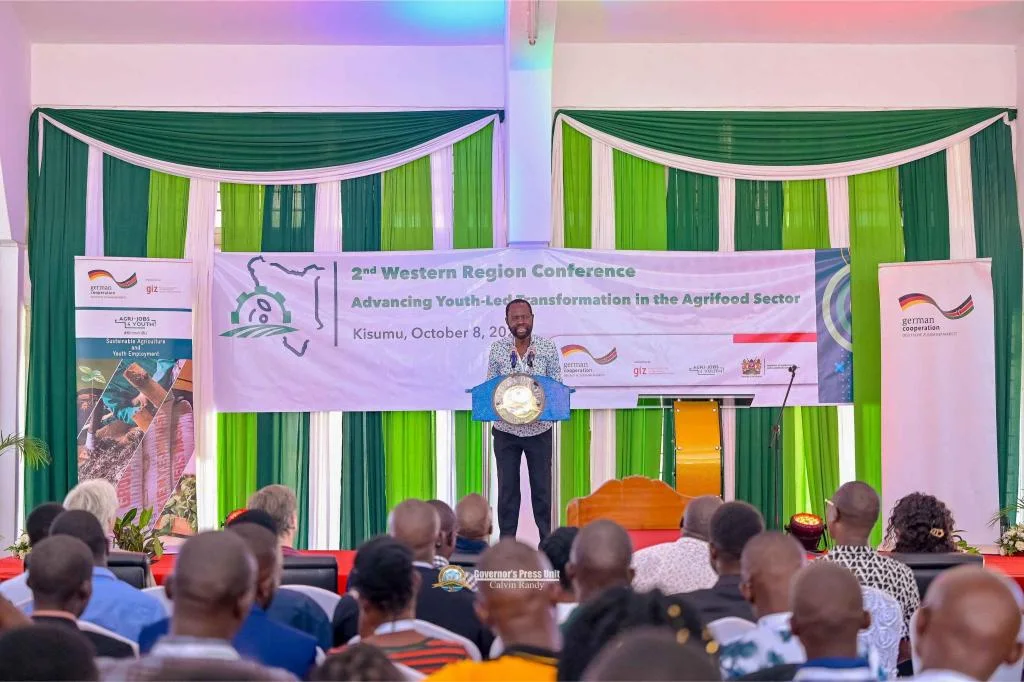
Speaking on the second day of the RAO2026 Memorial Conference at Daystar University, Nyong’o said Odinga’s political career provided important lessons on democratic responsibility, national unity and respect for public institutions.
During a lecture on communication and politics, the Kisumu governor argued that democratic leadership should not be judged solely by electoral victories but also by how politicians respond when they lose.
"Raila's ethic of democracy is not the art of winning every contest, but the discipline of refusing to destroy the republic when you are not declared the winner, Prof Nyong'o said during a lecture on communication and politics on the second day of the conference at Daystar University.
Nyong’o said Odinga’s approach offered a lesson for political leaders who must recognise that the stability of the country and the strength of its institutions are more important than individual political interests.
He also turned attention to devolution, describing it as one of the key reforms associated with Odinga’s political struggle. The system was introduced to reduce regional disparities, promote a fairer distribution of national resources and make government services more accessible to citizens.
Nyong’o said the creation of county governments followed years of efforts to give regions a greater role in determining their development priorities and ensure that communities benefited more directly from public resources.
"Today we have the 47 county governments. This was born out of many years of struggle for devolution led by none other than Raila Amolo Odinga," Prof Nyong'o said at the conference.
The governor said the original purpose of devolution was to ensure that development was not concentrated in a few areas while other regions struggled to access basic services.
"Devolution was meant to bring about regional development, balance the distribution of resources, bring the services closer to the people. As we commemorate Raila, we must ask ourselves as leaders; what has been achieved? Have we lived the true vision of devolution?"
He challenged county administrations to evaluate their performance against the goals that informed the introduction of devolved government and respond to the needs and concerns of residents.
According to Nyong’o, commemorating Odinga should involve more than recalling his political career. He said leaders should use the occasion to reflect on whether the reforms he championed had delivered the intended benefits to Kenyans.
He maintained that the effectiveness of democracy should be assessed through the everyday experiences of citizens, including their ability to obtain government services without travelling long distances.
"The true test of democracy is not whether a citizen votes but whether they experience the true meaning of citizenship, which means having services closer to them, he added.
His remarks focused attention on the responsibilities of the 47 county governments under the 2010 Constitution, which established devolution after years of demands for greater regional autonomy and a more balanced sharing of national resources.
The constitutional framework sought to give communities a stronger voice in governance while ensuring that development and essential services reached people across the country.
Nyong’o challenged leaders to consider whether those objectives had been achieved and whether county governments were adequately responding to the expectations of the people they serve.
The conference also heard from Dagoretti South MP John Kiarie, who spoke about his early political association with Odinga and the influence the former opposition leader had on his career.
Kiarie described Odinga as an important mentor, recalling how his public speaking skills and personal experiences helped strengthen the causes he advocated for throughout his political journey.
The legislator said he was appointed president of the ODM youth league while still young, giving him an early opportunity to take up a leadership role within the party.
He later received another responsibility when Odinga entrusted him with coordinating his campaigns in Lang’ata, an experience Kiarie said helped shape his understanding of political leadership and the work involved in mobilising supporters.
The accounts shared at the conference highlighted different aspects of Odinga’s influence, from his contribution to democratic politics and devolution to his role in mentoring emerging leaders.
Nyong’o’s message called on current leaders to preserve the democratic principles associated with Odinga while ensuring that the reforms pursued during his political career continue to benefit citizens through better governance and accessible public services.