
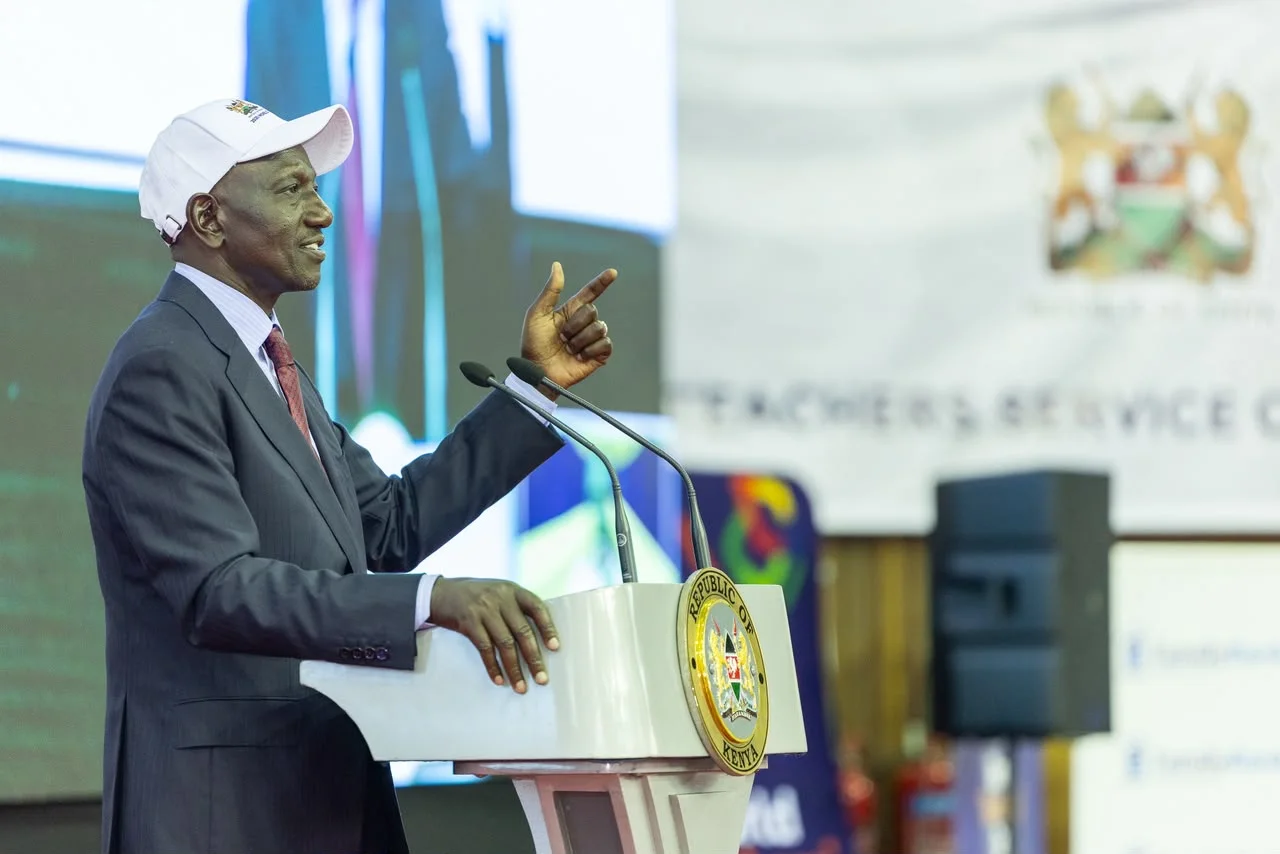
President William Ruto has reaffirmed the government’s commitment to reserving 20 per cent of affordable housing units for teachers, saying the initiative will provide educators with a dedicated pathway to home ownership.
Speaking during World Teachers’ Day celebrations at Kasarani Gymnasium in Nairobi on Monday, Ruto said one in every five homes developed under the government’s Affordable Housing Programme would be reserved for teachers.
He said the Affordable Housing Board had signed an agreement with the Kenya National Union of Teachers (KNUT) and the Kenya Union of Post Primary Education Teachers (KUPPET) in September 2025 to secure the allocation.
“We are also opening a new path to home ownership for teachers. We committed to reserving 20 per cent of affordable homes for teachers. In September 2025, the Affordable Housing Board signed an agreement with KNUT and KUPPET. Under that agreement, one in every five homes in affordable housing developments is reserved for you,” Ruto said.
The government is now working on mechanisms intended to make it easier for teachers to finance the houses.
The Head of State maintained that the Affordable Housing Board was working with the Teachers Service Commission (TSC) to introduce a check-off system that would allow teachers to pay for their homes directly through their salaries.
“We are now making those homes easier to acquire. The Affordable Housing Board is working with the TSC on a check-off system so that you can pay for your home directly through your salary.”
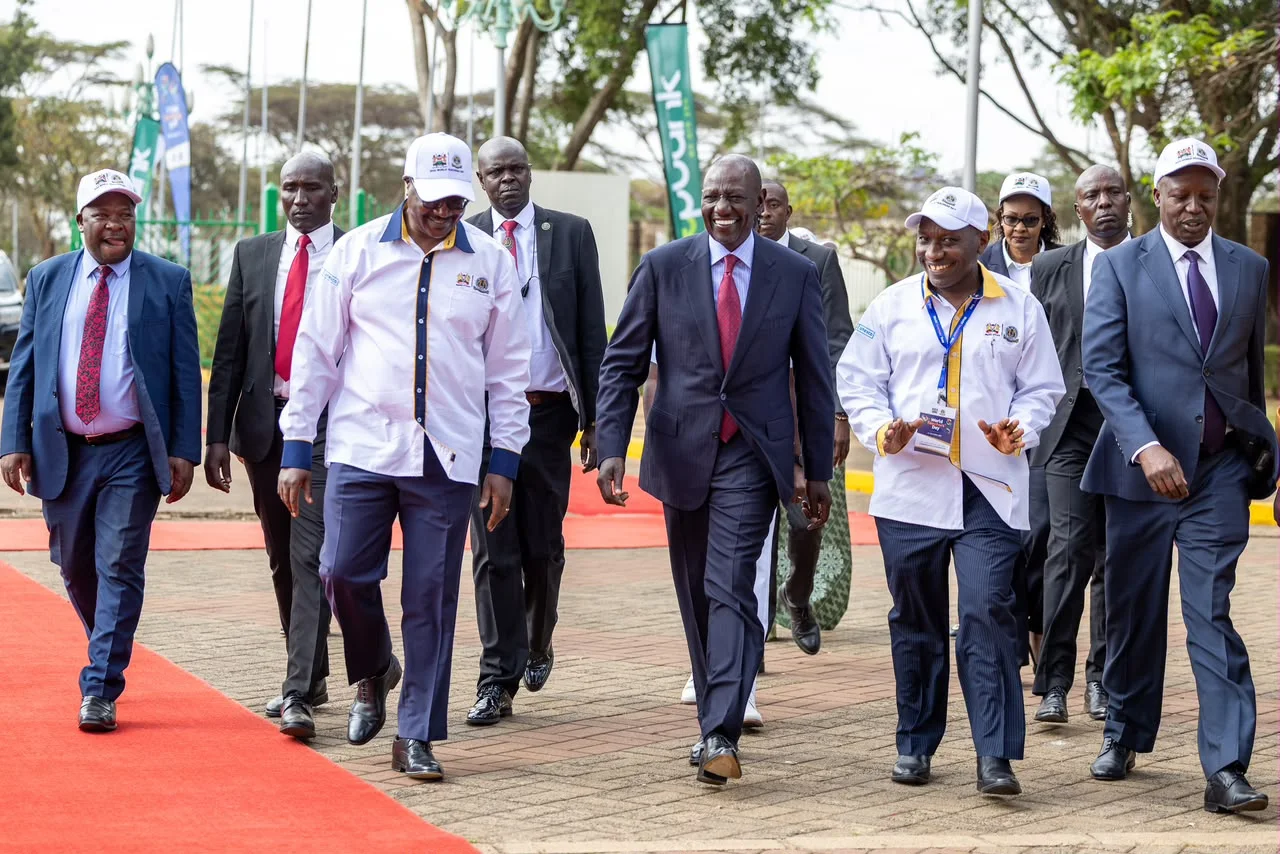
He added that teachers’ savings and credit cooperative societies would be involved in developing financing arrangements based on teachers’ incomes.
“A dedicated team now supports teachers. We are also partnering with teachers’ SACCOs to design financing that fits a teacher’s income. To own a home, all you need to do is apply for your preferred unit through Boma Yangu,” Ruto said.
The Affordable Housing Programme targets at least 200,000 units annually, according to the Affordable Housing Board. The government’s housing department says the programme has a target of more than 200,000 units and has attracted more than one million registered users.
The Boma Yangu platform allows eligible Kenyans to register, save towards a deposit, select available housing units and apply for financing.
The government says registration is open to Kenyan citizens aged 18 and above with a valid national identity card.
Demand for the programme has continued to grow. Data cited by Cytonn Research showed that registrations on Boma Yangu reached about 1.1 million users by early February 2026, up from about 500,000 a year earlier.
The same review found that 6,515 affordable housing units had been completed in five projects in 2025, with 6,390 sold or occupied, representing a 98 per cent uptake rate.
The government's current housing pipeline includes projects ranging from thousands to hundreds of thousands of units.
The official Boma Yangu project list includes 20,000 planned units at Makongeni, 40,000 at another Makongeni development, 67,800 units under Eastlands Urban Renewal projects and 240,000 planned units on former EAPCC land in Syokimau.
For teachers, the 20 per cent allocation creates a specific access arrangement within the wider programme.
The move has also been highlighted at grassroots level, with KNUT officials urging teachers to register on Boma Yangu and take up units reserved for them.
Ruto said the housing initiative formed part of wider measures to improve teachers’ welfare, alongside healthcare, remuneration, career progression and retirement benefits.
He maintained that the government had allocated Sh8.1 billion in the current budget to keep the teachers’ Collective Bargaining Agreement on schedule, while 126,462 teachers had been promoted since his administration took office.
Ruto also noted that the government had doubled the teacher promotion budget from Sh1 billion to Sh2 billion and directed that advertised promotion opportunities be increased from 34,016 to 50,000.
He concluded that the measures were aimed at strengthening the teaching profession and improving the welfare of educators.
“These investments in recruitment, training, career progression, healthcare, remuneration, housing, pensions, and our schools serve one purpose: to build the teaching profession and the human capital Kenya needs for the future.”