
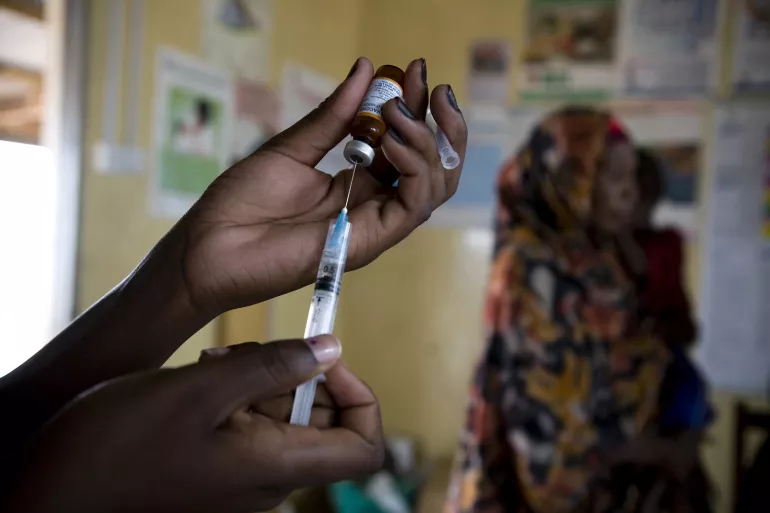
A new audit has laid bare major failures in the country's vaccination programme after revealing that millions of doses meant to protect children against deadly diseases were never used, despite repeated shortages that disrupted immunisation services in health facilities.
The report for the financial year ending June 2025 shows that more than 6.4 million doses of the Bacillus Calmette-Guérin (BCG) vaccine, which is given to newborns to protect them against tuberculosis (TB), were wasted after being supplied to hospitals but never administered. The losses happened at a time when families were struggling to access the same vaccines because of supply shortages.
The audit found that Kenya recorded vaccine wastage rates that were well above the level accepted by the World Health Organisation (WHO). BCG had the highest wastage at 75 per cent, followed by the measles-rubella vaccine at 57 per cent and the yellow fever vaccine at 51 per cent.
Under WHO guidelines, countries receiving support from the Gavi Vaccine Alliance are expected to keep vaccine wastage at 15 per cent.
The findings mean millions of BCG doses that had already been procured, transported and stored ended up being destroyed instead of protecting newborns during the first weeks and months of life when they are most vulnerable to tuberculosis.
The report also warns that children who miss the measles-rubella vaccine remain exposed to one of the world's most infectious diseases. WHO estimates that measles claimed 107,000 lives globally in 2023, with most of the deaths involving children under the age of five.
Children living in areas where yellow fever is a threat are equally left at risk if they fail to receive the vaccine, as there is no specific treatment for the disease and severe infections can be fatal.
“A review of the utilisation ledgers for the three vaccines revealed wastage rates of 75 per cent, 57 per cent and 51 per cent respectively,” the report states.
“Of the 8,602,303 BCG doses issued to health facilities, only 2,113,091 were administered, resulting in 6,489,212 doses, or 75 per cent, being wasted. This was contrary to paragraph 8 of the WHO’ ‘Monitoring Vaccine Wastage at Country Level’ guidelines for programme managers (2005), which require countries receiving GAVI support to reduce their wastage rates to 15 per cent for 10 and 20-dose presentations within three years.”
The audit comes after years of vaccine shortages that affected routine childhood immunisation across the country. During 2024, health facilities reported prolonged shortages of BCG, measles-rubella and oral polio vaccines, forcing the Ministry of Health to redistribute the available stock while awaiting fresh supplies.
When new consignments arrived, the ministry rolled out nationwide distribution and urged parents and caregivers whose children had missed their scheduled vaccinations to return for catch-up immunisation. Even so, the report says the combination of missed vaccinations and the destruction of available doses leaves children more vulnerable to diseases such as measles.
According to the audit, several weaknesses contributed to the losses. These included failures in maintaining the cold chain, disposal of unused doses after multi-dose vials had been opened, poor planning that resulted in facilities receiving quantities that did not match demand and weak record-keeping that slowed the movement of vaccines nearing their expiry dates.
The report notes that BCG, measles-rubella and yellow fever vaccines are supplied in multi-dose vials. Once a vial is opened, any remaining doses must be discarded. This means facilities with fewer children seeking vaccination each day are likely to record higher losses if vaccination sessions are not planned according to demand.
The audit also raises concerns over how funds set aside for vaccines were utilised. During the period under review, the State Department for Health received Sh5.53 billion for vaccine procurement but spent only Sh2.93 billion, leaving Sh2.6 billion, or 47 per cent, unused. Another Sh200 million that had been allocated for vaccine production was later moved through supplementary budgets.
The report further points to gaps in reporting donor-supported vaccines. It says the State Department received 35,651,824 doses financed jointly by Gavi and the government, but their value was not determined and the portion funded by Gavi was not reflected separately in the financial statements. As a result, it was not possible to establish how much of the wasted vaccines had been paid for by taxpayers and how much had been financed by development partners.
“In the circumstances, these deficiencies may indicate a significant shortfall or gap in implementation planning, inefficiencies in procurement or delays, which could potentially undermine the effectiveness of the vaccination programme,” the report says.