
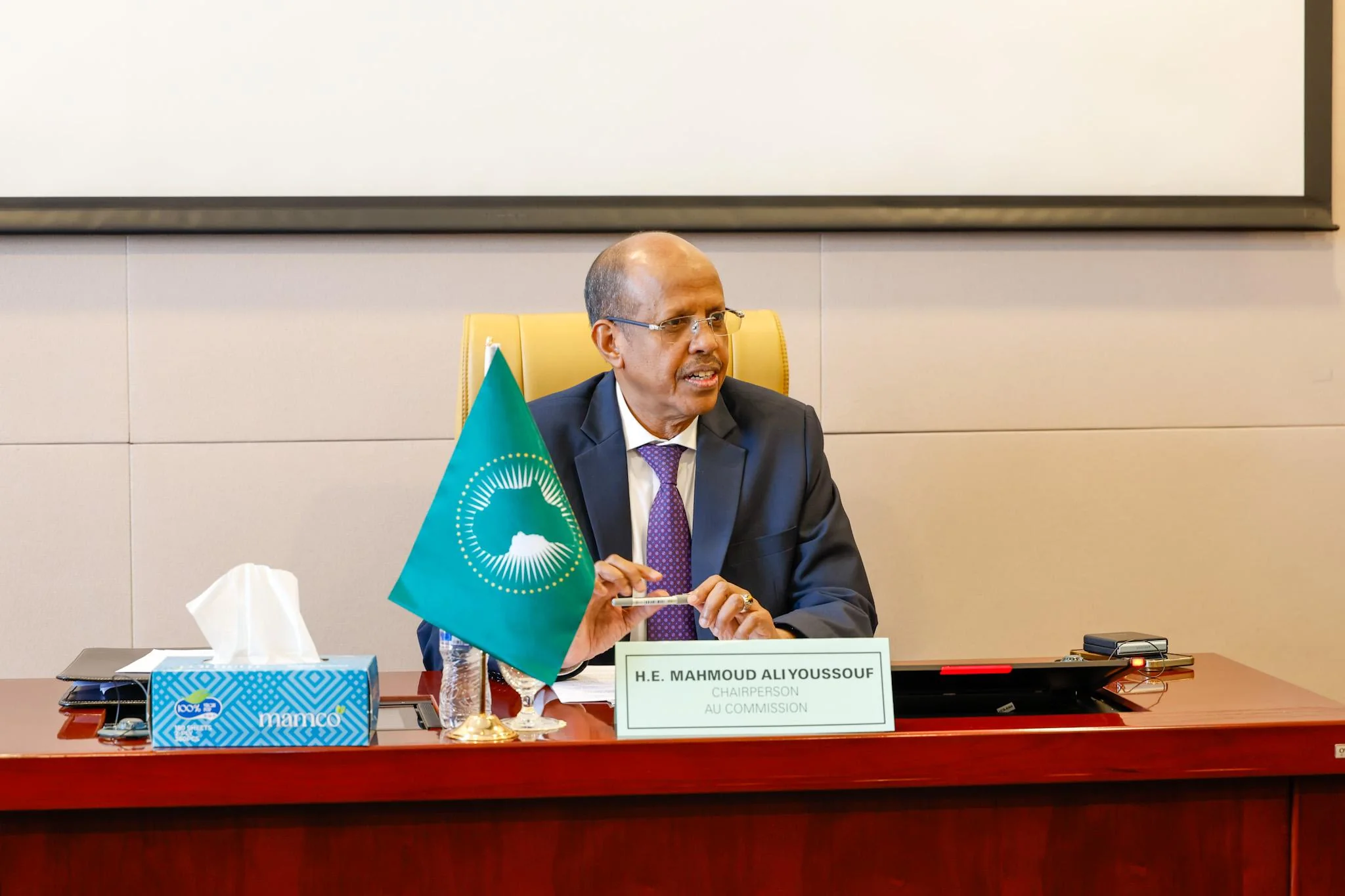
The African Union has intensified its call for an end to sanctions against Zimbabwe, arguing that the restrictions continue to block access to international funding, discourage investors and complicate the country’s efforts to achieve its long-term economic goals.
African Union Commission Chairperson Mahmoud Ali Youssouf renewed the demand in a statement issued on Friday, October 23, 2026, calling for the immediate and unconditional removal of the measures imposed on Zimbabwean institutions and individuals.
Youssouf said the restrictions were limiting Zimbabwe’s ability to engage with international financial systems, attract foreign direct investment and obtain development assistance, raising concerns about their effect on the country’s economic prospects.
“The unilateral sanctions have significantly constrained Zimbabwe’s access to international financial systems, deterred foreign direct investment, increased the cost of doing business, and severely limited the country’s ability to secure development assistance,” the statement read.
The AU maintained that the measures had made it harder for Zimbabwe to secure the financial resources and investment needed to support economic expansion. It argued that these barriers could also affect the country’s ability to implement development programmes and strengthen its economy.
The commission further warned that the consequences of the sanctions extended to Zimbabwe’s broader development commitments, including national targets and economic integration plans shared with other African countries.
“They have severely undermined progress towards achieving the country’s Vision 2030, SADC’s regional macro-economic convergence and integration targets, the AU’s Agenda 2063, and the United Nations Sustainable Development Goals,” the statement added.
Zimbabwe’s Vision 2030 outlines the country’s long-term development ambitions, while Agenda 2063 sets out the African Union’s vision for a more integrated, prosperous and sustainable continent. The United Nations Sustainable Development Goals provide a global framework for improving living standards and addressing major development challenges.
AU Aligns With SADC Position
The commission also reaffirmed its commitment to supporting Zimbabwe in seeking the removal of the sanctions, signalling that the issue remains a priority in its engagement with regional partners.
“The Chairperson of the AU Commission reaffirms the continued commitment of the AU to support the brotherly nation of Zimbabwe in mobilising efforts for the lifting of the unilateral sanctions,” the statement said.
Youssouf also confirmed that the AU supported the position taken by the Southern African Development Community, which has called for the removal of the restrictions.
“In this regard, the AU fully aligns itself with the statement made by the Chairperson of SADC, on behalf of the region,” the statement added.
SADC promotes economic cooperation among its member states and pursues regional economic convergence and integration. The AU’s support for the regional bloc reflects a shared position on the need to address the sanctions and their reported impact on Zimbabwe’s development.
The latest statement places the issue within the wider regional debate on economic cooperation, foreign investment and the ability of African countries to achieve their development objectives.
Zimbabwe Sanctions Remain a Contentious Issue
The renewed appeal comes amid longstanding disagreements between Zimbabwe and Western countries over the restrictions imposed on the country.
Zimbabwe and its regional allies have argued that the sanctions have harmed the economy by limiting access to international financial services, discouraging investment and making it more difficult to obtain development support.
The term unilateral sanctions refers to restrictions imposed by individual countries or groups outside a collective United Nations sanctions framework. The measures vary according to the countries imposing them, their legal basis and the individuals or institutions they target.
In its latest statement, the AU did not list specific sanctions or announce any new action against the countries responsible for imposing them. Instead, it reiterated its demand for their immediate and unconditional removal.
The commission also maintained that the restrictions were undermining Zimbabwe’s efforts to meet its national development goals and contribute to broader regional and international targets.
By reaffirming its alignment with SADC, the AU has signalled its intention to continue supporting Zimbabwe through regional cooperation and efforts to mobilise backing for the removal of the measures.
The continental body reiterated its commitment to working alongside Zimbabwe and its regional partners to press for an end to the sanctions, maintaining that their continued impact remains a concern for the country’s economic development.